• Argentina to Brazil, Reflections – November 23, 2025
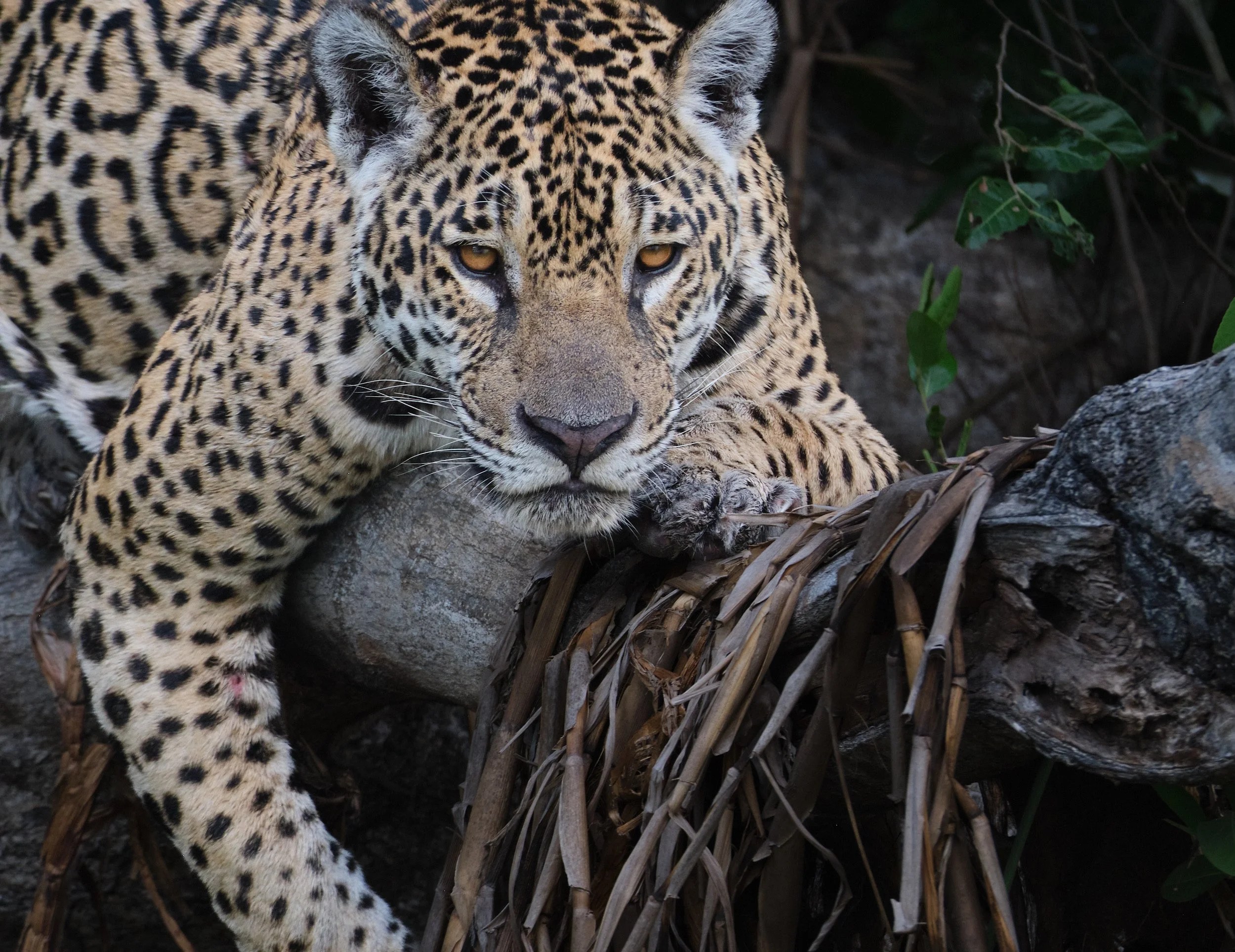
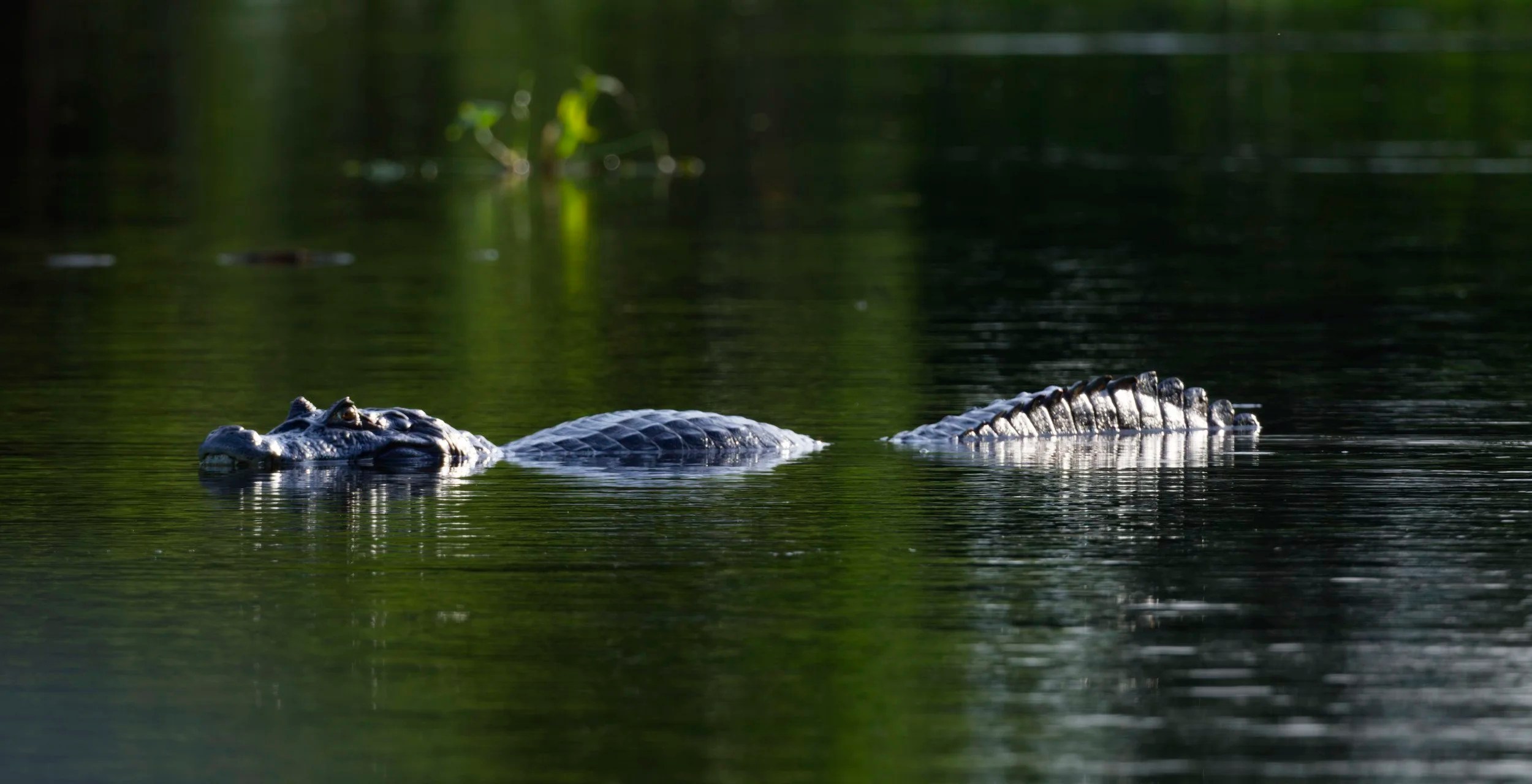
     Cayman
    Cayman

    I have had a number of email nudges, asking whether I’m still in Brazil and why I haven’t posted an update. I returned about 10 days ago, but my batteries were truly drained, and it has taken me until the last day or so to feel recharged enough to write this.

    I’m sure many of you have picked up on the theme of our last two or three South American travels, road trips, in the best sense of the phrase. Our most recent trip however drifted away from the classic definition, and that led to it being, not quite right.

    To take you back to our road trip origins, I first met Rob in 1969 when we were both at OISE (Ontario Institute for Studies in Education) the then newly-created entity whose initial primary objectives were to conduct and disseminate research in the field of education, and to offer graduate-level education courses and degrees. I was in my second work tenure at the Institute, my previous role had been in the Education Planning unit where I had worked as a Research Assistant on a project to develop a cost-benefit model for building Community Colleges, a new educational policy initiative at that time. My second stint was in a much more mundane role, story for another day, and it was in this period that I met my very good friend and travel companion Robert, who at that time was a Ph.D. student at OISE.

    Rob and I spent many long hours planning a trip that became a central focus for us, to drive motorcycles from Toronto to the southern tip of South America. At that time, 1969/70, there were still many ‘war surplus’ stores in the city where military material from WWII and the Korean War as well as military training materials and equipment were still available. In the absence of MEC and the other outdoor and camping equipment stores that we now have, these stores filled a need and for those who wanted to go camping or rough travelling, they were usually the first stop for tents, sleeping bags, rucksacks etc. They also supplied much of the clothing of the hip young, and military jackets were standard kit everywhere from Vietnam War protest marches to Holiday dinners with family.
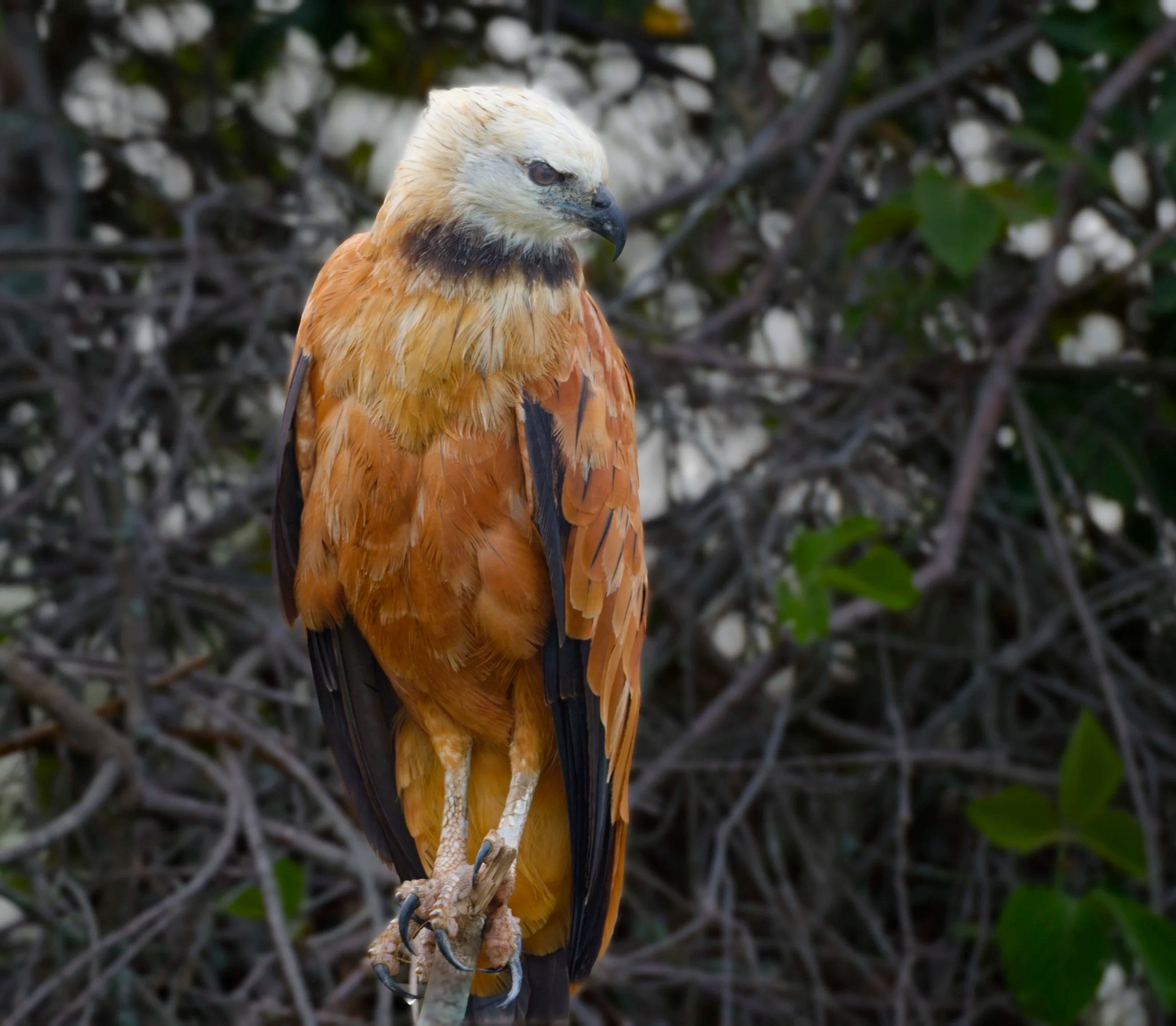
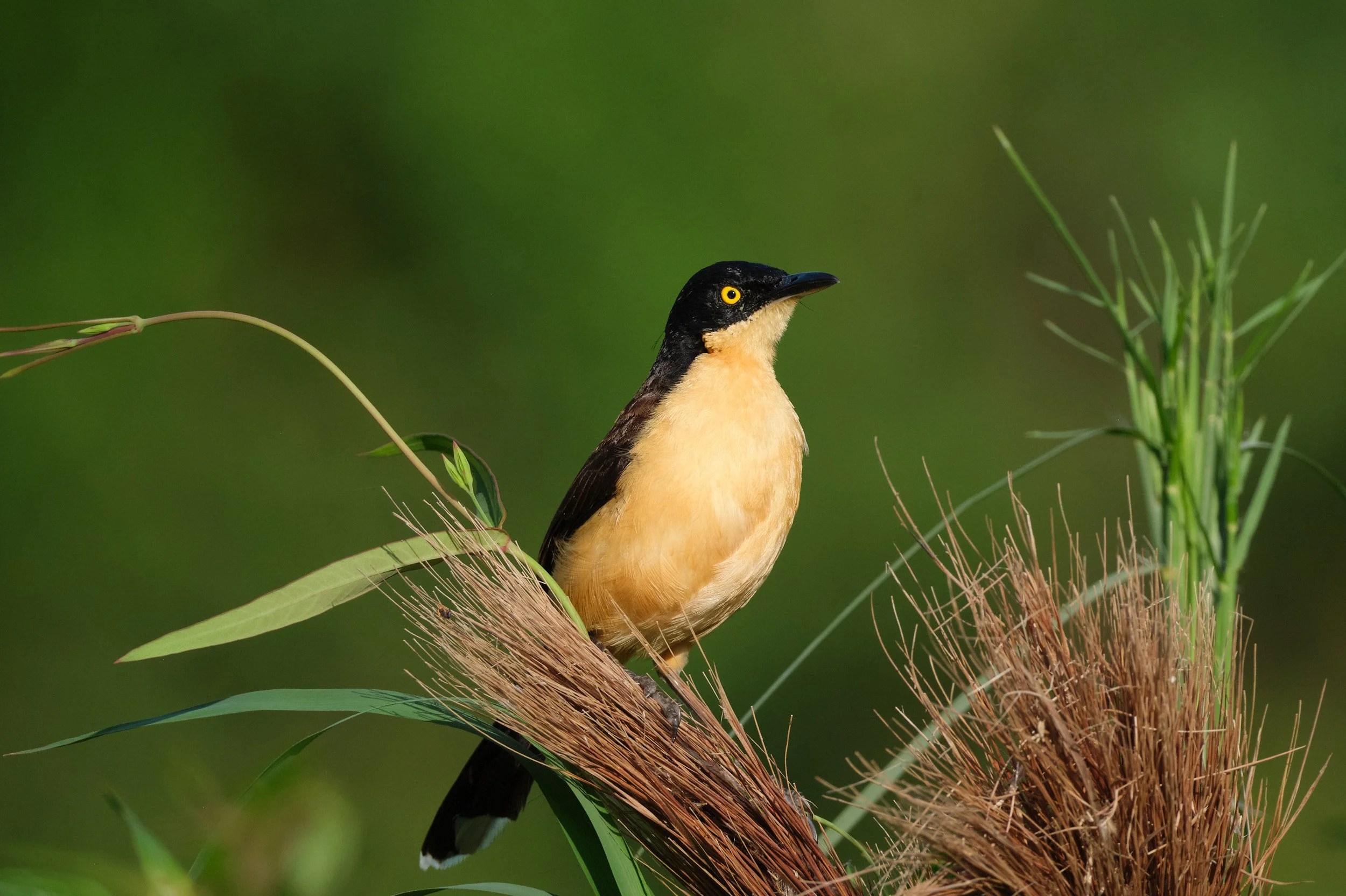
     Black-collared Hawk
    Black-collared Hawk

    And occasionally, there were true finds, such as the original WWII military dispatch riders’ Triumph motorcycles, still packed in oil and grease, in their original crates that we came across in an ad. These were going to get us to Ushuaia. We would unpack and de-grease the motorcycles, assemble them and then, Bob’s your uncle, we would simply spend 6 or 7 months, possibly years, it didn’t seem to matter, driving on the adventure of a lifetime. It also didn’t seem to matter that neither of us was even slightly mechanically inclined or that neither my basement apartment nor R’s flat were ideal sites to de-grease and assemble a working motorcycle.

    And as unrealistic as it was and perhaps because it was so unrealistic, it became very real and very important at the time. While we spent many long evenings planning and consuming quantities of wine and beer, not surprisingly reality always intruded, and the adventure never did happen. While we rarely spoke of it over the passing years, this was the dream that always sat in the back row of every idle discussion, that awareness of unfinished business.

    I don’t think either of us mentioned it 2 years ago when I asked Rob if he wanted to join me in driving the Careterra Austral southward through Chile to the end of that highway at Villa O’Higgins, but I’m sure we were both aware of it. It was the first time we had travelled together in 55+ years and I think that we both discovered that we enjoyed it and could make it work.

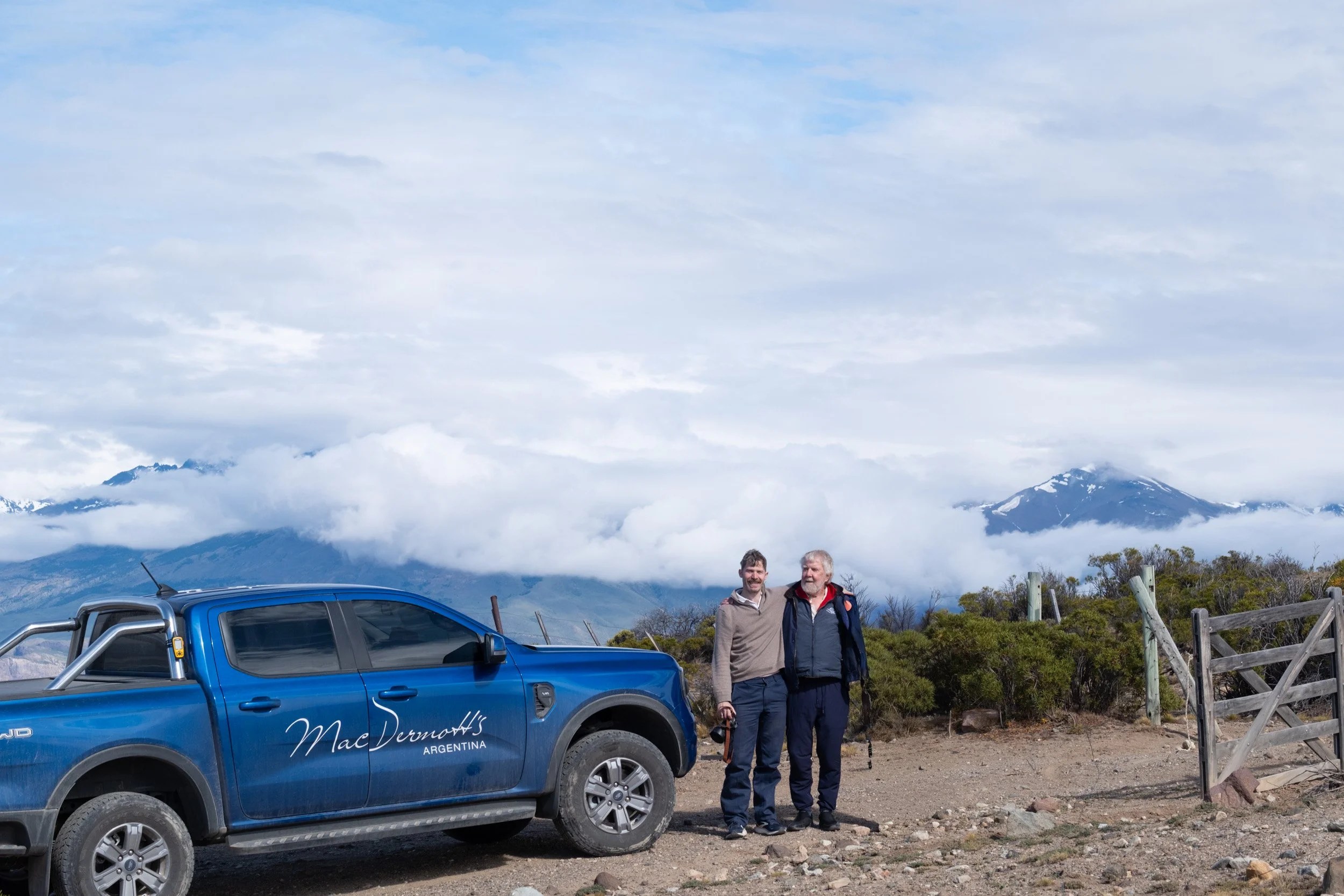
    In keeping with the unacknowledged links to our original plan, last year we planned to drive from the tip of South America to Buenos Aires but because of scheduling conflicts we had to switch the timing of the trip and the logistics of the route became too complicated. We ended up driving from Buenos Aires through Patagonia from the sea to the Andes.

    These two adventures met or at least came close to our definition of our classic road trip, a fixed destination and a minimal itinerary between the departure point and the finish. Simply to drive away and take each day as it came. And while we now require a degree of comfort and control of our itinerary that would have been anathema to our younger selves, the important thing was the trip itself. To switch metaphors, the idea of casting off and simply going where the wind took us. And while to an outside pair of eyes we may have seemed to be following a fairly structured routine, we could still hold to the shadow of an idea, wandering at will and meeting each new adventure with eyes seeing a world for the first time.
    Our most recent trip broke that mould. The difference? This was a trip with a purpose or purposes that went beyond the simple idea of letting kismet determine the next adventure. For Rob, who was fired with the idea of Paraguay as a shadow world with a tortuous history filtered through the imaginations of Graham Greene and John Gimlette, his purpose was to find traces of that lost world. A world that included an Australian utpioan experiment in the wilds of Paraguay.

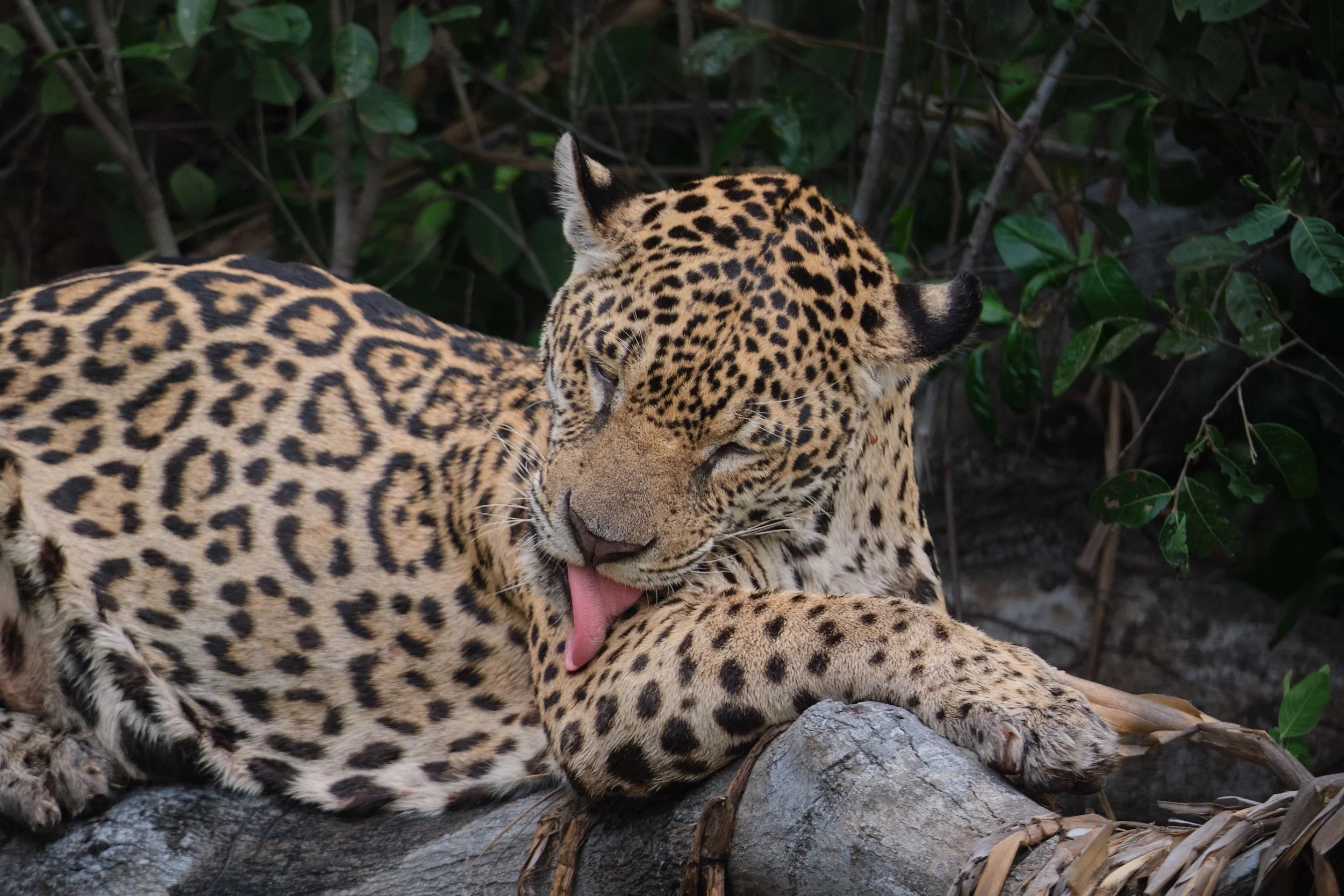
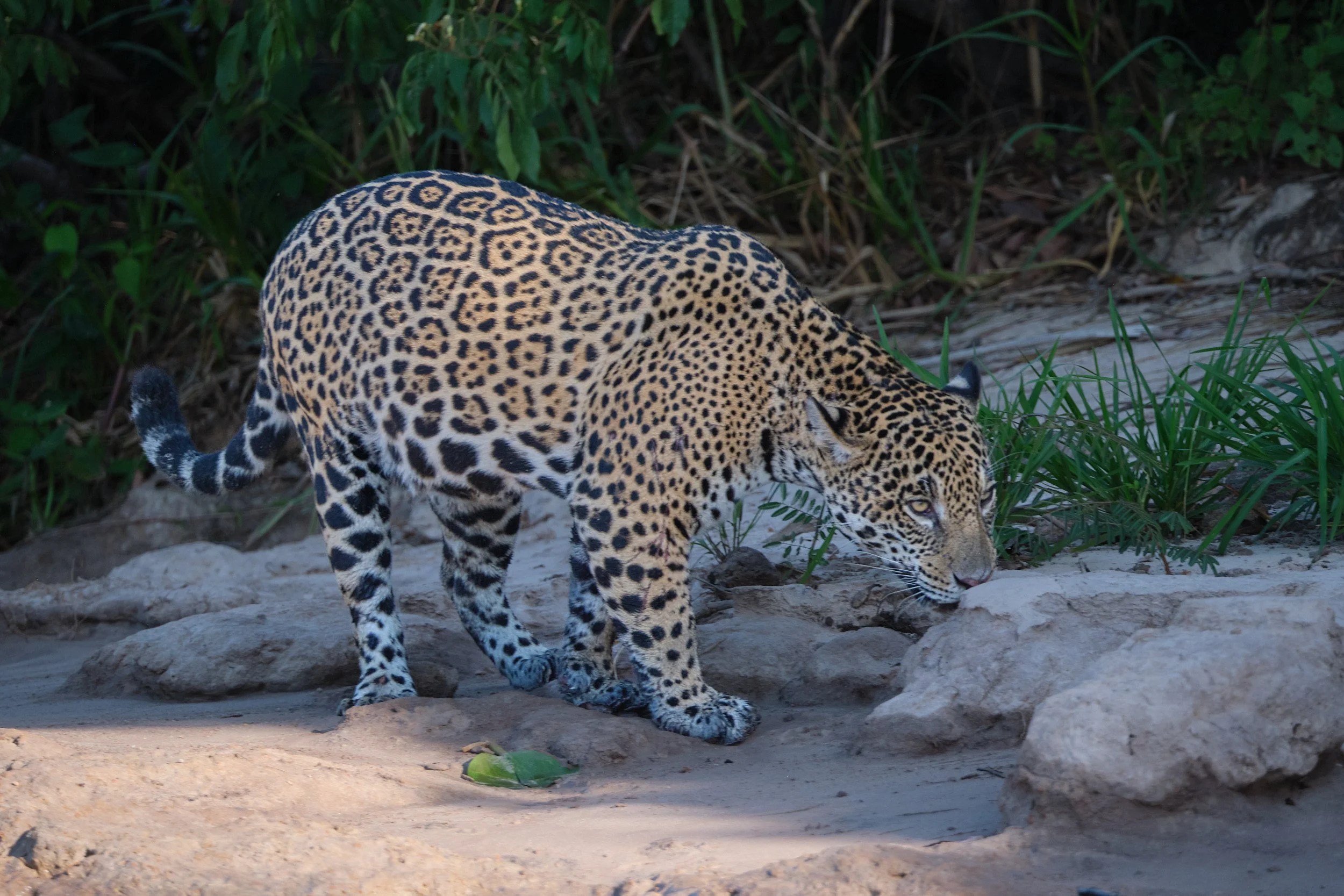
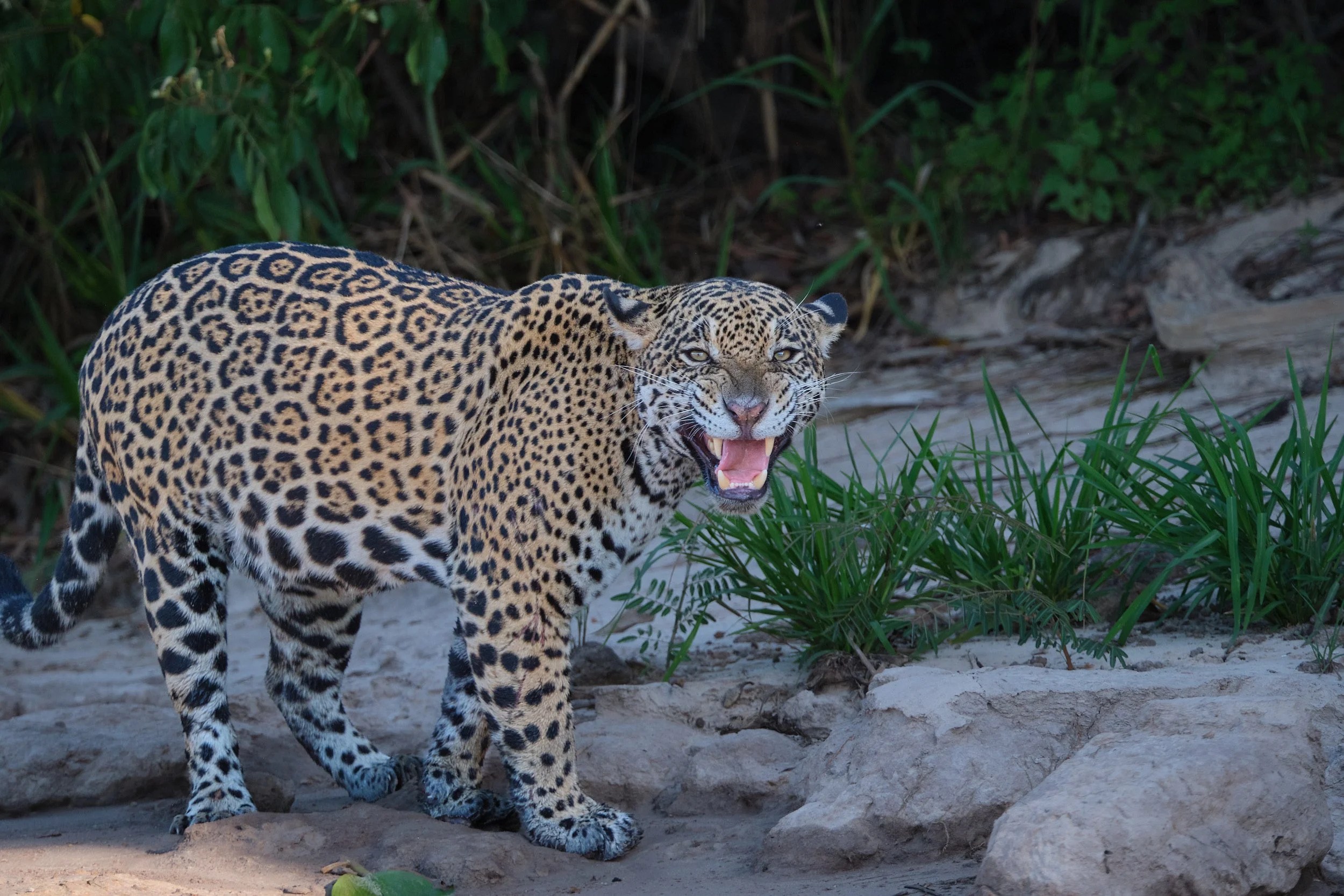
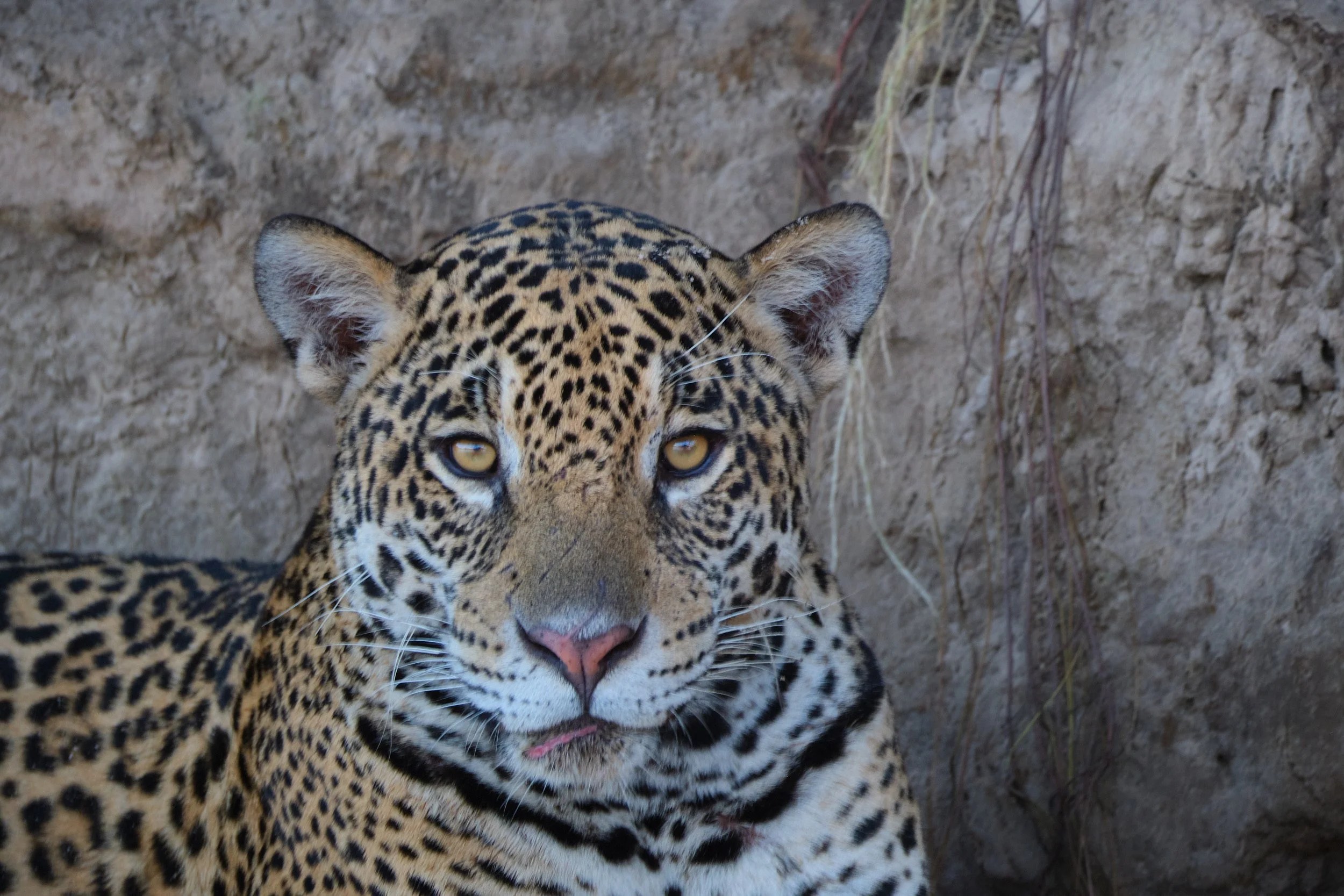
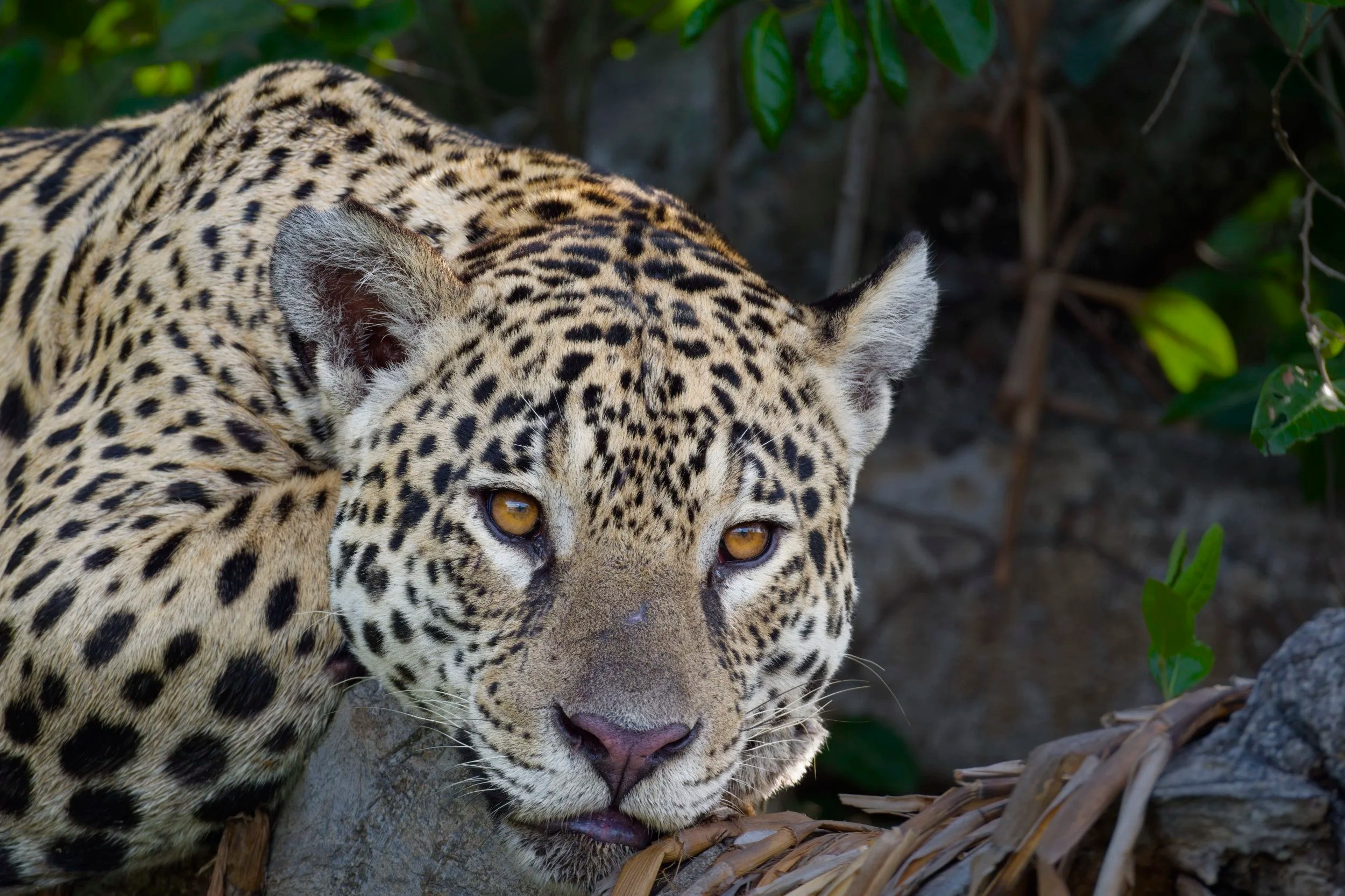
    For me, it was, as it usually is, about the possibility of seeing and photographing wildlife, in this case in Brazil, and most especially, jaguars. The fact that we stitched our goals together with a cord of roads, 5,00km long we thought made for a road trip but it wasn’t….just a very long drive.

    How did that shape the trip?

    Rob was intent on ‘his’ portion of the trip, Paraguay and I on ‘mine’, Brazil. I don’t think either of us considered the trip as a whole as much as we should have so neither of us fully appreciated the fact that in order to get to Asuncion in Paraguay and on to Brazil we first needed to drive through the whole of Uruguay from south to north, through a portion of Argentina and halfway up Paraguay! And because it was a long drive and not a road trip, we hadn’t made time, for instance, to drive to and visit Montevideo while we were in Uruguay; the plan had become, get to Paraguay as quickly as possible.

    Neither did we think to ask the obvious question, why don’t we just fly to Asuncion in Paraguay and start the trip there? Had we done that we would have been able to enjoy the other critical characteristic of a good road trip, turning off the beaten path when something looks interesting and follow your nose. We simply had too many kilometres to cover to allow for that.

    Added to this was the fact that on our previous two trips I had taken a very laissez faire approach to wildlife and took photographs as and when I came across the opportunity, it was not hard-wired into the itinerary in such a significant way. I know that leading up to the trip I spent more time thinking about that than on the trip as a whole, to our cost.

    I also know that we both spent the months leading up to the trip researching and preparing for our individual trip sectors so I overthought the equipment that I needed for my photography, and right up the moments before leaving for the airport I was switching lenses and other equipment. In Rob’s case on top of everything else, he was busy selling his home and moving to a new location.
    Finally our response to the trip was was not helped by our guide in Brazil who shredded what was otherwise a very worthwhile experience. He was brash, short-tempered, autocratic and insensitive, quite the worst guiding experience that Rob or I have ever had. He was a control and command guy, possibly useful when guiding a group when that task becomes more like herding cats but he had no client relationship skills in a one-on-one situation, as ours was. No collaboration or consultation, no discussions between ourselves and the guide about options and choices. Questions were treated as intrusions and were responded to as personal affronts. We simply spent 13 hours a day in the very hot sun, in a small boat being hauled like baggage from place to place. Our guide was technically competent, knew the animals and birds and thanks to the radios that the guides all use to notify each other of animal activity, we did have some wonderful sightings but his people skills were woefully lacking and that did leave a very bad taste. I’m not posting his name or his company but if anyone is planning a trip to Brazil for wildlife please write to me and I’ll be happy to share.

    My learnings from this adventure, none of them new but all worth repeating:

    – Focusing on one particular aspect or period of a trip to the exclusion of the trip as a whole, comes at a cost

    – Overthinking and underplanning, comes at a cost.

    – Your guide can make or break the trip

    After that long and rambling semi-rant, I do need to acknowledge that I’m pleased with some remarkable photographs and Rob did get to lift a little bit of the Paraguayan veil, even if we did not find any of its darker or more mysterious corners.

    Next steps?

    The final element in the equation is our age and health and how capable we are of continuing along this path. So a pretty significant question, do we have another trip left in us and are there new roads for us to travel?

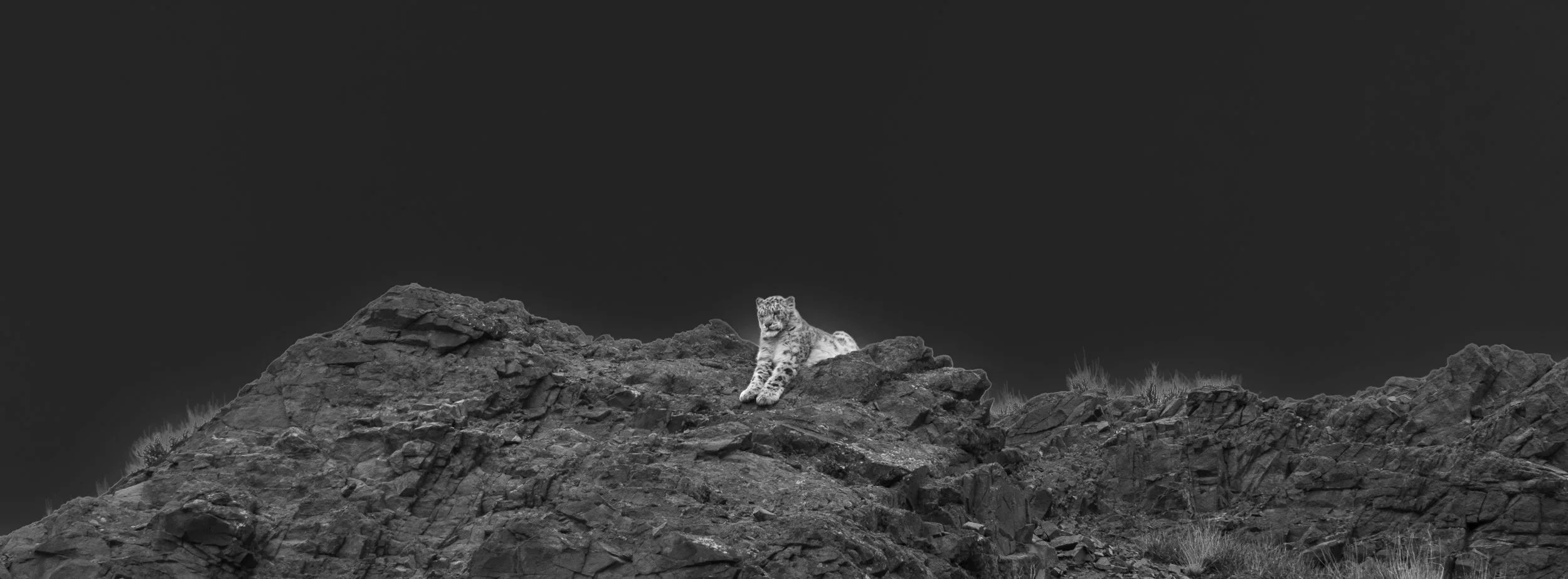
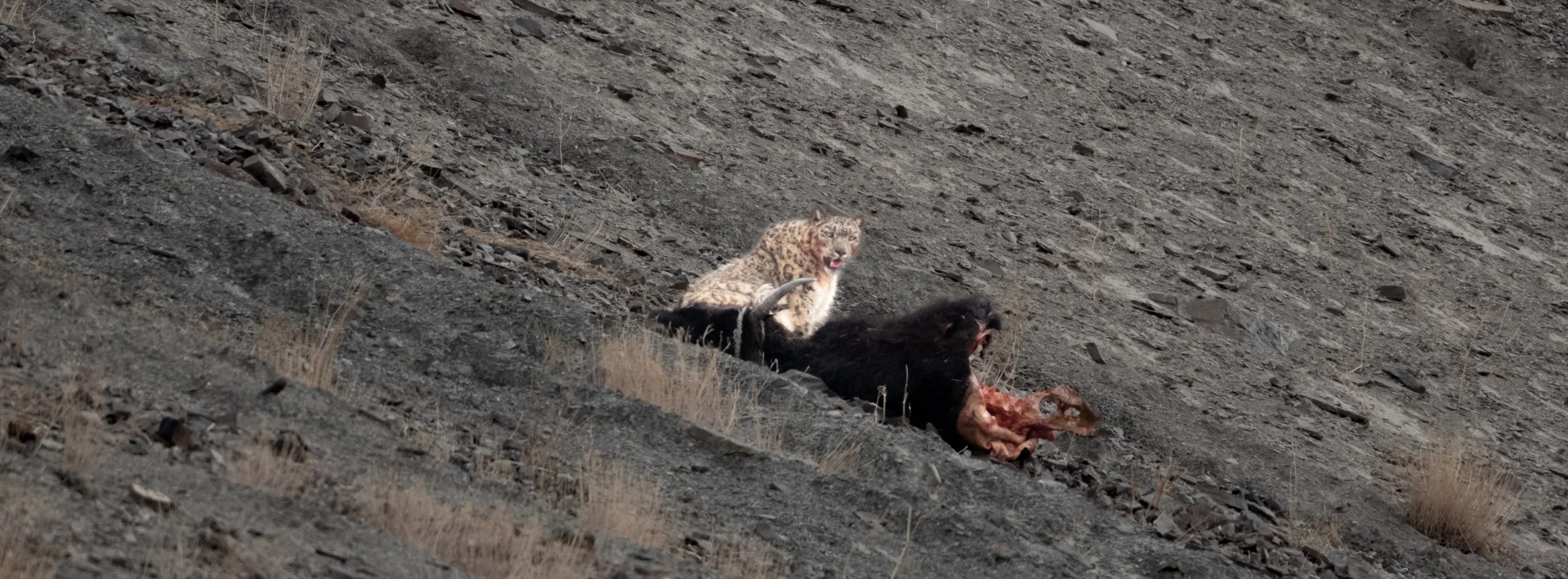
    PS Following on from my snow leopard experience in India earlier this year and a couple of jaguar experiences on this trip I have been giving a lot of thought to what I do, wildlife photography and the places and conditions that allow us to practice this activity. I’m trying to get my thoughts in order and when I’m more confident in my conclusions I’m planning at least one article on rewilding and ecotourism, how ethical and sustainable they really are and some of the problems that they bring in their wake including the role of photographers like me. A very very complicated topic!

    Stay tuned!
  • São Paulo – November 11, 2025
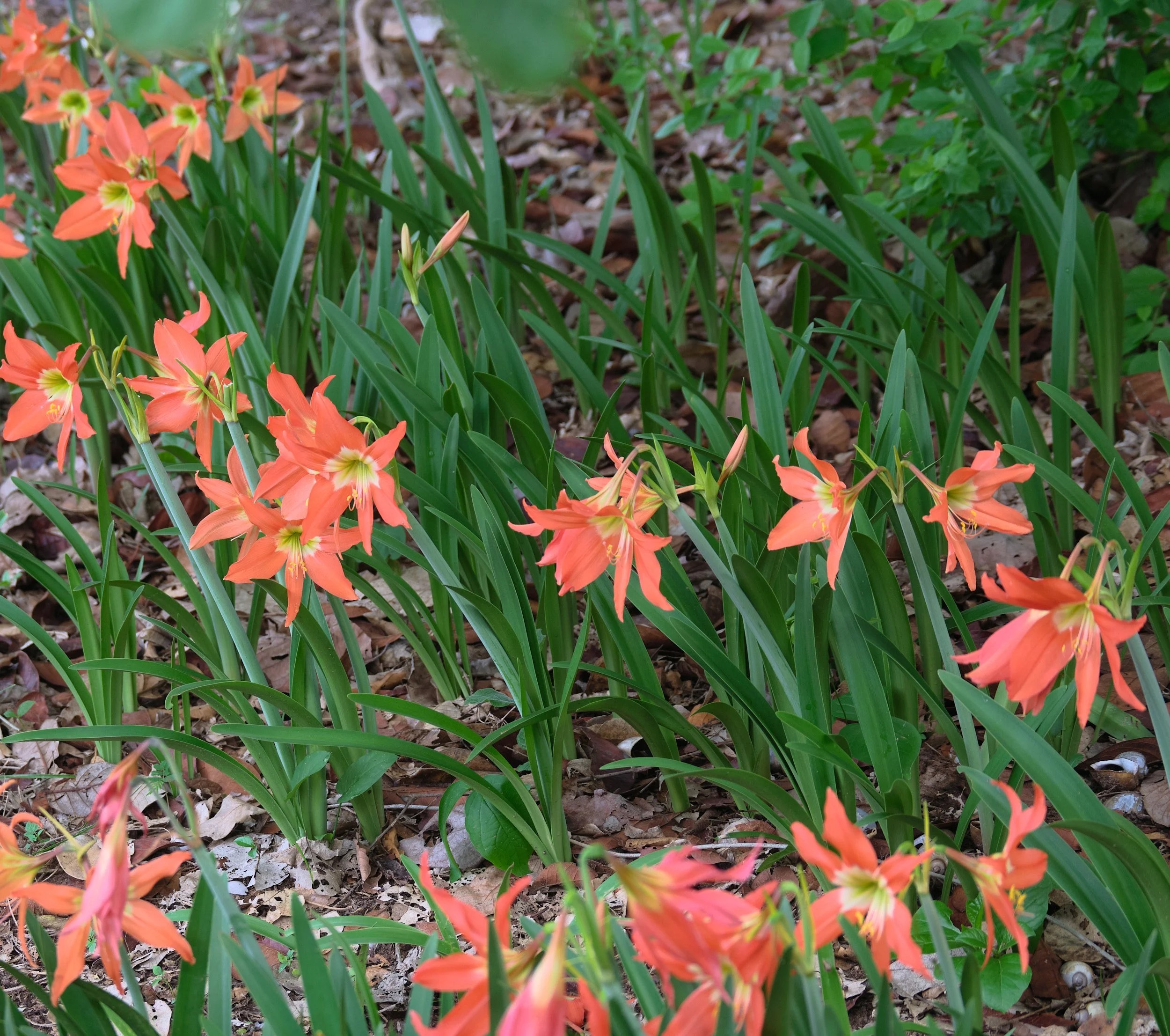
     Wild Amaryllis, the progenitor of all our domestic varieties
    Wild Amaryllis, the progenitor of all our domestic varieties

    Arrived in São Paulo yesterday afternoon after driving and flying from our last camp in the Pantanal. Rob and I had a quiet drink and dinner at the Marriott near the airport last night and then we said our goodbyes after a pretty intense 3 weeks of travel. This is the third trip of its kind in the last three years and it remains to be seen if we have the capacity for another similar adventure. Lots of time to figure that out in the months ahead.

    Rob had an early flight this morning on his odyssey back to Australia while my flight home is not until this evening, so a day to regroup. Off to bed last night with the knowledge that for the first time in 3 weeks I didn’t have to set my alarm but arose with the sun anyway, hard habit to break. 

    It feels wonderful to have the whole day on my own and free of commitments except for my evening flight. This is in no sense a reflection on Rob or our guides but we have all been living in each other’s pockets 17 hours a day for 3 weeks and it’s wonderful to have the solitude, time and space to relax and reflect. 

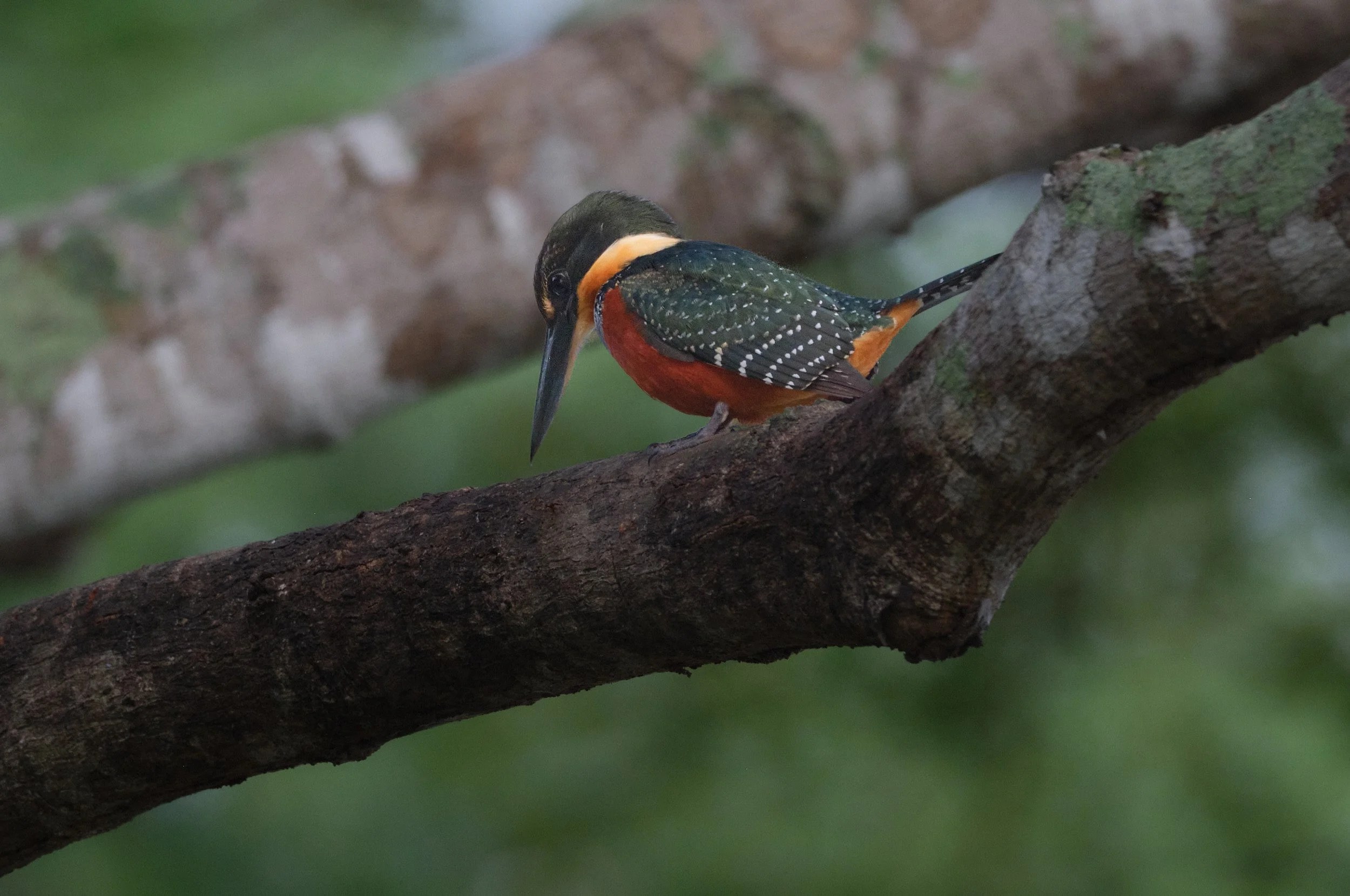
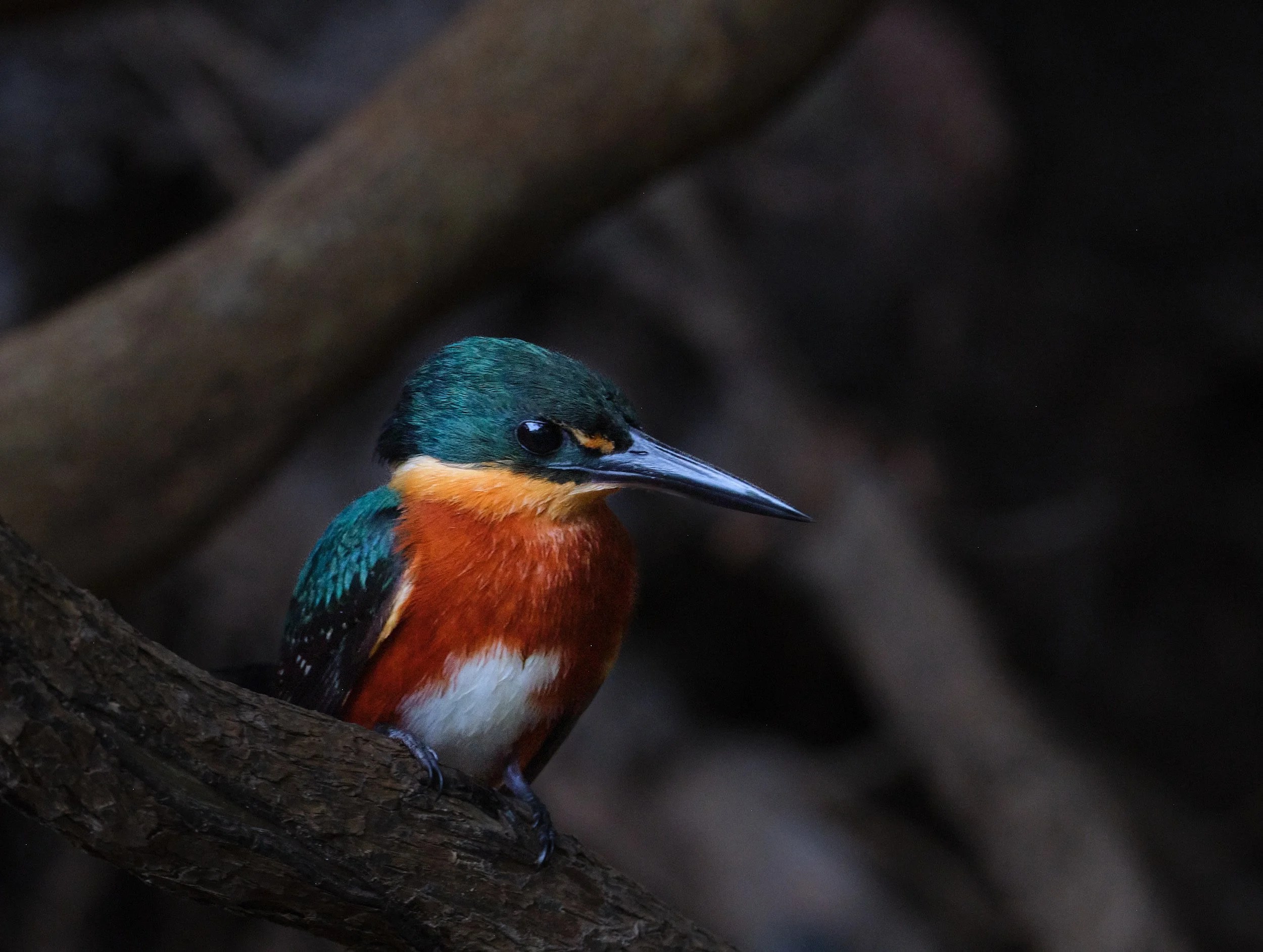
    I have not been entirely idle however. I have continued to dig through my photos and have posted a variety of shots of birds, jaguars and animals. Included in the group are a number of photos of Kingfishers, one of my favourite birds. They represent a first for me, I managed to photograph examples of all of the species native to the region. The first four took a bit of work but were manageable; the fifth species I was told would be a gift of luck since it is very small and rarely observed. While watching for a jaguar along a narrow channel where we were told she had been seen, our guide shouted to me and on a branch in a very dark patch in the trees about 3 metres away and at eye height sat a tiny, beautiful, gem-like bird, the American Pygmy-kingfisher. He was very patient with me as I struggled to adjust my camera settings and find focus and posed proudly when all was ready. I was and am thrilled!

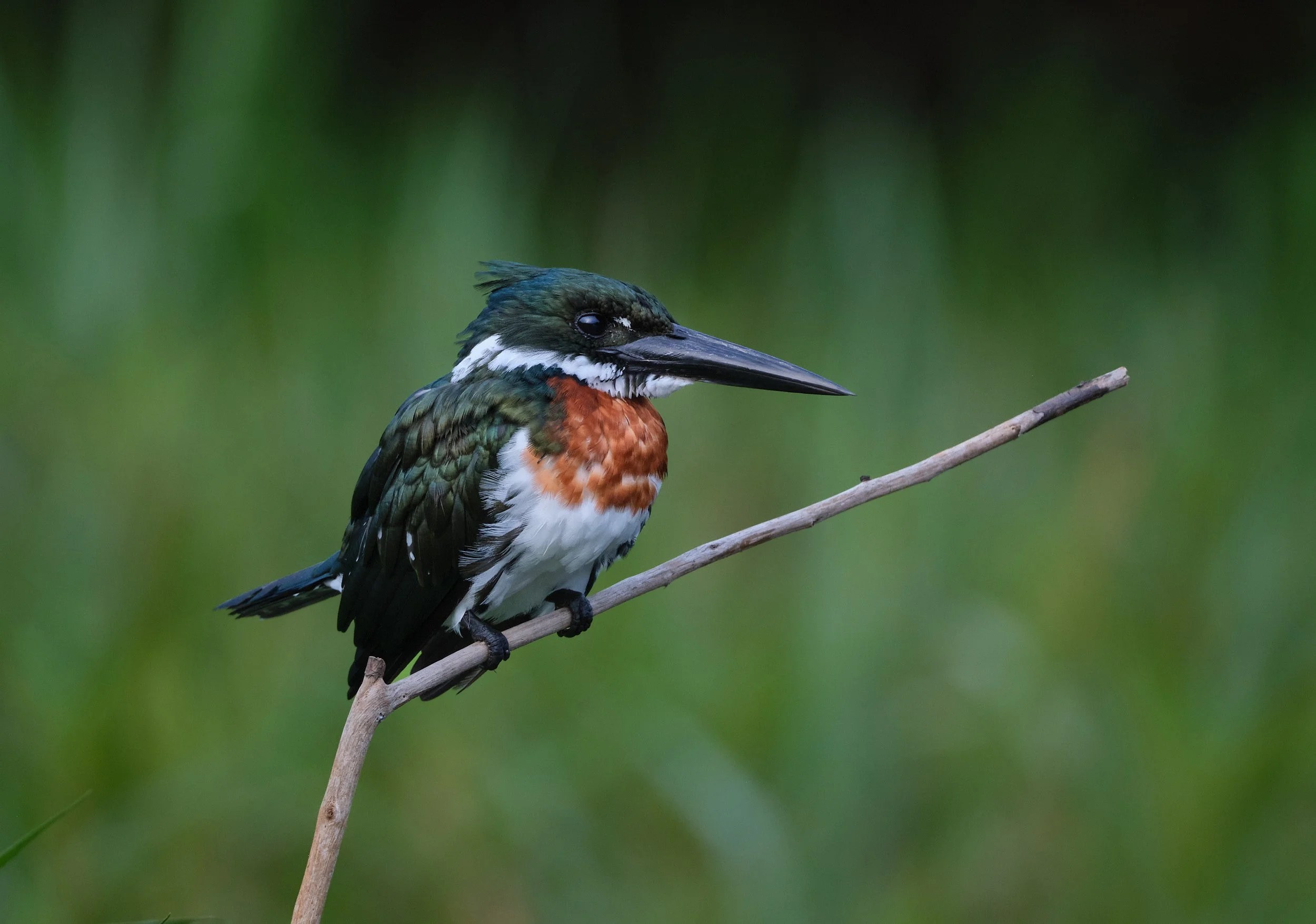
     Amazon Kingfisher
    Amazon Kingfisher
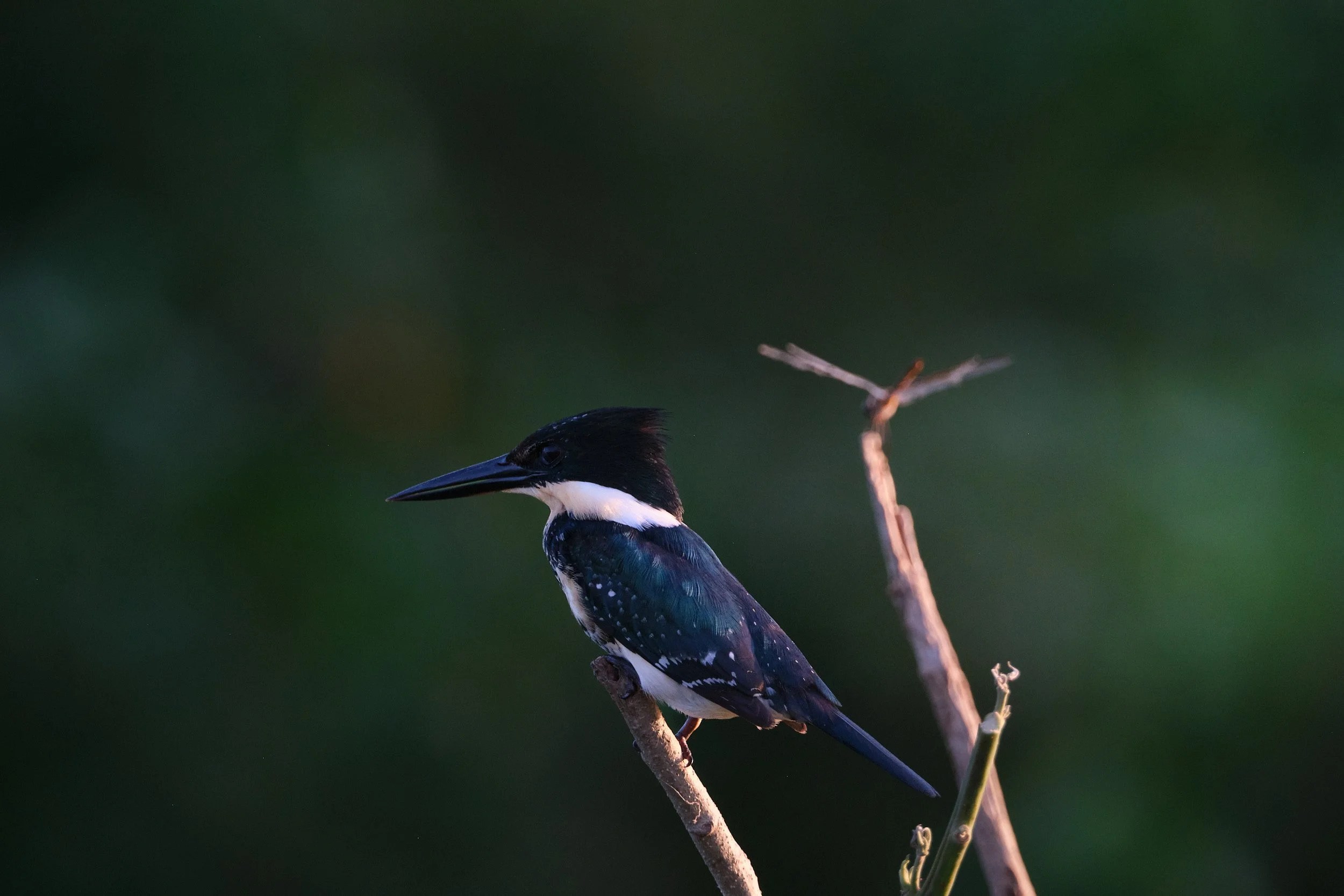
     Green Kingfisher
    Green Kingfisher
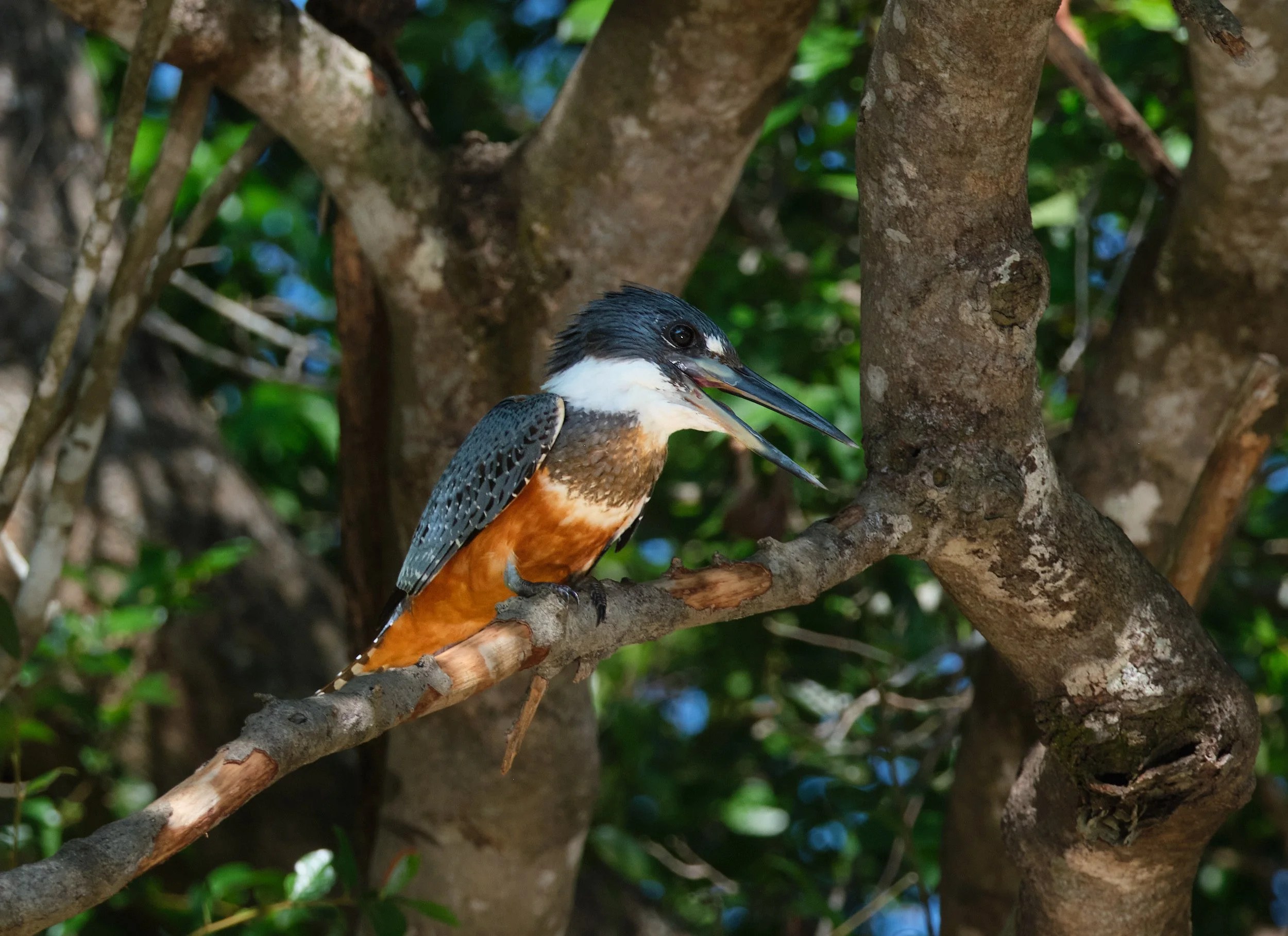
     Ringed Kingfisher
    Ringed Kingfisher
     Green-and-rufous Kingfisher
    Green-and-rufous Kingfisher
     American Pygmy-kingfisher
    American Pygmy-kingfisher
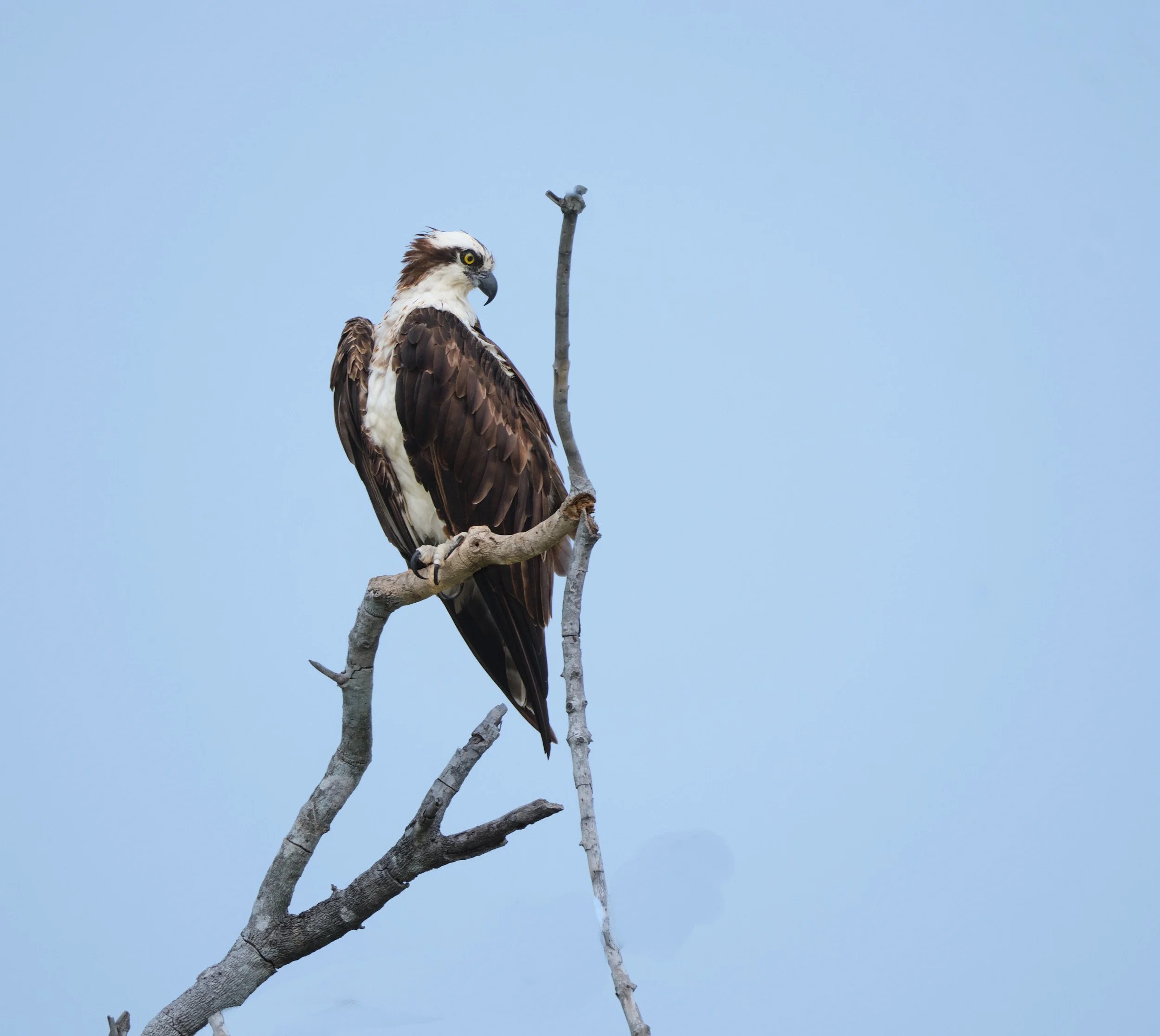
     Osprey. There are no native fish hawks or eagles in the region. The Osprey is an annual migrant
    Osprey. There are no native fish hawks or eagles in the region. The Osprey is an annual migrant
     Cocoi Heron
    Cocoi Heron
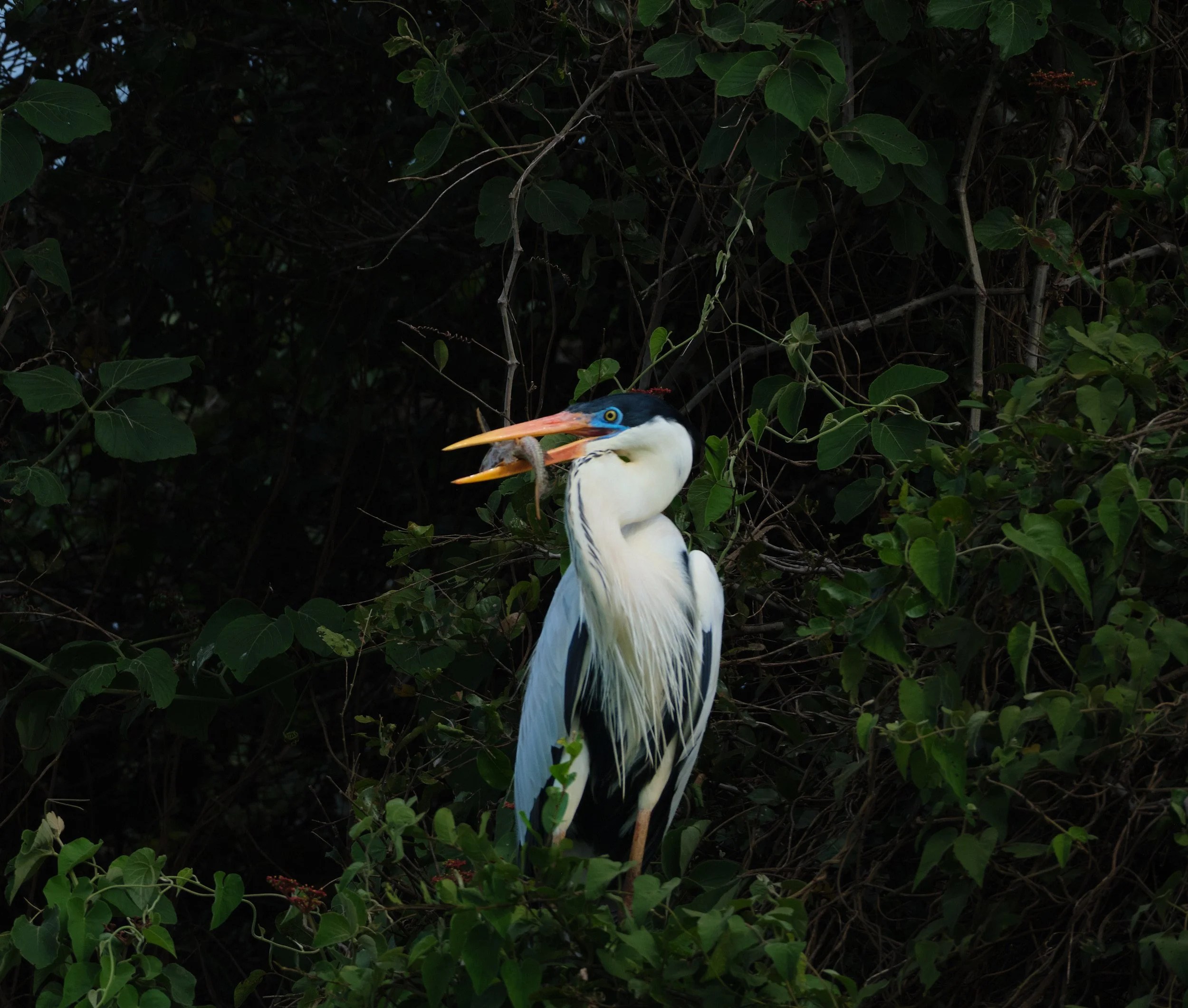
     Cocoi Heron with a fish
    Cocoi Heron with a fish
     Common Tody-flycatcher. Nothing particularly special about him but I love his name and he is stunning.
    Common Tody-flycatcher. Nothing particularly special about him but I love his name and he is stunning.

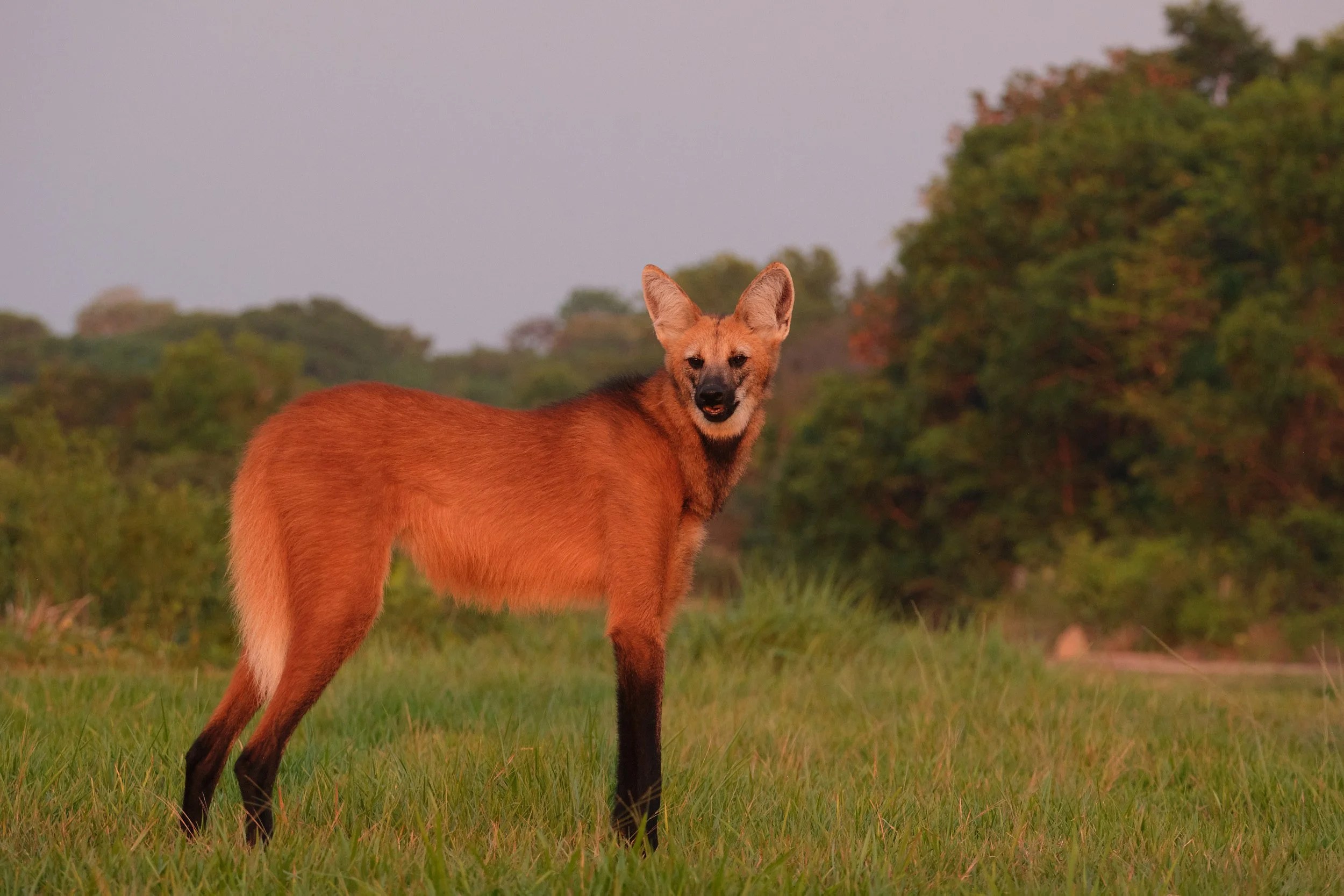
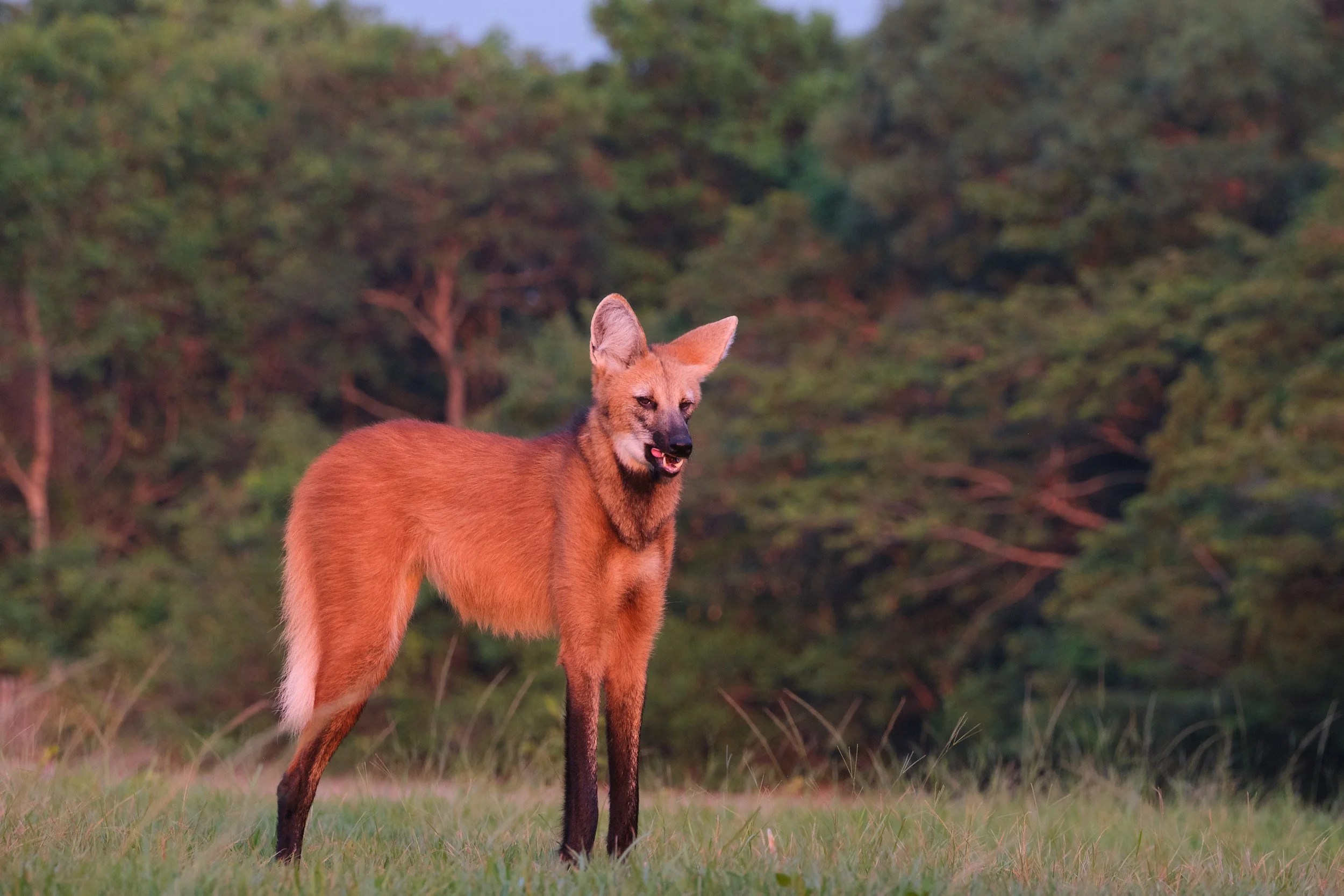
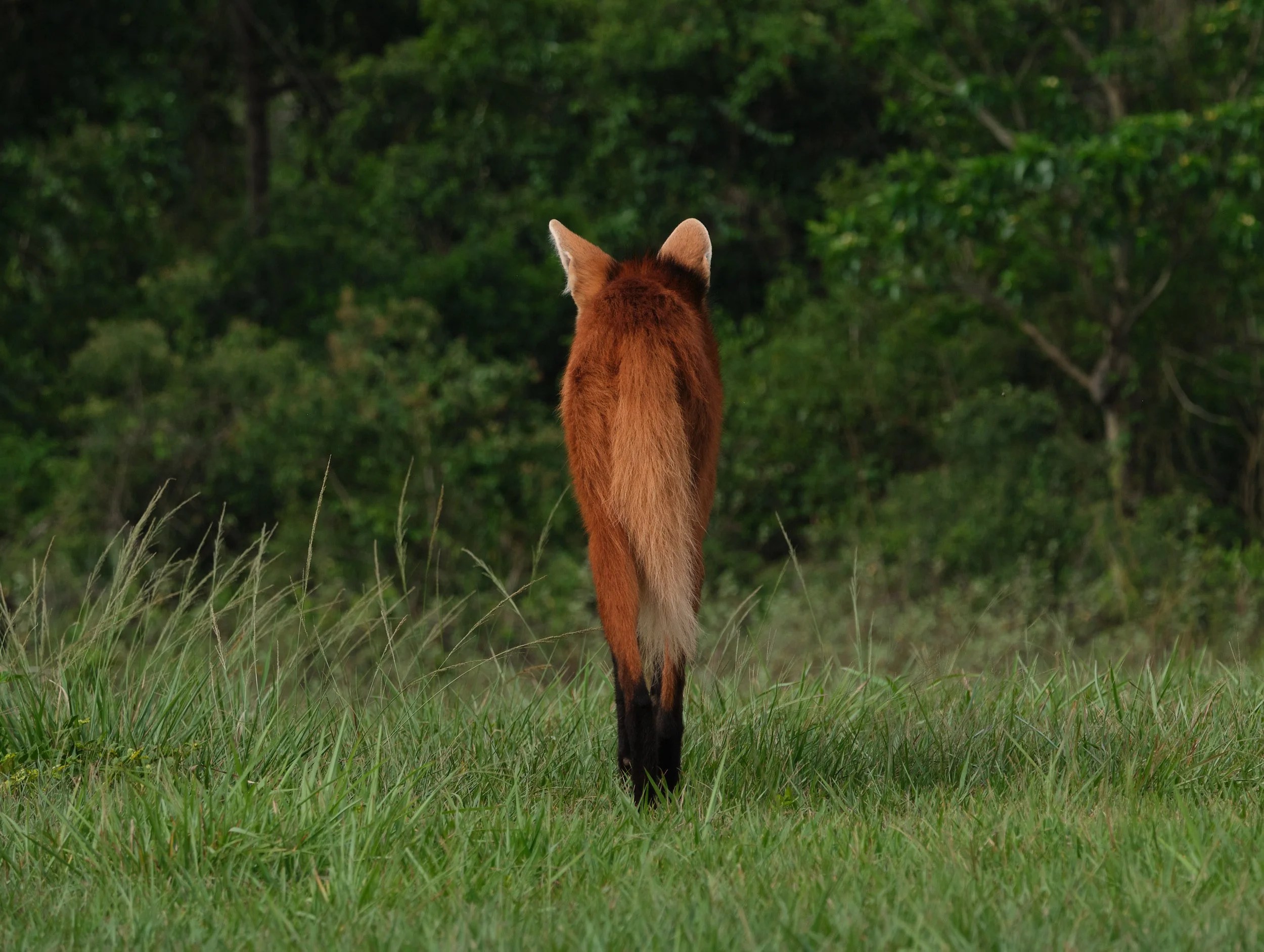
    Maned Wolf in sunset light. A very rare sighting. It is neither a true wolf nor fox, It is the only species in the genus Chrysocyon (meaning “golden dog” in Ancient Greek). It does give the impression of being a long-legged red fox with a German Shepard’s head.
     Maned Wolf
    Maned Wolf

    More to come!
  • The Pantanal – November 9, 2025
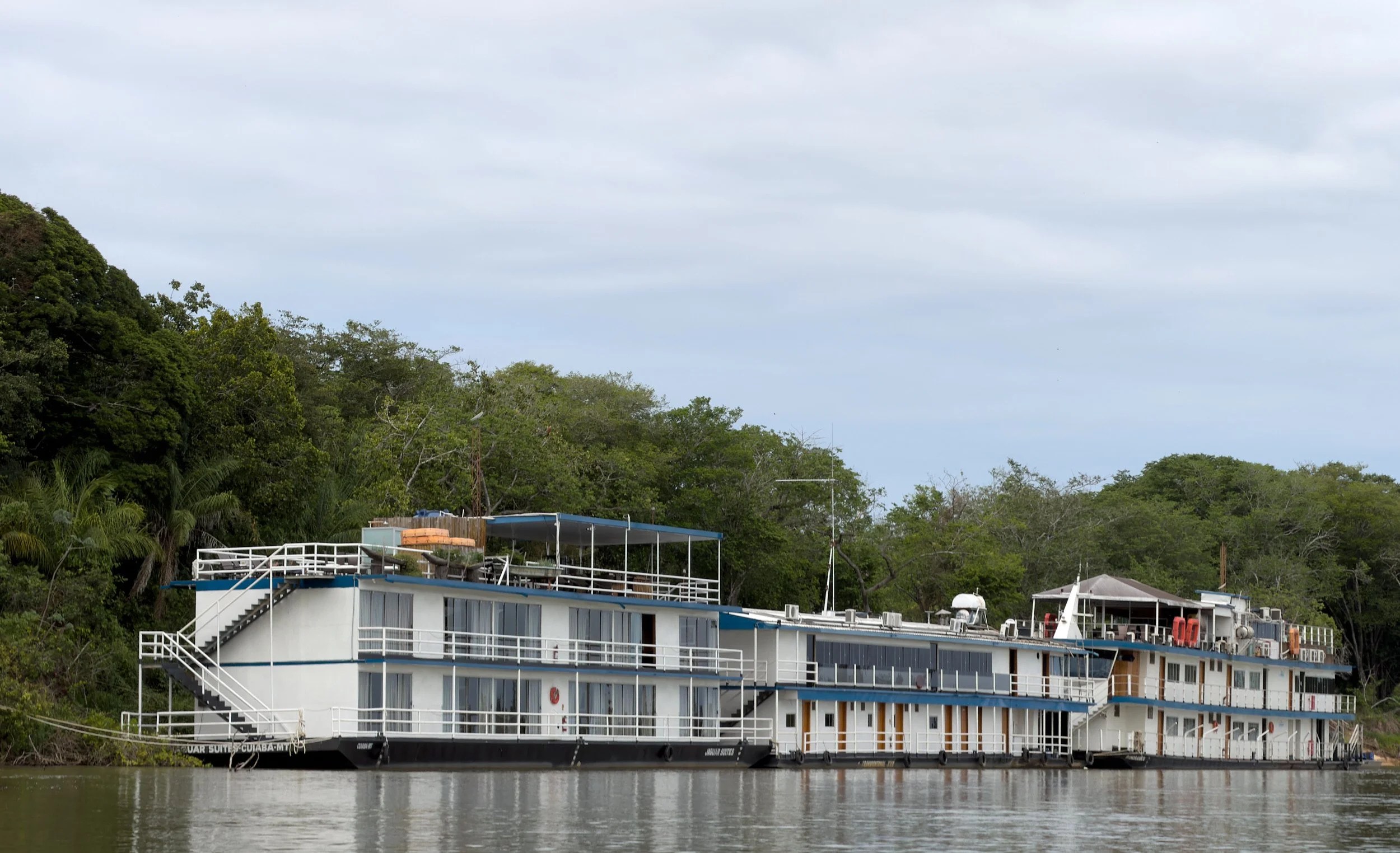
     Our floating hotel, in the heart of jaguar country.
    Our floating hotel, in the heart of jaguar country.

    Today is a day for jaguars.

    We have been in the Pantanal since Monday and the last 5 days have not left much time for reviewing images nor for posting. Our days have started with an alarm set for 4:00, with a quick breakfast at 4:45 and off in the boat at 5:15 sunrise.

    There are 5 of us in a 5 metre long boat, self and Rob, our two guides and the boat driver. We stop in for a quick lunch at our floating hotel at 11:30 and are off again at 12:00 and stay out until sunset at around 18:00, so 12+ hours in the boat. Temperatures coolish in the morning and the late afternoon but 35-37C from about 7:00 until about 18:00.

    Dinner at 19:00 and in bed by 21:00, not much time for image review.

    And time is definitely needed. I mentioned last year, when we were in Patagonia, that my hands have been developing an age-related shake which makes fine motor control increasingly more difficult when trying to keep the camera steady. The Pantanal shooting environment has raised the camera-steadiness stakes considerably.

    I’m using a 150-600mm super telephoto which is more than 33cm long and camera and lens weigh 2.5kg, so keeping it steady in ideal conditions is a challenge but in a small boat in a river with a swift current and many waves it becomes a herculean task. My solution is to ‘spray and pray’, That is try and grab focus on the subject and set the shutter to ‘burst-mode’. Normally when you press the shutter the camera takes one image, in burst-mode it takes 7 images a second. Before sitting down to review my images I had no idea how well my shots would work, there were lots of great shooting opportunities but I did not know how well I had managed to capture what I was trying to capture. And at 7 frames a second I had over 9000 images to review,.

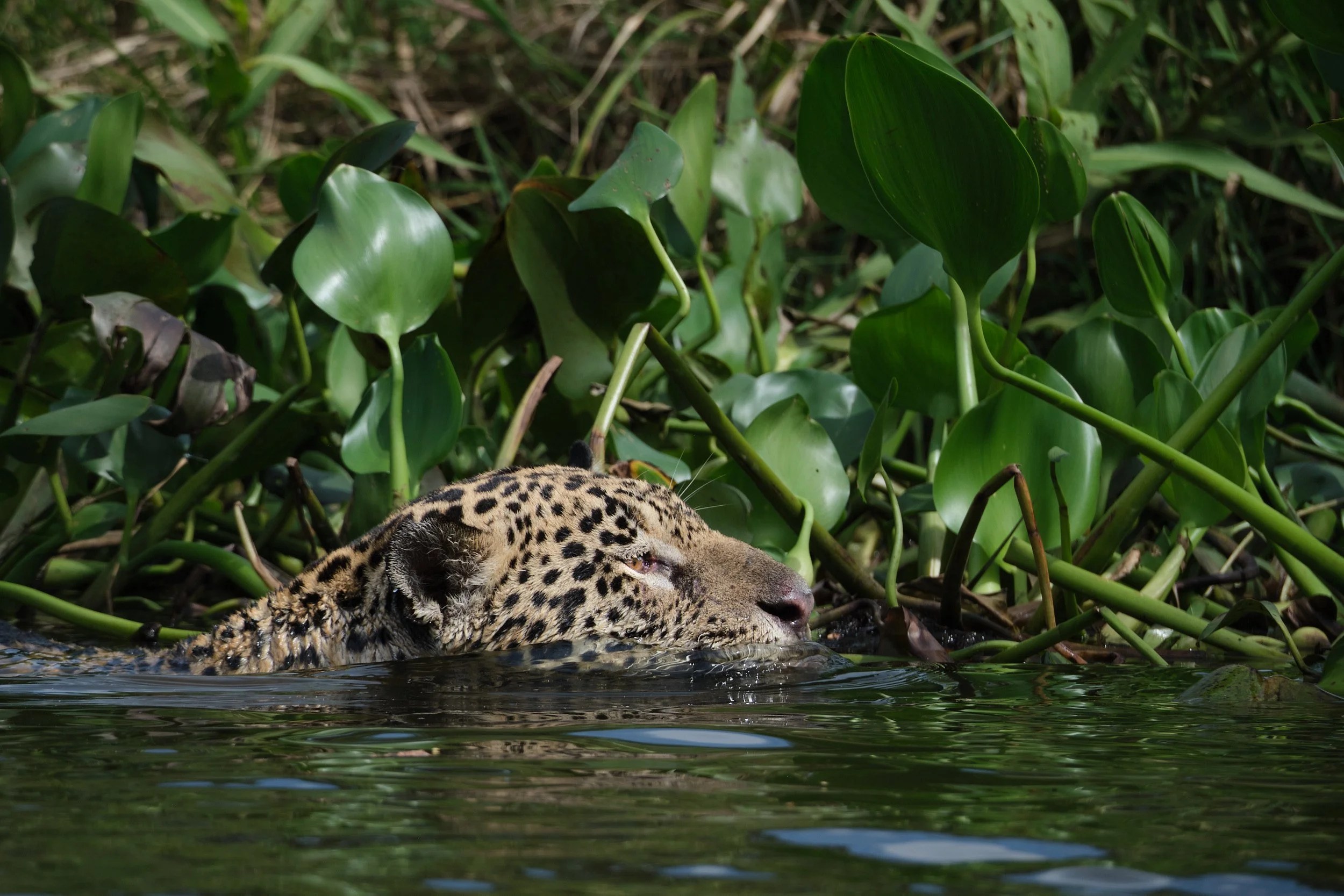
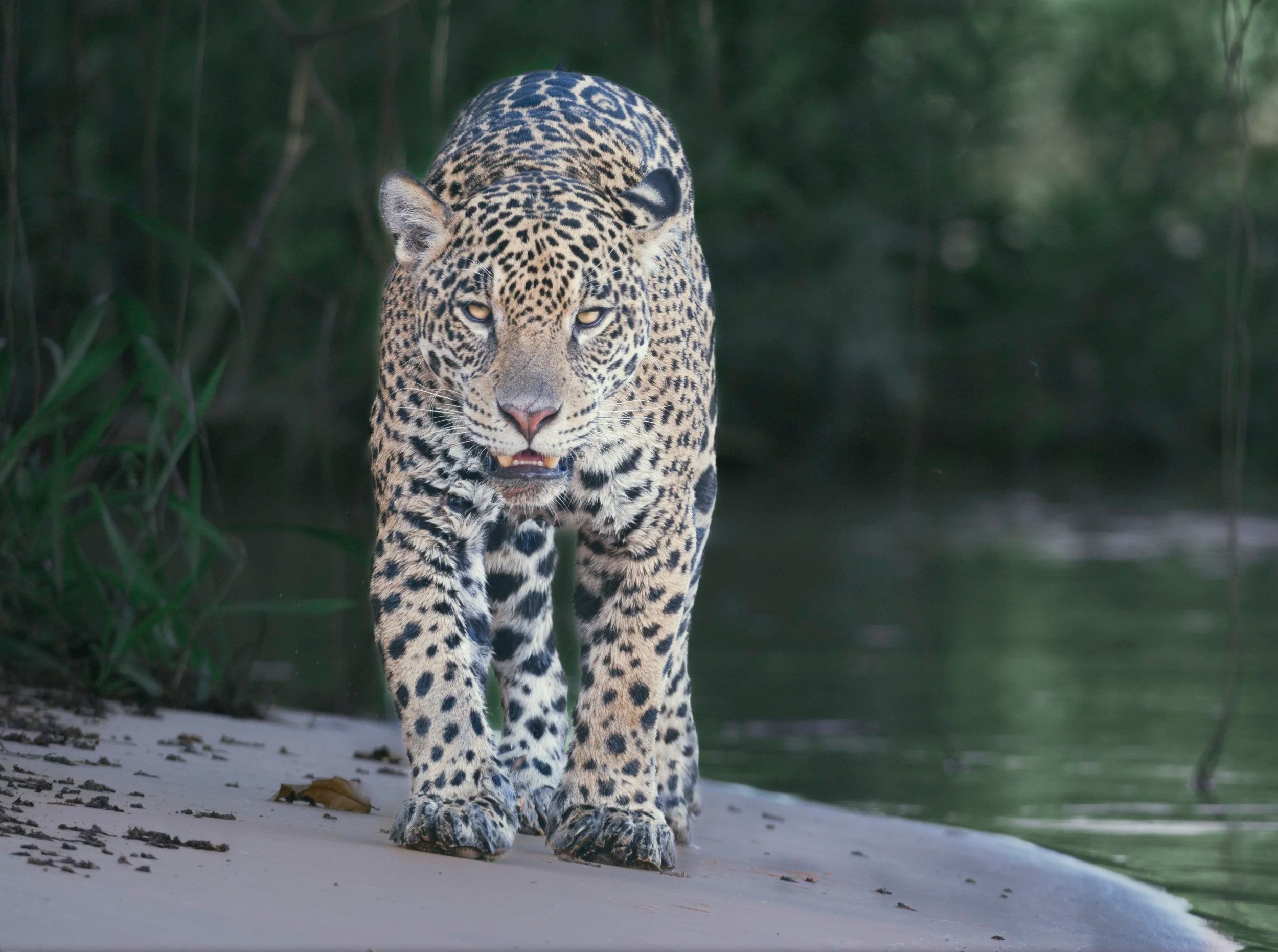
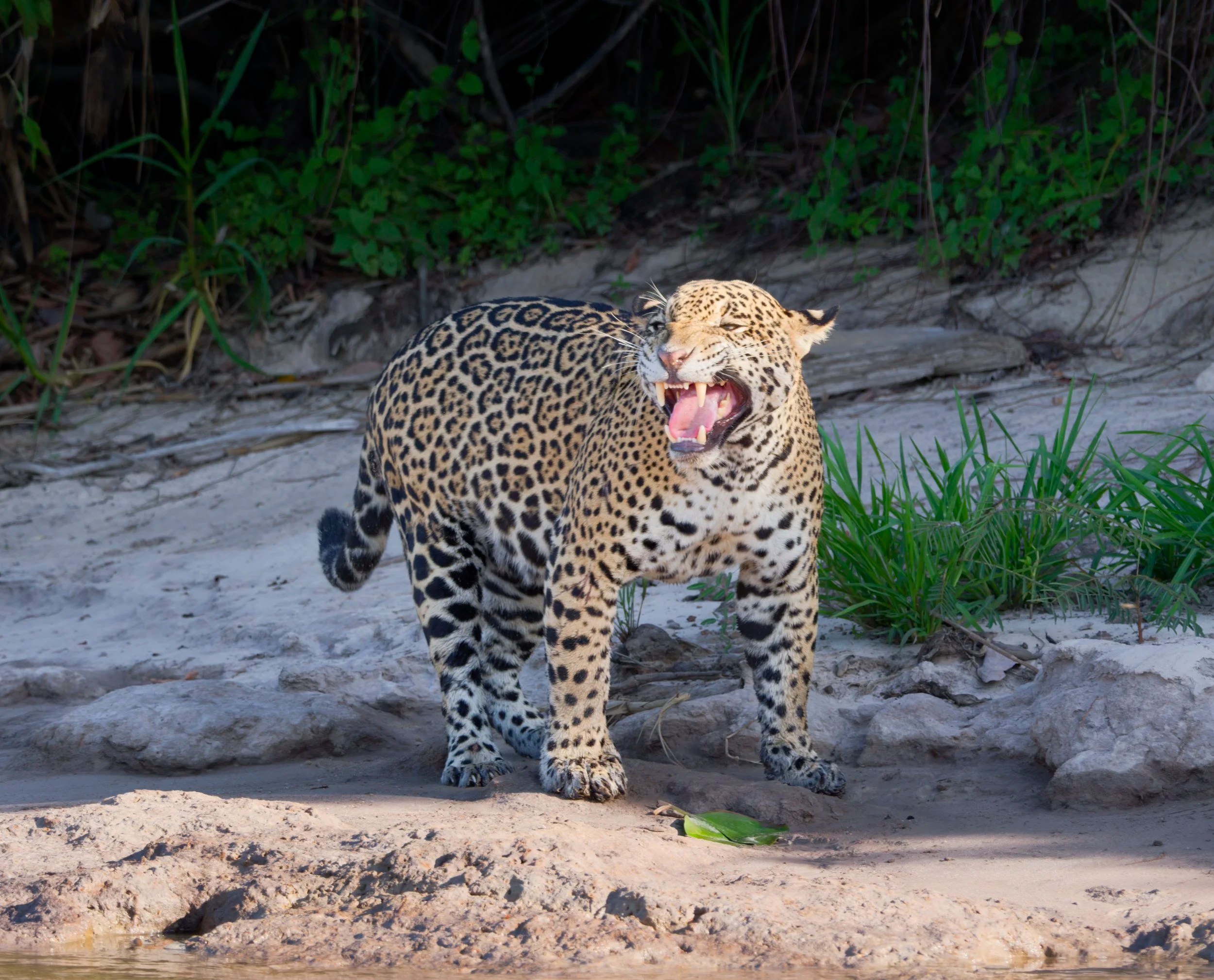
    Over the course of 5 days we have had 21 encounters with jaguars and with 8 different individuals, an embarrassment of riches! Yesterday, our first free-ish day, I spent about 5 hours scrolling through images looking for keepers. The ratio of good ones to discards or duplicates is very small but hardly surprising. If I can make 5-10 good shots over the course of a trip I’m more than pleased. The first batch follows below; by no means great shots but they a give a good sense of the animals and their habitat.

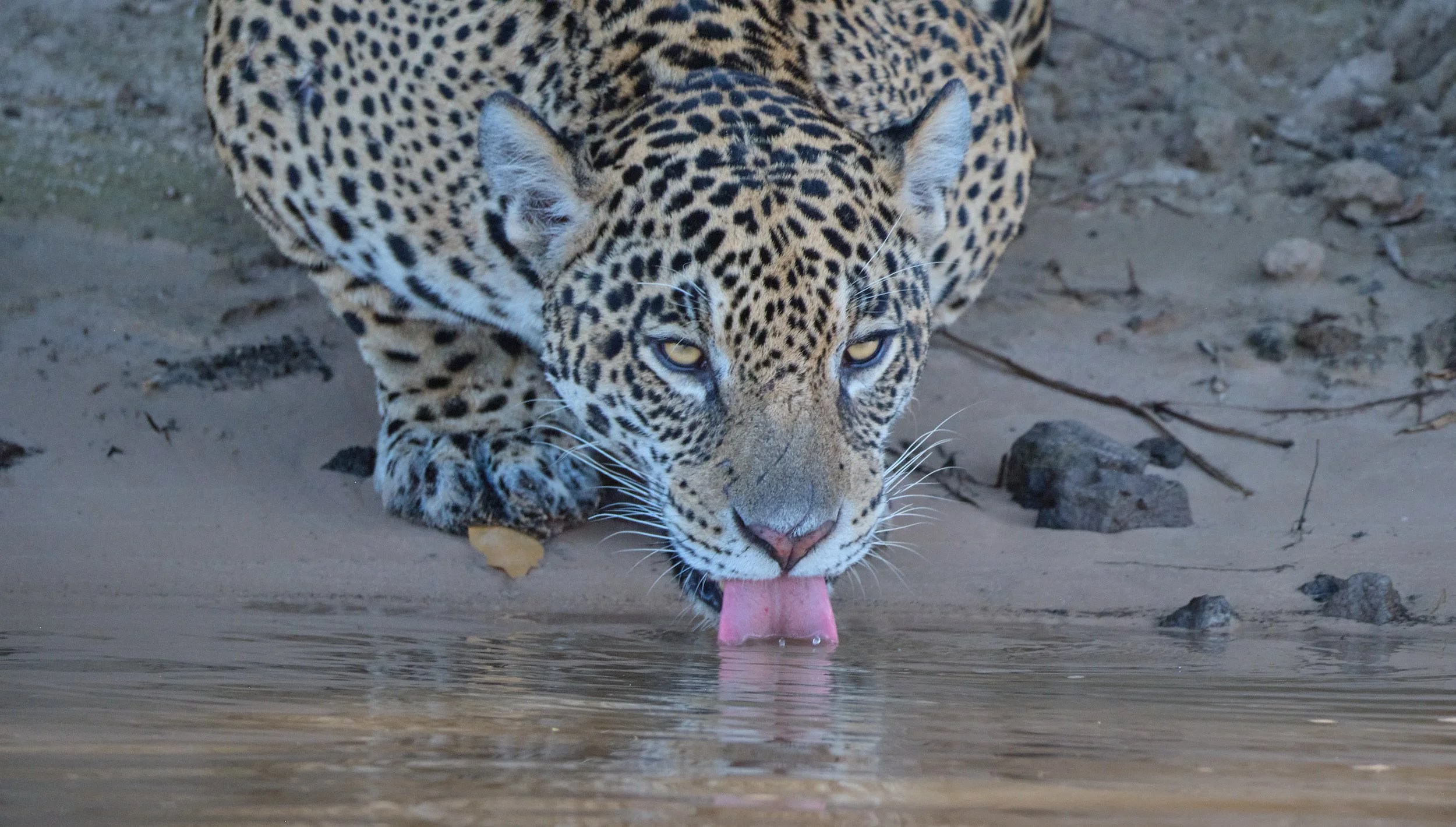
     Young female jaguar
    Young female jaguar
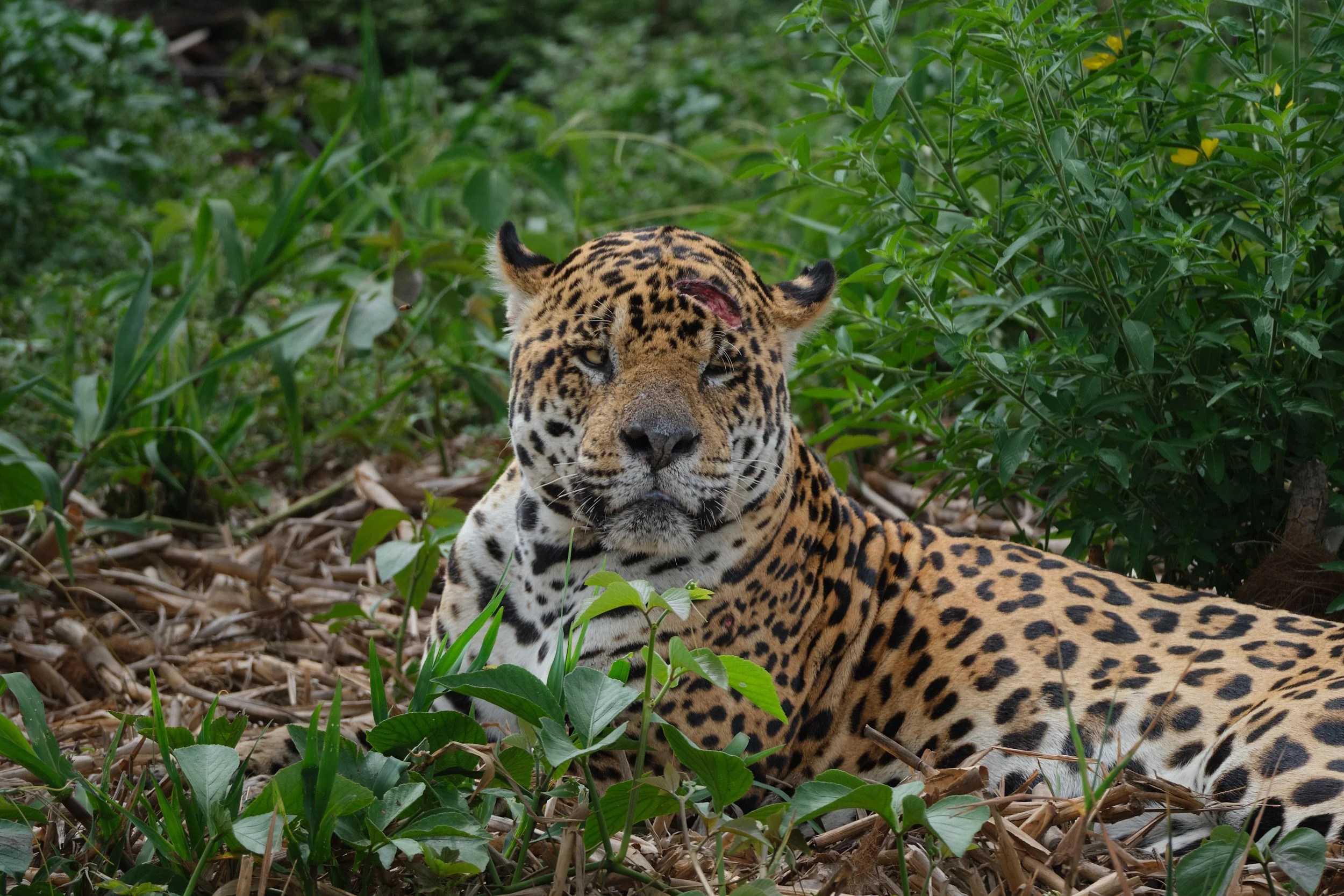
     Older male displaying the effects of a territorial dispute.
    Older male displaying the effects of a territorial dispute.
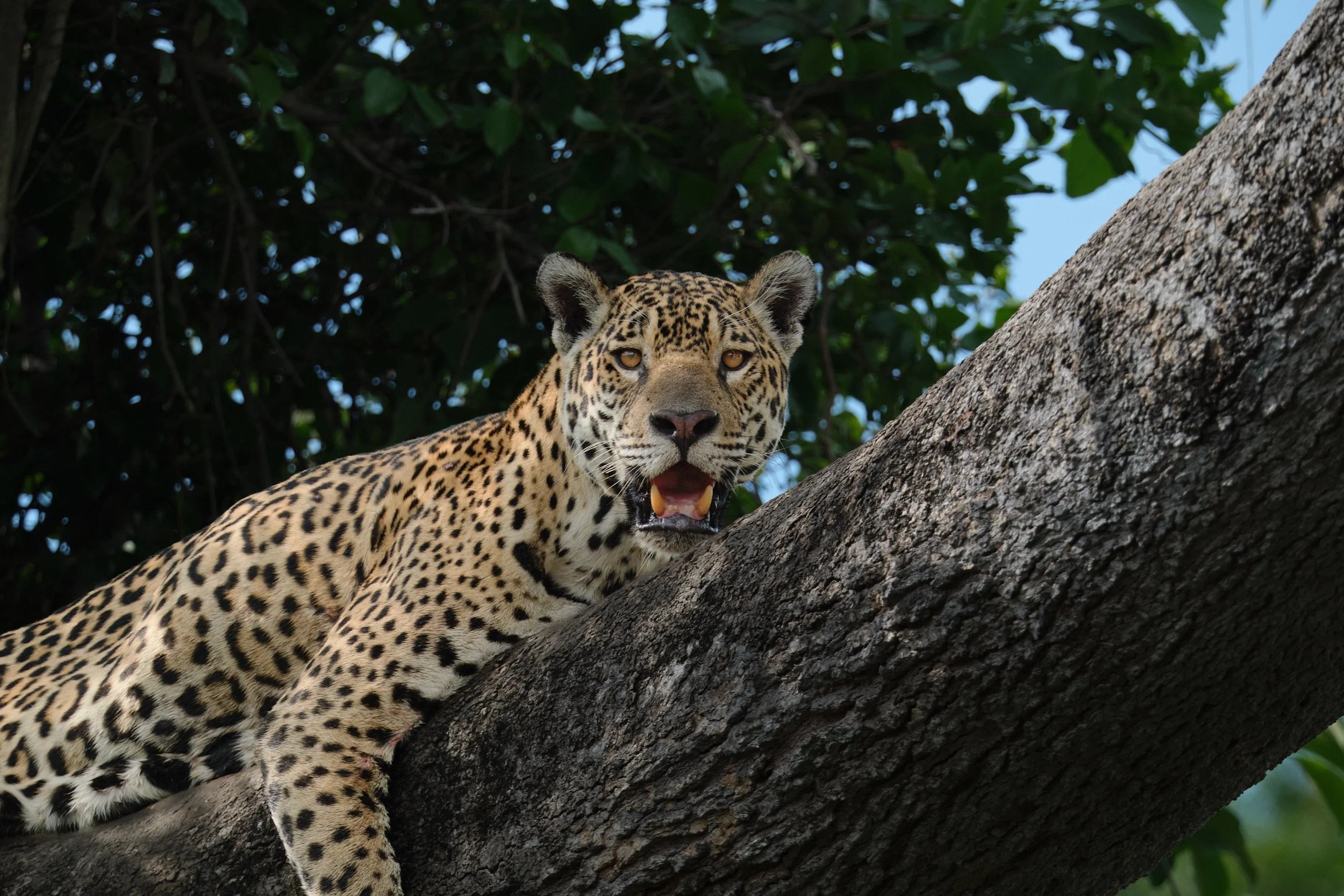
     Another young female, in hopes of taking a cayman in the water below the branch.
    Another young female, in hopes of taking a cayman in the water below the branch.
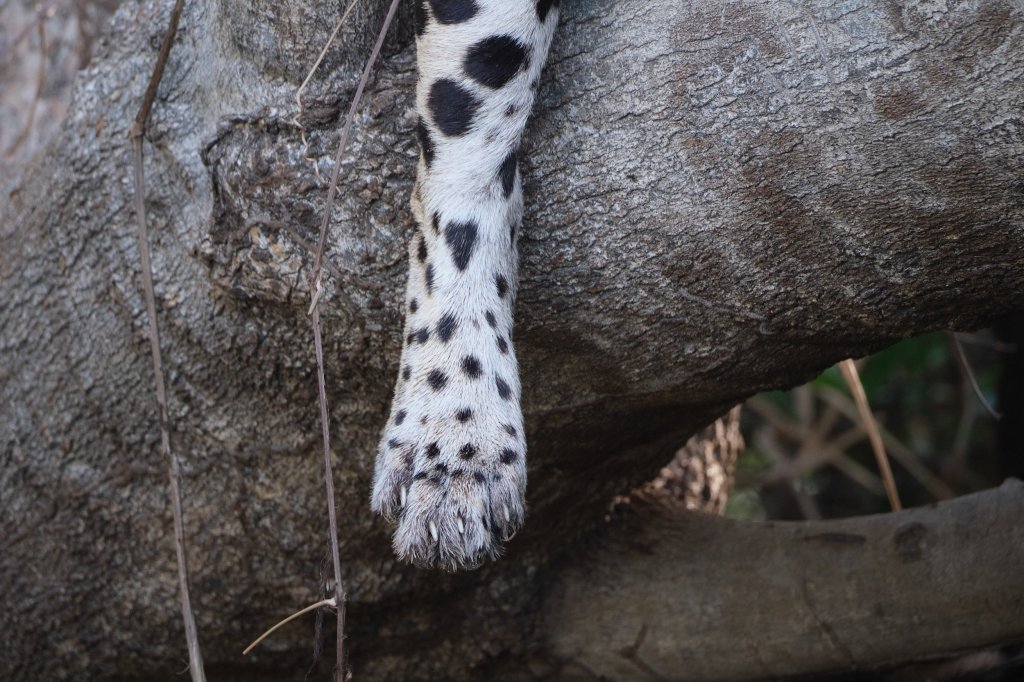
     A reminder that, at their core, they are all just cats
    A reminder that, at their core, they are all just cats
     This young female is in the first stage of smelling the area for indicators of another cat who may have marked the territory
    This young female is in the first stage of smelling the area for indicators of another cat who may have marked the territory
     She is now exhibiting the Flehman Response. This is a behaviour  in which an animal curls back its upper lip exposing its front teeth,  inhales with the nostrils usually closed, and then often holds this  position for several seconds. It is usually performed over a site or substance of particular interest to  the animal.  Flehmen is performed by a wide range of mammals, including ungulates and felines. The behaviour facilitates the transfer of pheromones and other scents into the vomeronasal organ (or Jacobson's organ) located above the roof of the mouth via a duct which exits just behind the front teeth of the animal.
    She is now exhibiting the Flehman Response. This is a behaviour in which an animal curls back its upper lip exposing its front teeth, inhales with the nostrils usually closed, and then often holds this position for several seconds. It is usually performed over a site or substance of particular interest to the animal. Flehmen is performed by a wide range of mammals, including ungulates and felines. The behaviour facilitates the transfer of pheromones and other scents into the vomeronasal organ (or Jacobson’s organ) located above the roof of the mouth via a duct which exits just behind the front teeth of the animal.
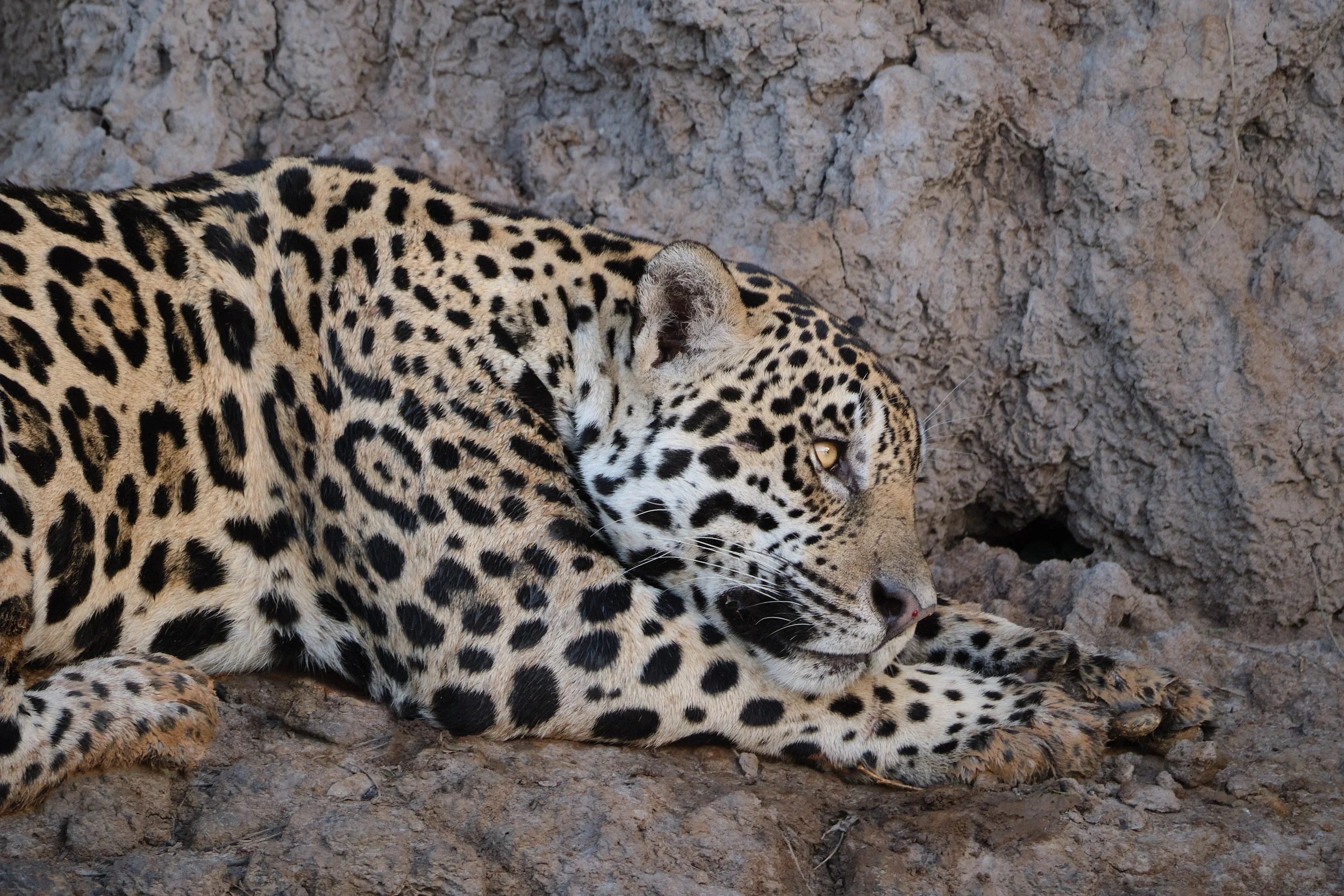
     Another beautiful female, sitting for her portrait.
    Another beautiful female, sitting for her portrait.
     Mid-day rest
    Mid-day rest
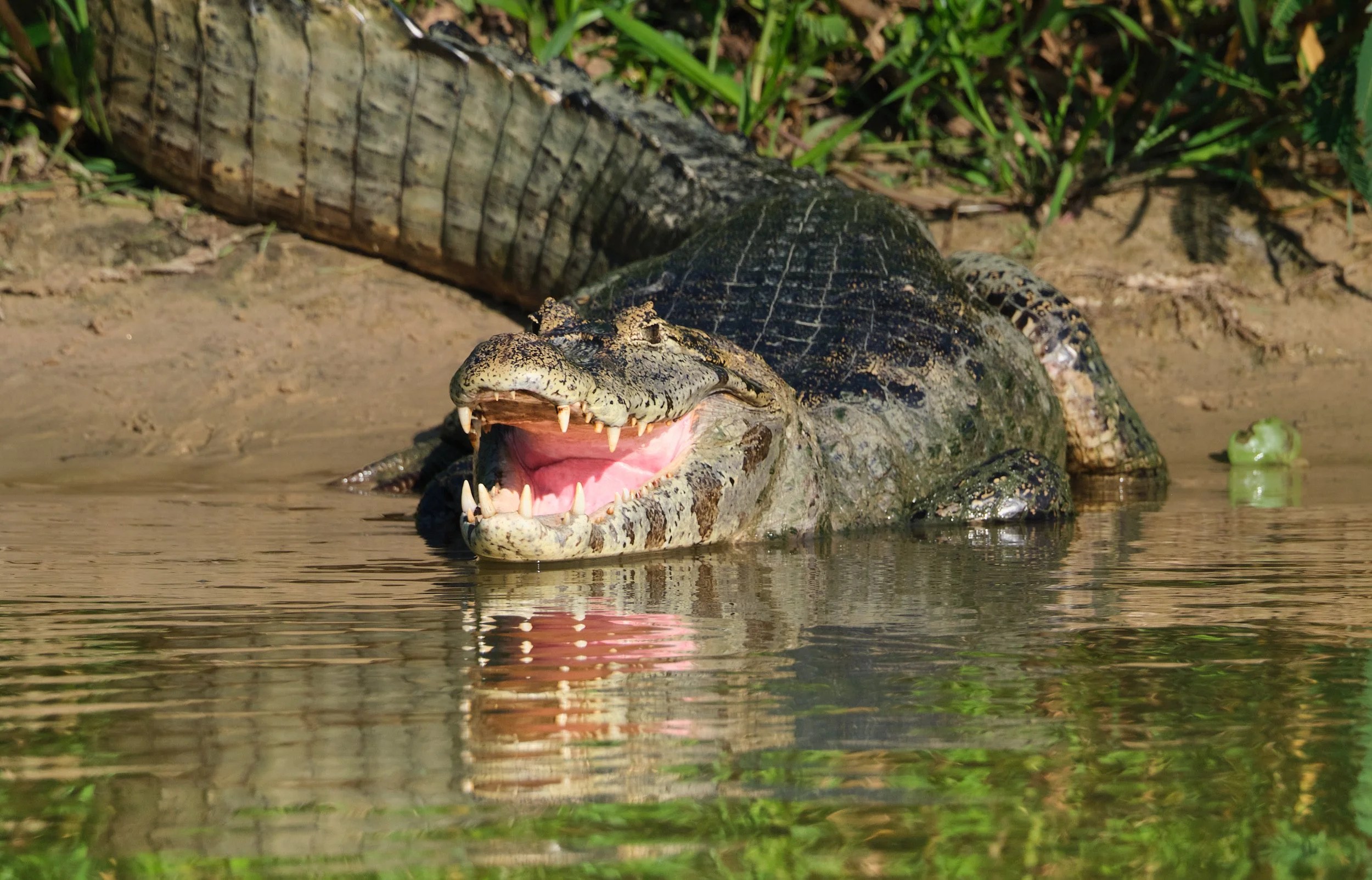
     A cayman, the jaguars’ favourite prey.
    A cayman, the jaguars’ favourite prey.
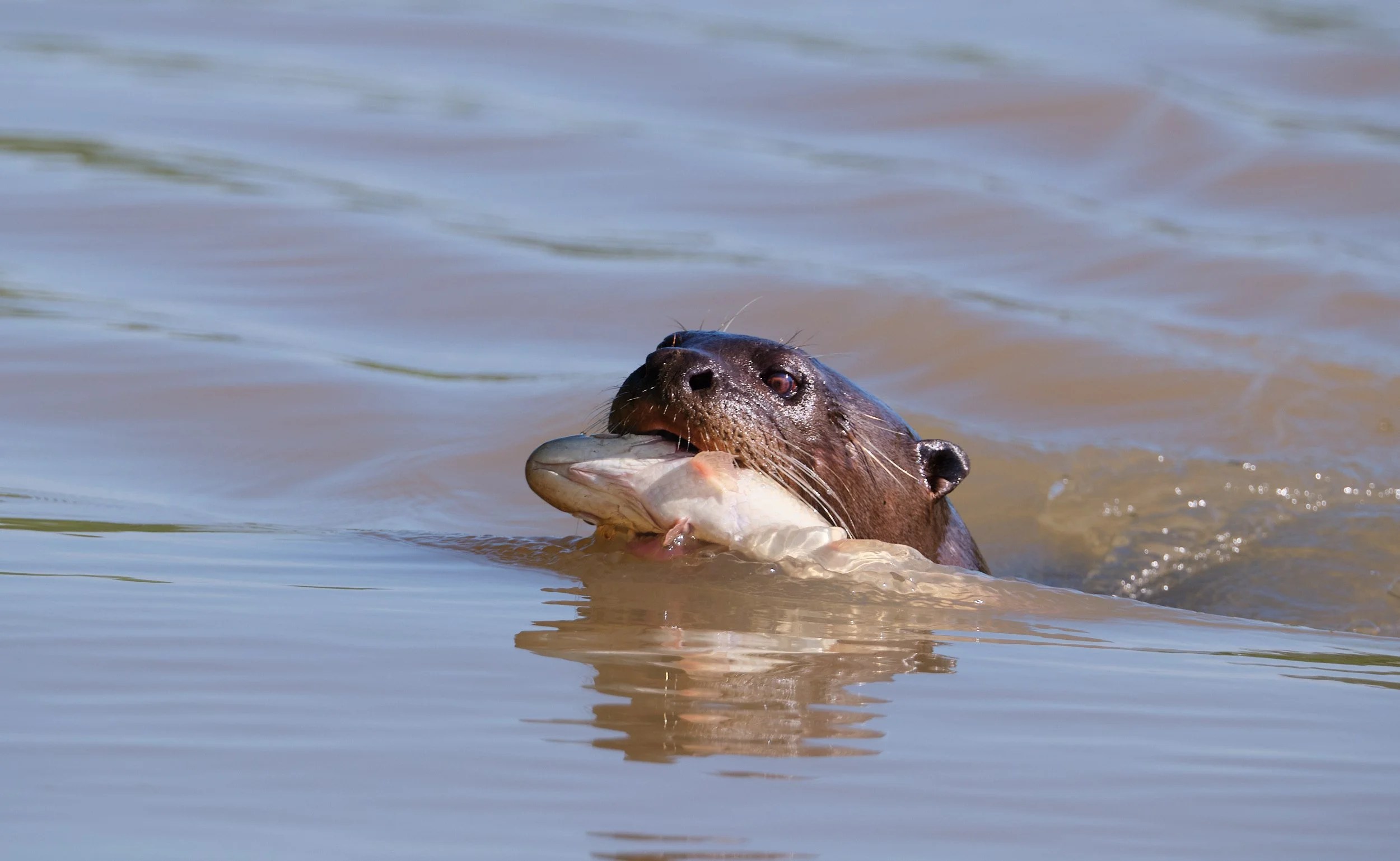
     A change of pace from jaguars. Giant otter with a just-caught fish. They swim so easily but at such speed that they create a bow wave. The water behind him is several inches lower than the wave that he is creating in front.
    A change of pace from jaguars. Giant otter with a just-caught fish. They swim so easily but at such speed that they create a bow wave. The water behind him is several inches lower than the wave that he is creating in front.
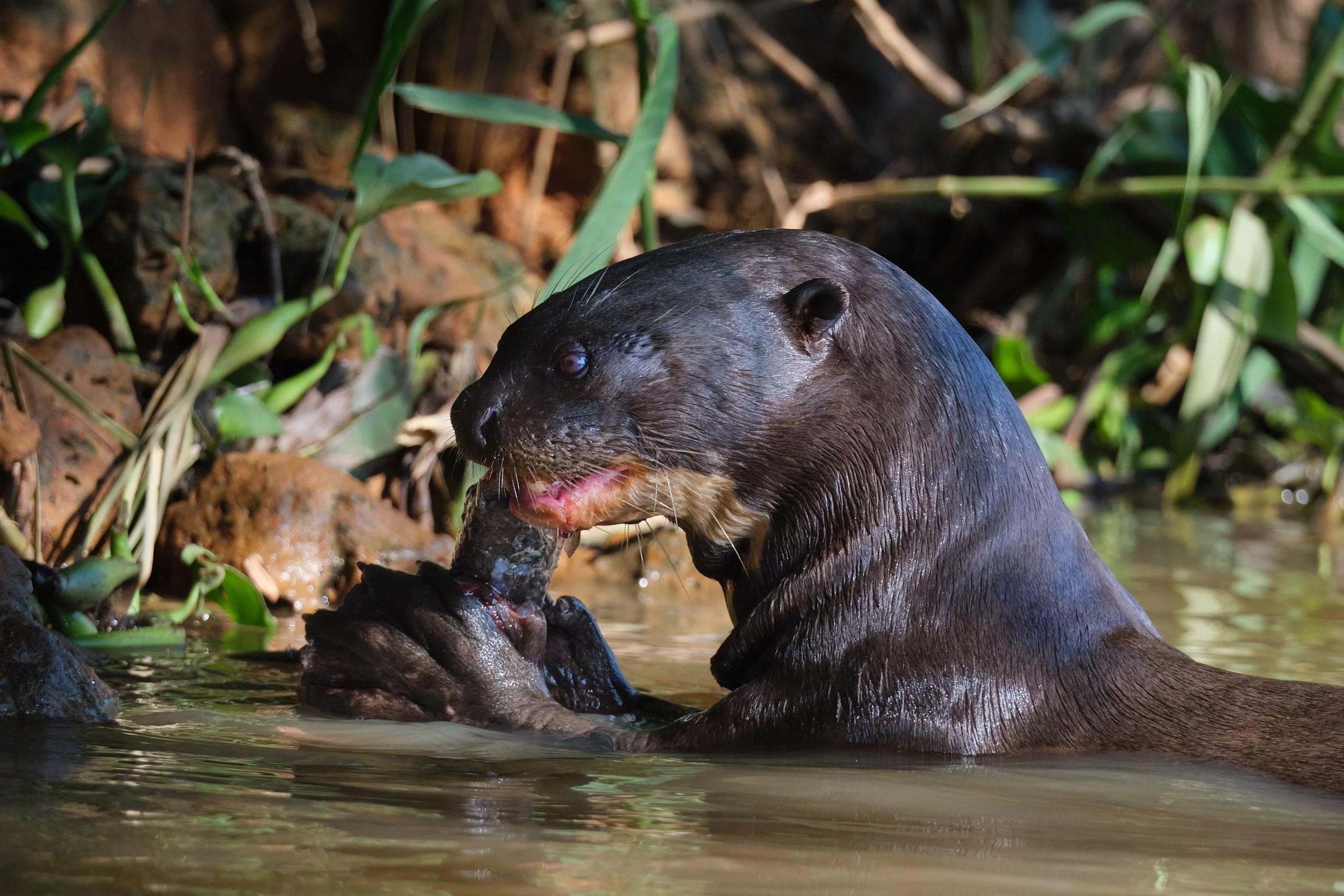
     Otter and his meal
    Otter and his meal

    More to come!

  • In Brazil, On the Way to the Pantanal- November 4, 2025
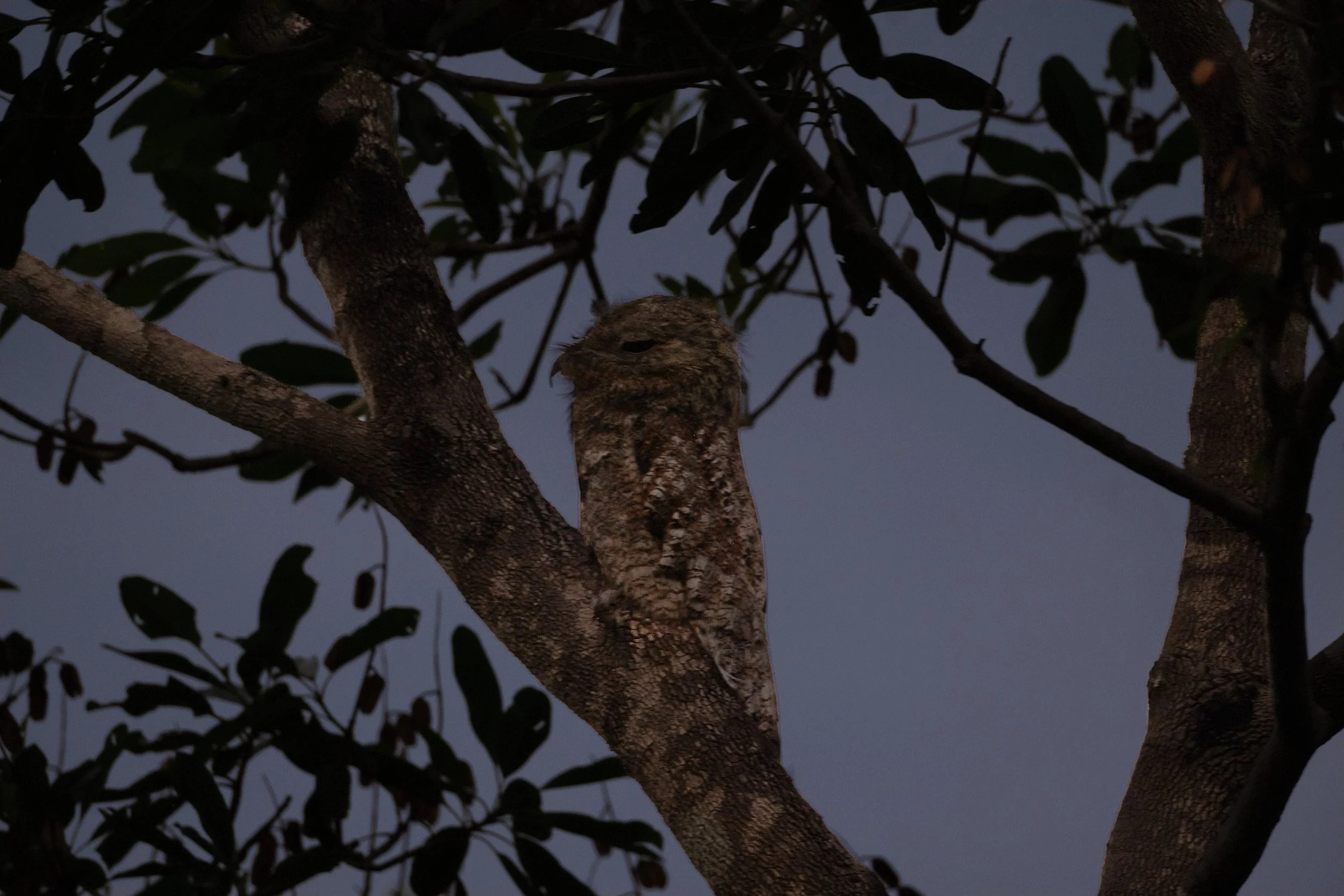
     A Great Potoo at dusk, disguised, he believes, as a tree branch
    A Great Potoo at dusk, disguised, he believes, as a tree branch

    I write this on the way to our most looked-for destination, Porto Jofre, the heart, the epicentre of Pantanal jaguar country. Time is short to put this post up before we lose the little internet presence that has been available to us recently so I’‘ll let the pictures do the talking for me until I have the time and the bandwidth to write more fulsomely. By my calculations at 1,000 words per picture, I have written a fairly lengthy article.

    Enjoy!

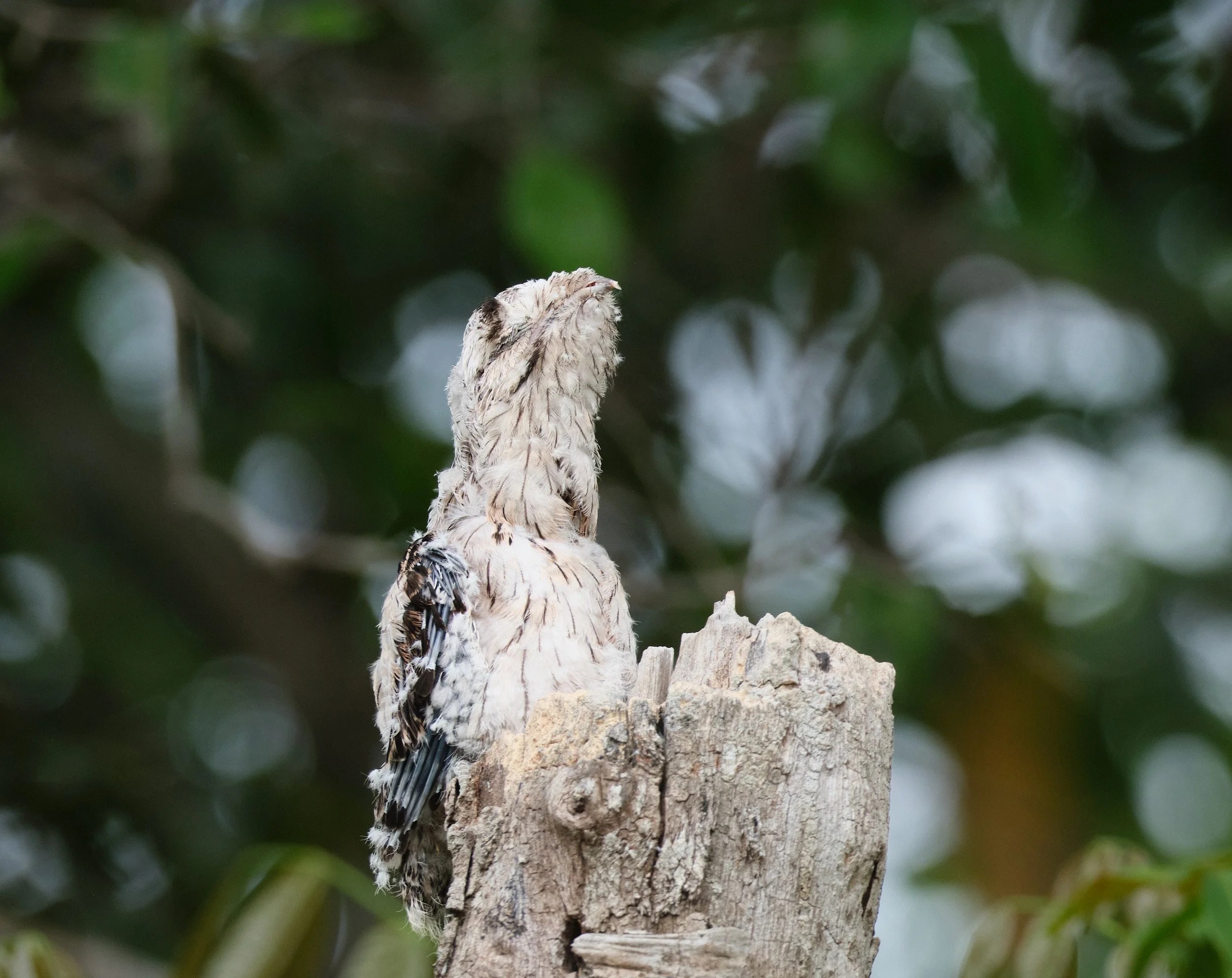
     A juvenile Lesser Potoo, also and not surprisingly, hoping that the world thinks he’s a tree stump
    A juvenile Lesser Potoo, also and not surprisingly, hoping that the world thinks he’s a tree stump
     Amazon Kingfisher, one of my favourite bird families, with a dragonfly.
    Amazon Kingfisher, one of my favourite bird families, with a dragonfly.
     Green Kingfisher, diving
    Green Kingfisher, diving
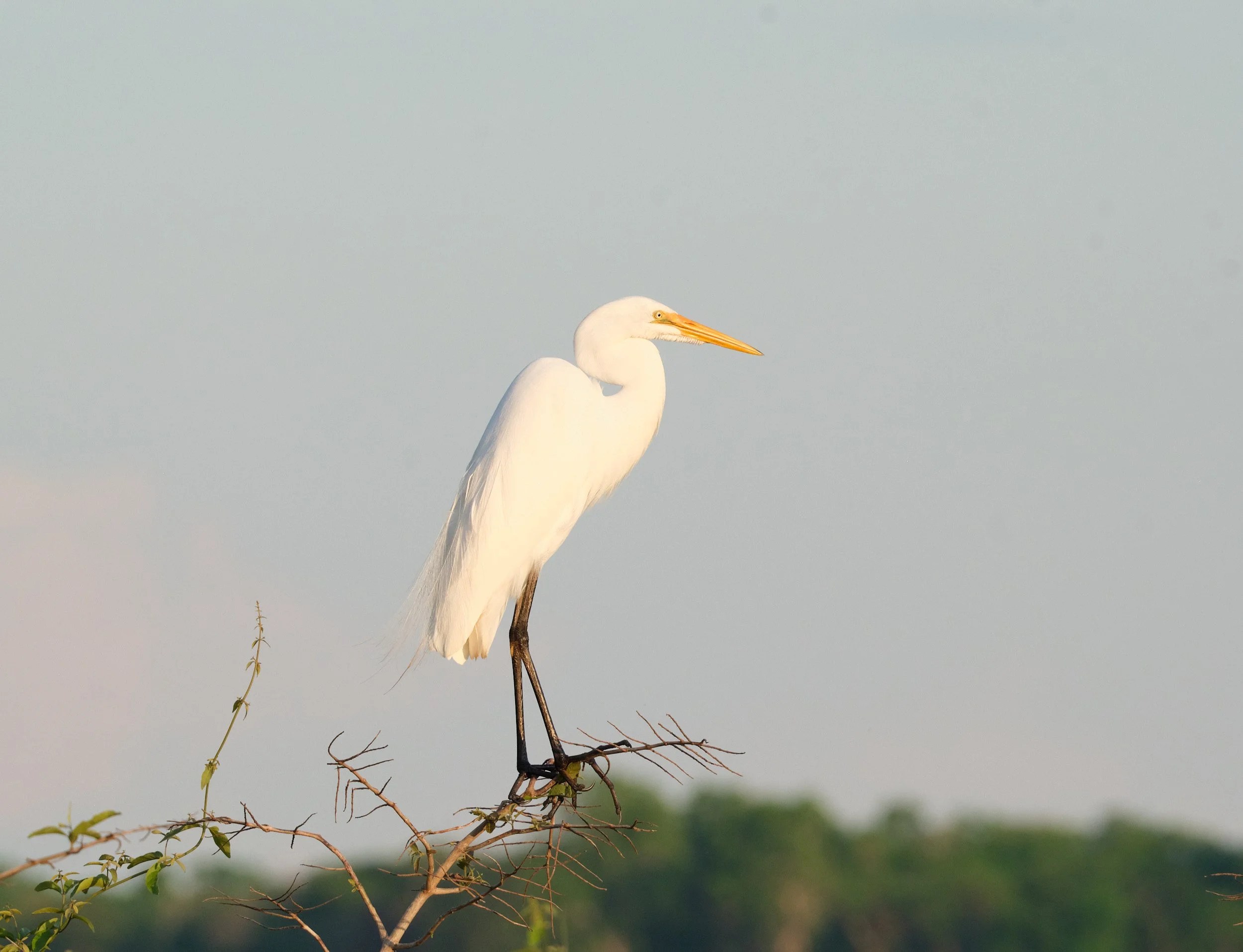
     Great Egret. One of the most ubiquitous bird species, egrets found on every continent except Antarctica. Nonetheless, a beautiful and stately example of the most handsome of the species.
    Great Egret. One of the most ubiquitous bird species, egrets found on every continent except Antarctica. Nonetheless, a beautiful and stately example of the most handsome of the species.
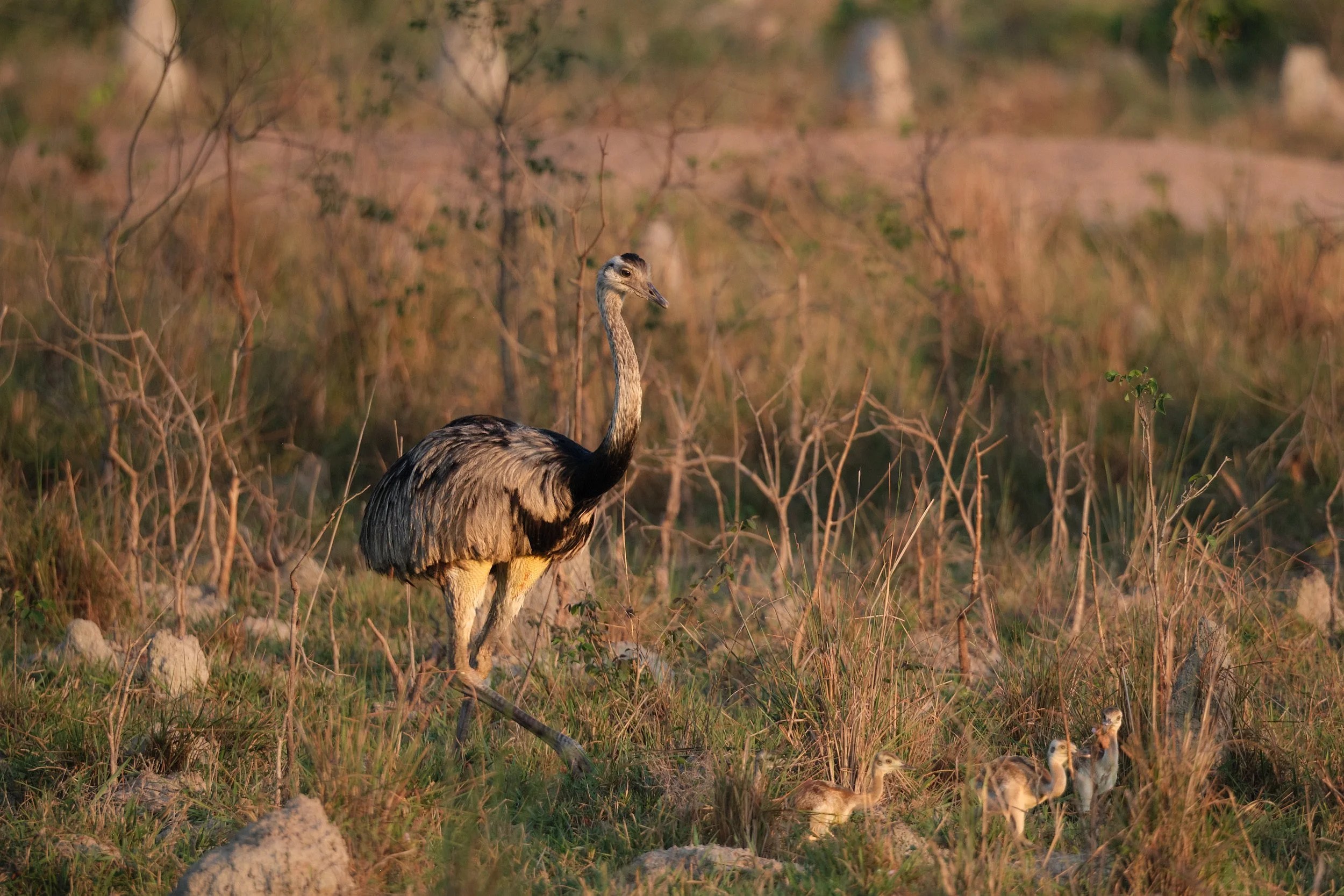
     Male Rhea, whose job it is to care for the chicks, with the 3 who made it into the picture, of the 12 under his care..
    Male Rhea, whose job it is to care for the chicks, with the 3 who made it into the picture, of the 12 under his care..
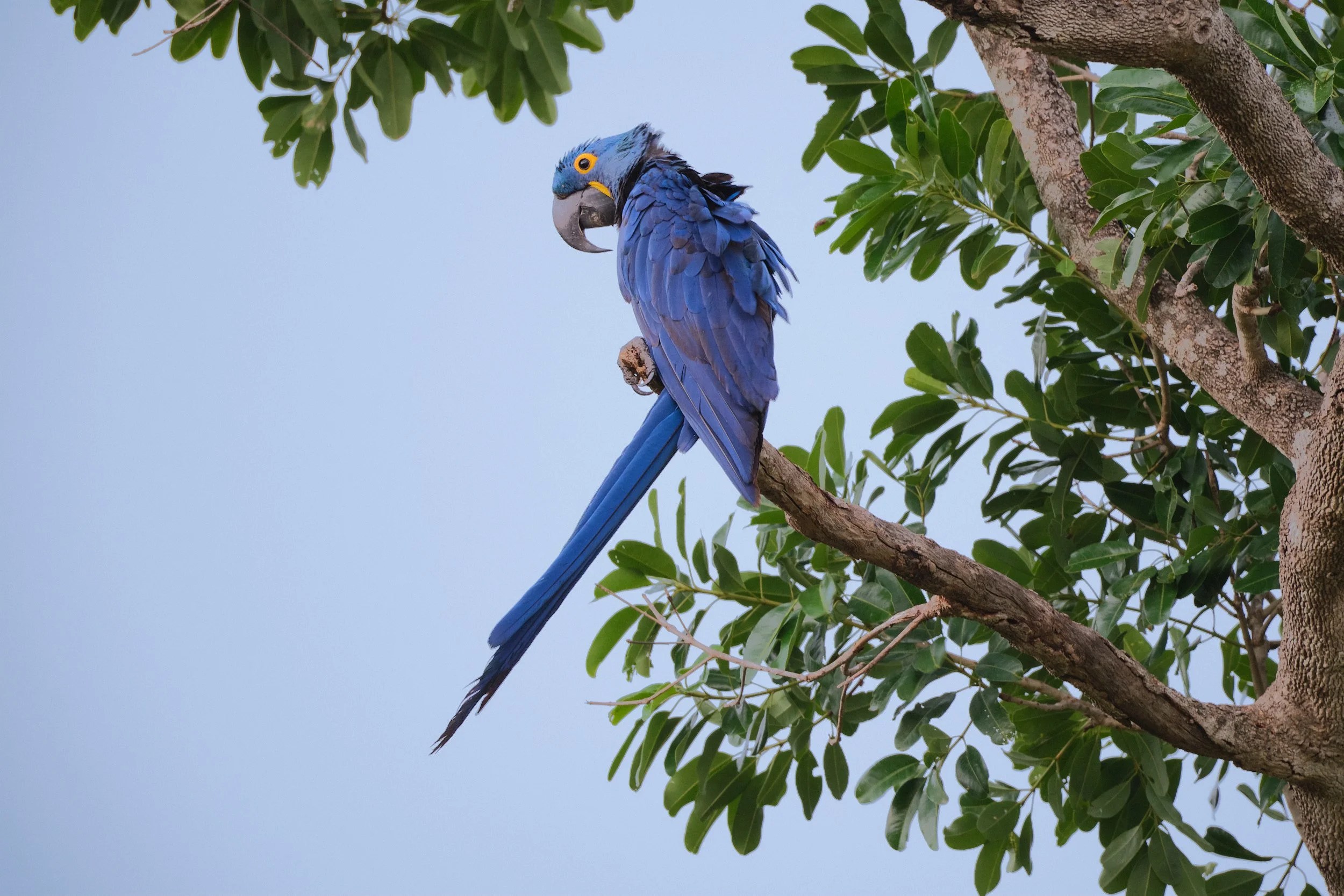
     Hyacinth Macaw, looking elegant.
    Hyacinth Macaw, looking elegant.
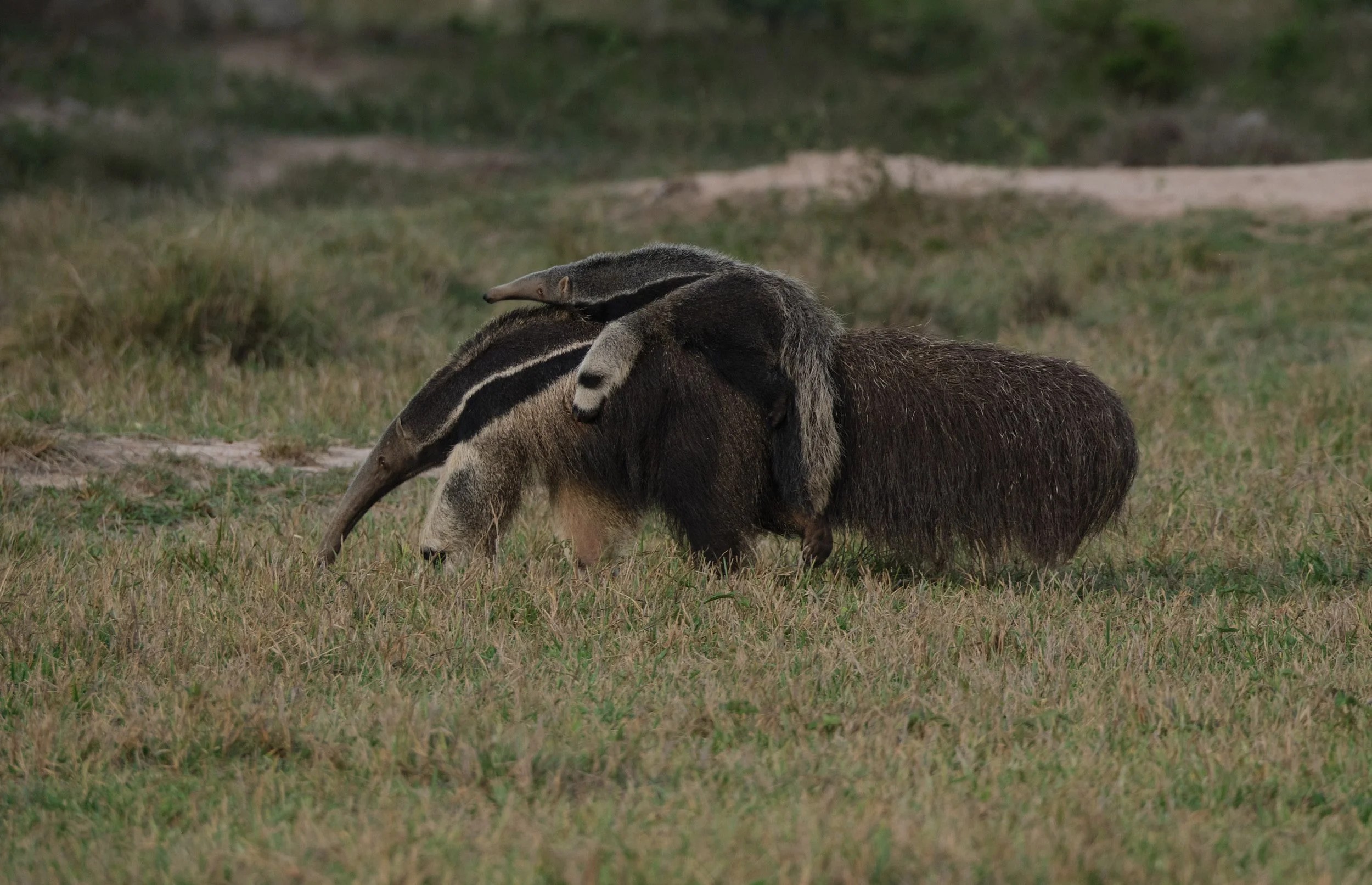
     Giant Anteater mother carrying her babe on her back.
    Giant Anteater mother carrying her babe on her back.
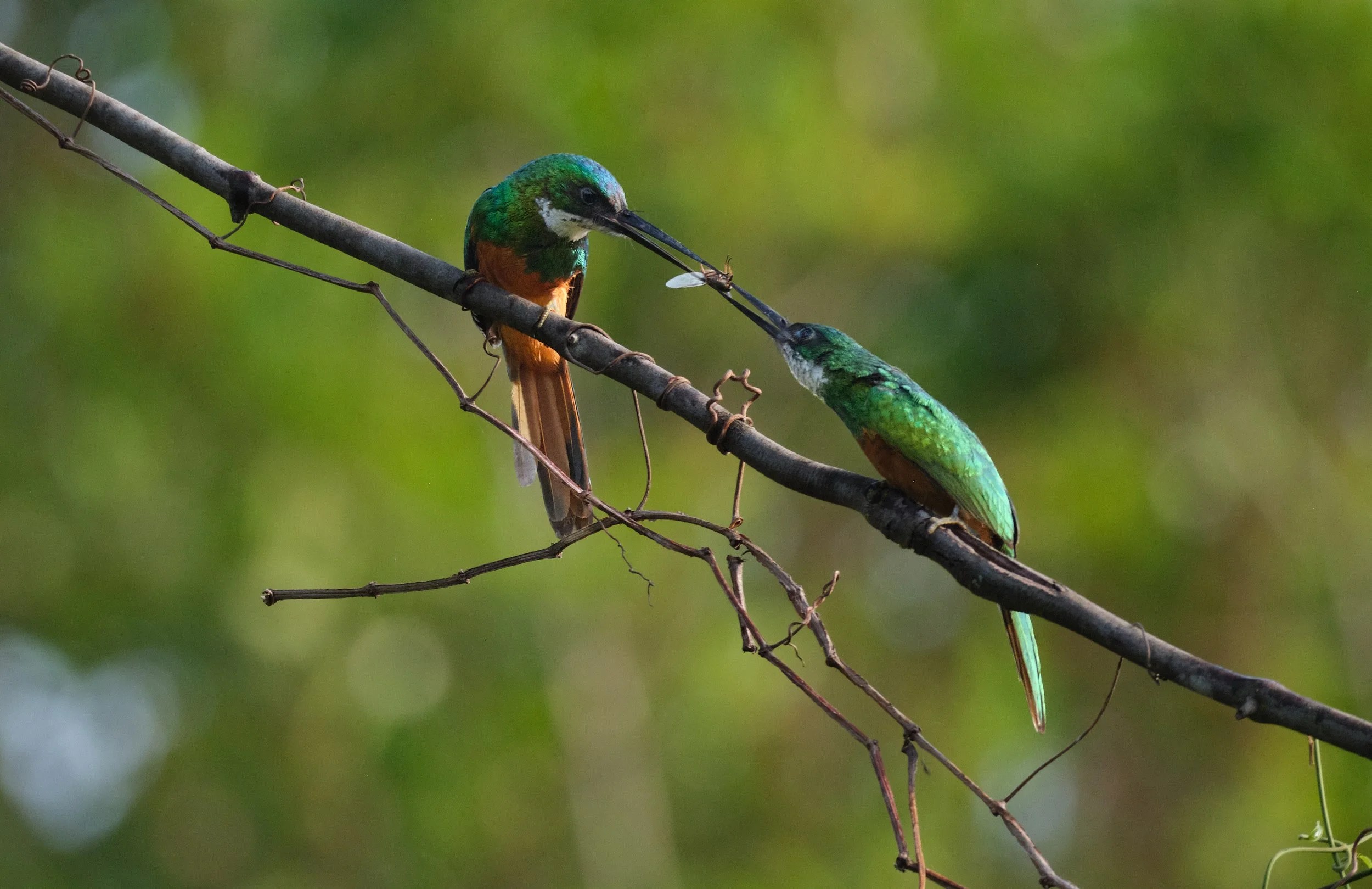
     A male Rufous-tailed Jacamar giving his mate a love offering. A behaviour rarely observed, and even less frequently photographed. A very lucky shot.
    A male Rufous-tailed Jacamar giving his mate a love offering. A behaviour rarely observed, and even less frequently photographed. A very lucky shot.

    More to come!

  • Out of Paraguay into Brazil – October 31, 2025
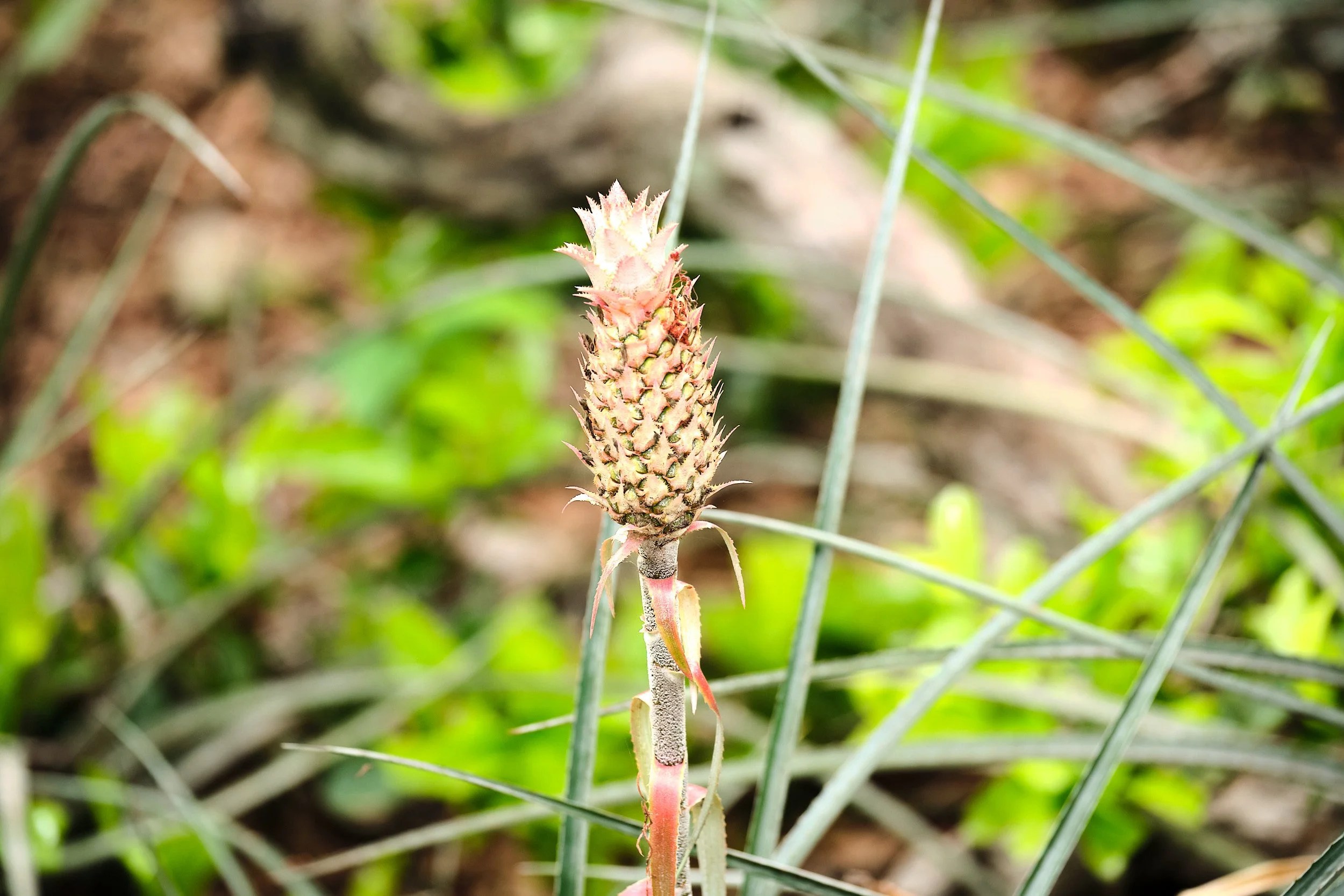
     Wild pineapple, about the size of my thumb, Buraco das Araras
    Wild pineapple, about the size of my thumb, Buraco das Araras

    Following the events chronicled by Rob in the previous post, we spent 3 days in Asuncion, the capital city of Paraguay. From my readings and research prior to this trip I had expected to meet a city with a film noir vibe, an undertone of barely-veiled violence, shot in slightly grainy black and white.

    Not so. It’s certainly a fact that many of the countries in this region, Paraguay a poster model of the type, had wrenching problems and troubling histories from their foundings in the early 19th century and for the following 150 years. Variations on a theme of violent dictatorships and periodic intervals of turmoil, internal rebellion and external wars with their neighbours. And yet in the last 30+ years there have been major transformations in Uruguay, Paraguay, Argentina and Brazil. While their challenge continues to be, as it is in many parts of the world, keeping autocrats at bay, they seem to be doing at least as well as much closer neighbours.

    Instead of a city that could have been the setting for a latin Casablanca, I found a thriving, vibrant city, alive with possibilities but facing up to its past. Far from ideal but working on its problems. This was well-represented by our guide for our few days in Asuncion, a young Paraguayan university lecturer in the history of fine art whose area of study is local colonial and indigenous art and culture. He was surprisingly open about being gay, the son of an upper-middle class Paraguayan family, all lawyers, who have been involved in the country’s governance for a couple of generations. He was very direct and open about the country’s past and its present and clear-eyed and thoughtful about the country’s transformation, both strengths and weaknesses. Fascinating insights into a fascinating city.

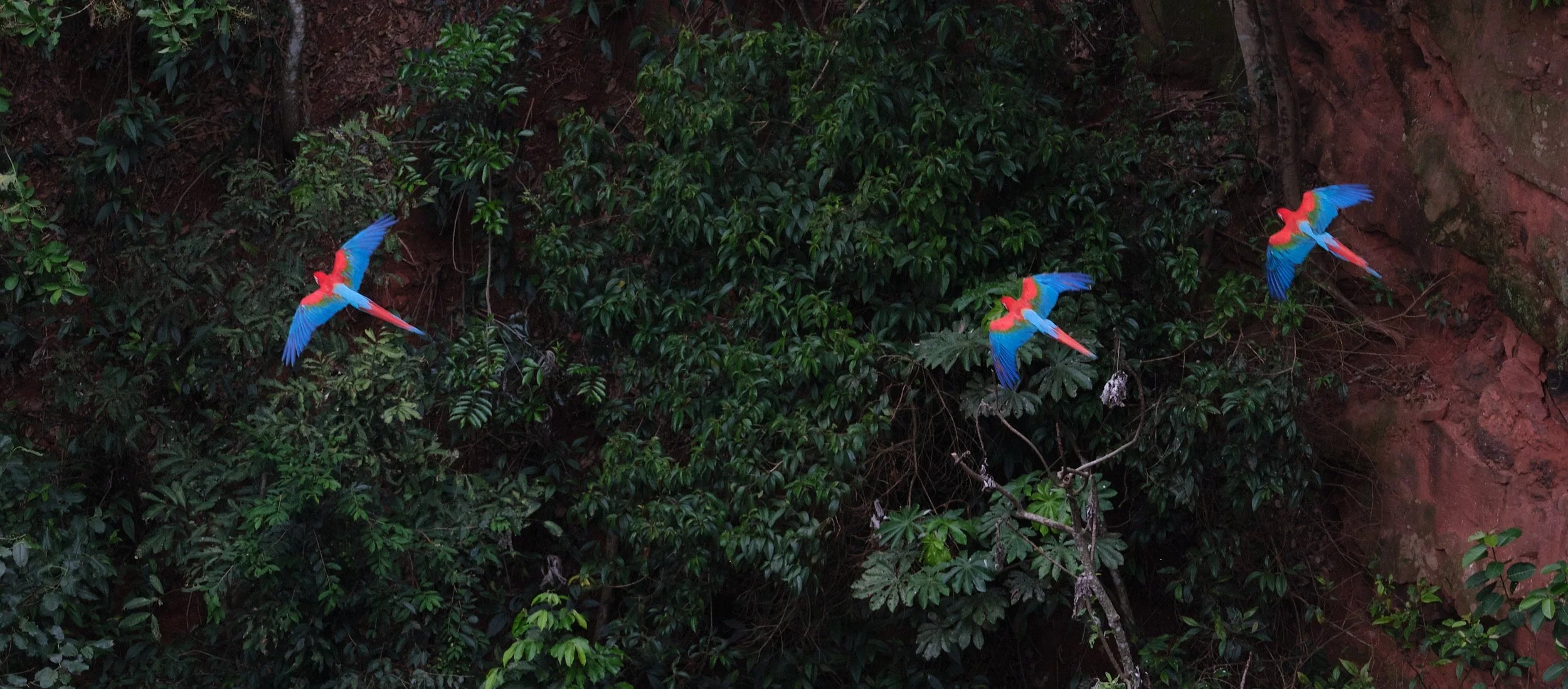
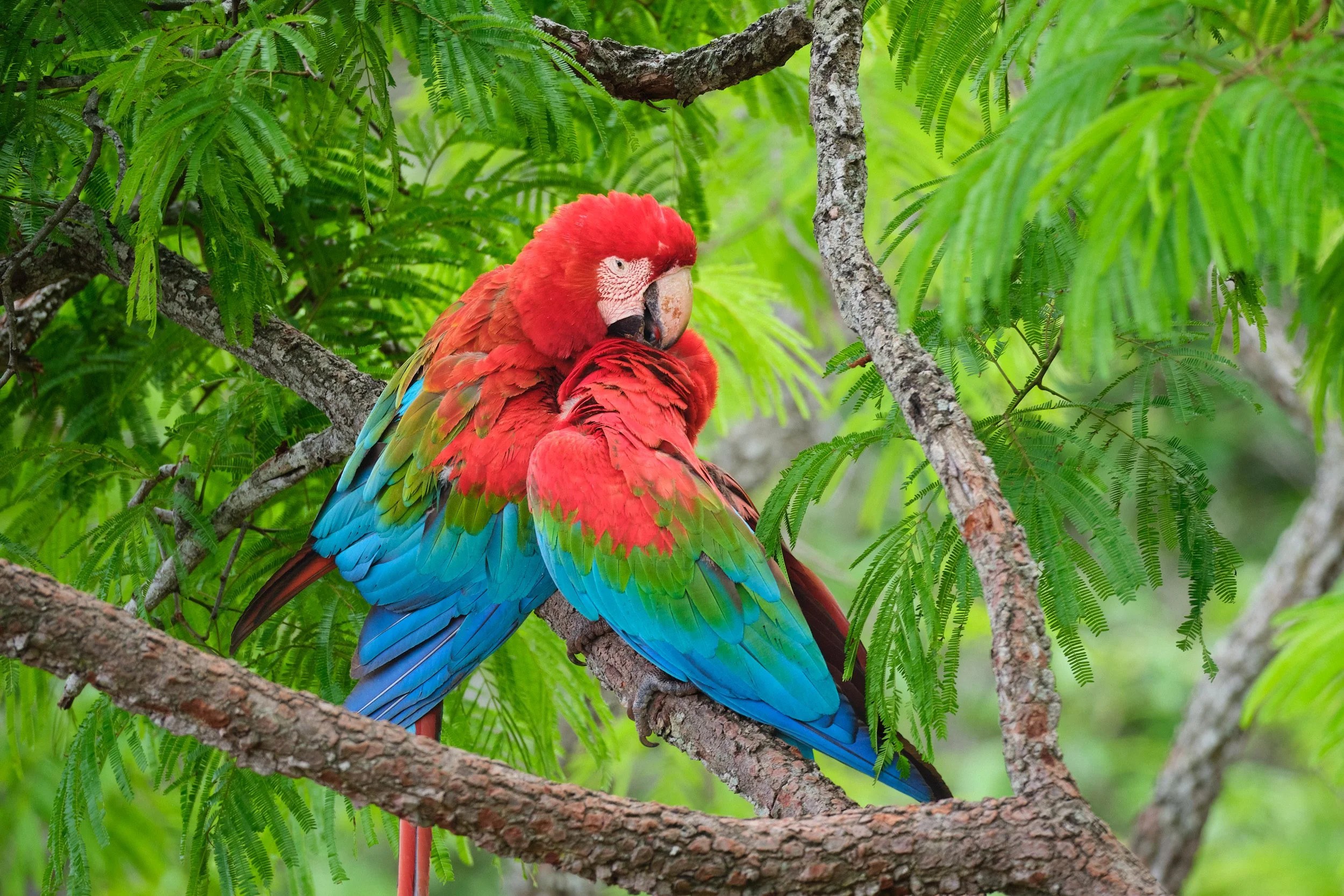
     Red and Green Macaws, Buraco das Araras
    Red and Green Macaws, Buraco das Araras

    We left Asuncion very early yesterday morning on our way to Bonito in Brazil, a 10 hour drive. Although we had been told to expect this, we were nonetheless surprised when we crossed the border into Brazil to discover that the border post between Paraguay and Brazil seemed to be derelict, no officers present and the building’s contents in disarray. We have been told that we will be able to validate our Brazilian entry in São Paulo on our departure from the country but, as a safeguard, we have taken each other’s pictures in front of the deserted border post with a time and date stamp on the images. I also have my GPS track showing us driving from Asuncion and crossing the border on the date and time of the pictures. Apparently tourists just don’t drive from Buenos Aires or Asuncion to Brazil so they didn’t feel it was worthwhile to bother keeping the post open. No problem, we’ve been told. We’ll see…

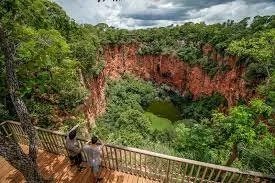
     Buraco das Araras
    Buraco das Araras

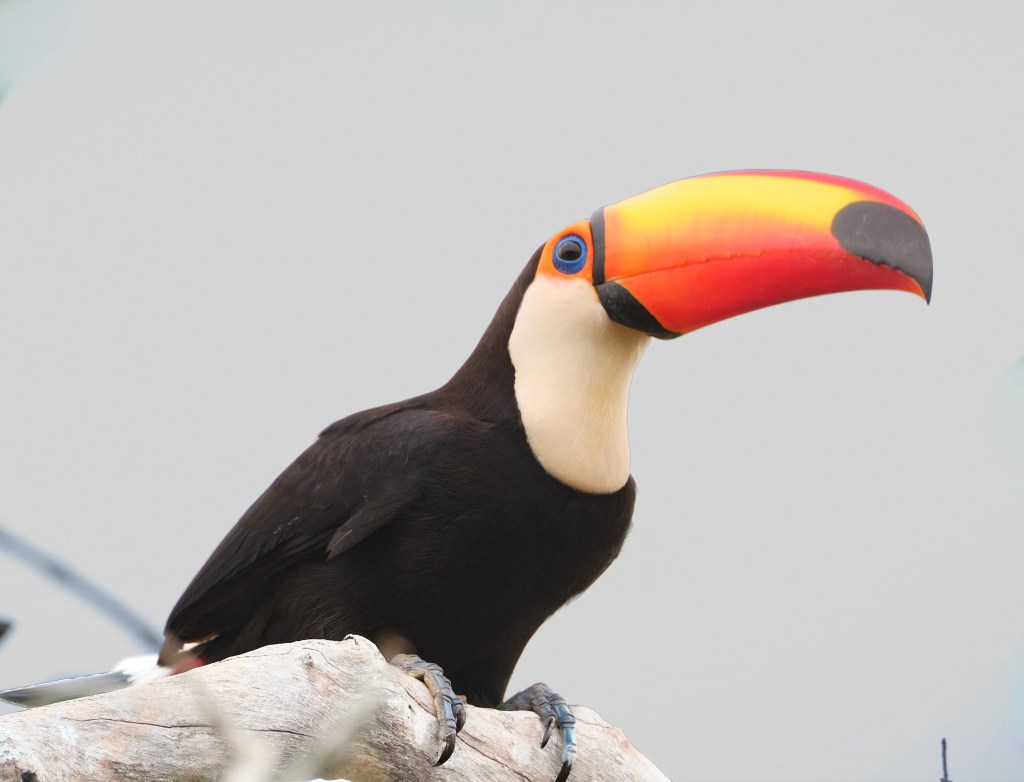
    We spent today with a local guide who took us to Buraco das Araras, or Macaws’ Hole, a huge sandstone crater in Bonito, Brazil, considered the largest sinkhole in South America. It is 100 metres deep and 160 metres in diameter, surrounded by lush vegetation. You must observe from the top of the crater since the walls are vertiginous red sandstone, so entry into the sinkhole is not possible.

    You can find birds such as red and green macaws, ibis and toucans nesting in crevices in the sandstone walls and mammals such as armadillos and anteaters inhabit the bottom.

    The macaws nesting in the red sandstone cliffs take us back almost exactly one year to our travels in Patagonia when we spent a magic day with the burrowing parrots of Barranquero, closing the loop.

     Green and Red Macaw affection
    Green and Red Macaw affection

    From here we have a couple more days of hard driving to take us to the Pantanal and the real beginning of our wildlife jaguar adventures.

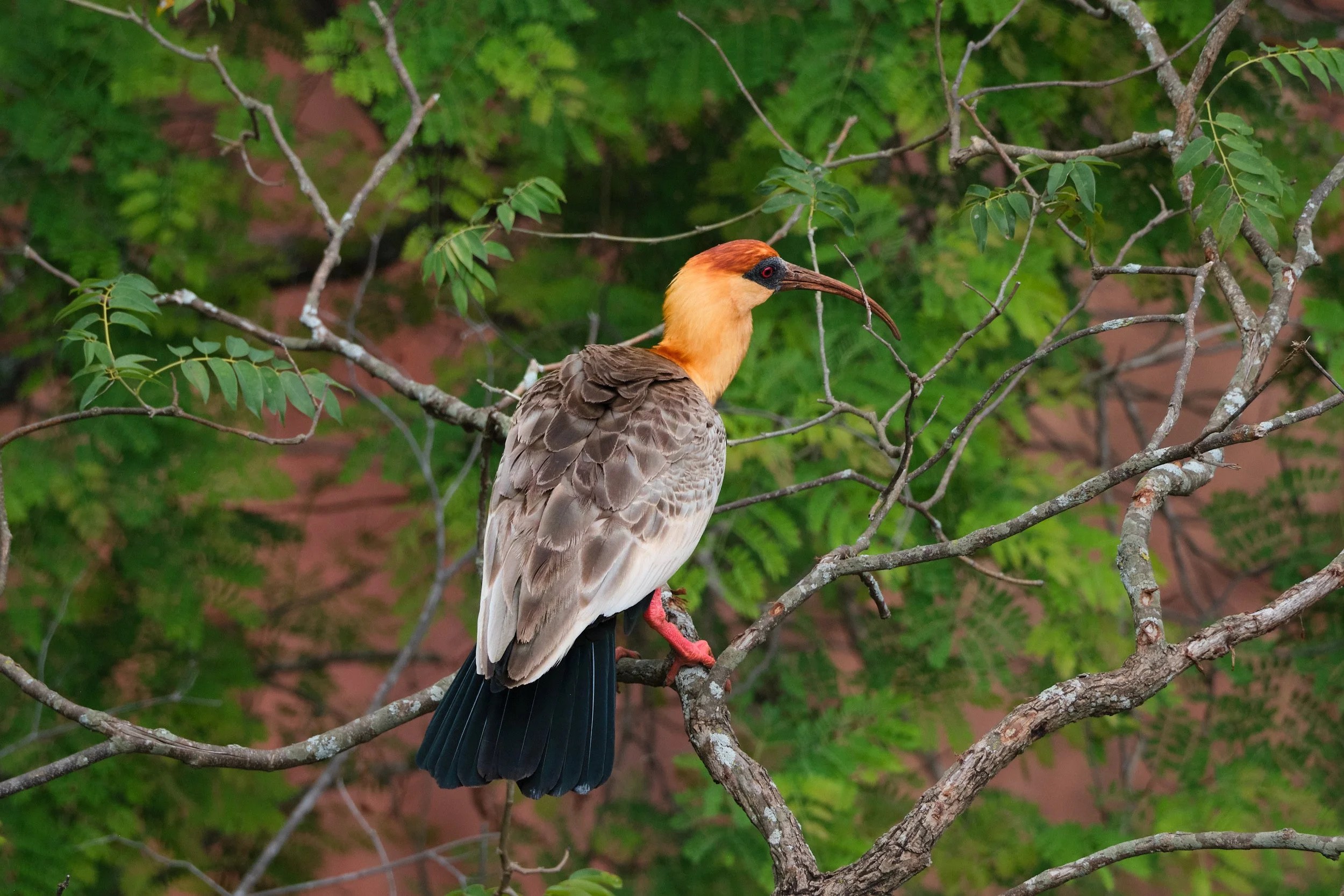
     Buff-necked Ibis
    Buff-necked Ibis

    More to come!

  • Off to Paraguay – October 28, 2025
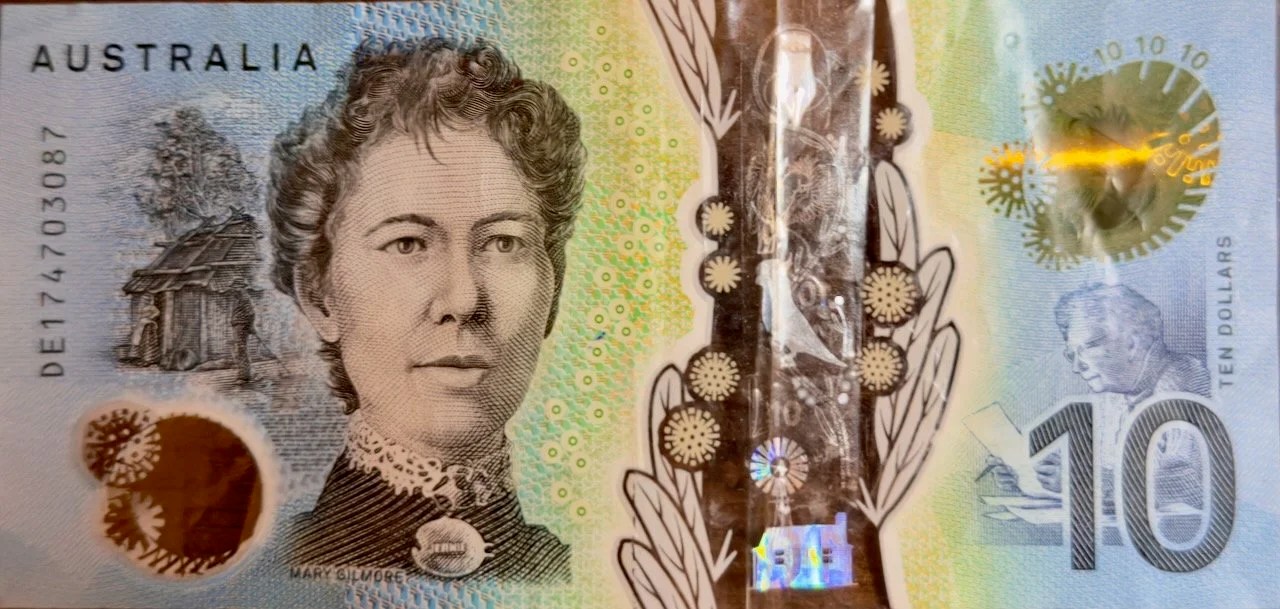
     Mary Gilmour, see below for explanation
    Mary Gilmour, see below for explanation

    In a first for my journal I have asked my friend and fellow-traveller Rob to guest-post an article on the ‘bizarre social experiment’ that I talked about in an earlier post as one of the rationales for this adventure. Since this ‘new socialist utopia’ was created and peopled by a group of intrepid Australians it seemed appropriate that Rob should be the one to document it.

    However before I turn things over to Rob, we are presently in Asuncion, the capital of Paraguay, a country once described as ‘an island surrounded by land’, an apt characterization as I hope you’ll come to see in the next couple of posts. A portion of this morning was spent in the former House of National Congress, now a museum, where we noticed a chart listing all the nationalities whose citizenry have at various times emigrated en mass to Patagonia. Of course the Australian group was listed but I had confidently assumed that I would not see Canada represented. Surprisingly there were a couple of waves of emigration in the 1940’s and 50’s by large groups of Mennonites from Manitoba and Saskatchewan who were, I guess, seeking a more accommodating climate either political or climactic. A fascinating insight.

    Now over to Rob…

    Drawing on contemporary international interest in ‘Utopias’, William Lane – an Anglo-Australian labour leader and journalist – marshalled discontent from the failed shearers’ strike and depression of the 1890’s to establish a socialist utopia outside Australia.  But where?  Well, Paraguay.  Where Gerry, Hugh and I are (somewhat metaphorically) following in the footsteps of Francisco Solano Lopez, the President who unwisely engaged his country in the War of the Triple Alliance, 1864-1870 against Brazil, Argentina and Uruguay, resulting in the death of, it seems, over half the Paraguayan population, including 90% of adult males.         

    So, a country ripe for an influx of – obviously male – Australian sheep-shearers, farmers and ‘tradies’.  Some 240 set off from Sydney in 1893 to take up a generous offer of land for this new socialist Australia.   

    Lane, quixotic and authoritarian, established ‘rules’, including teetotalism, life marriage, and a white-only colour bar.  Need we say that by the time of the arrival of a second ship, the settlement was rent asunder by non-compliance.  The venture split, set up a second colony, and disintegrated.  The full story would challenge Monty Python or Fawlty Towers.  

    This is not a history blog but it is noteworthy – and Gerry has already foreshadowed this in his earlier October 23 entry – that among the many plots and characters – a ‘second fleeter’ was 31 year old (later Dame) Mary Gilmour, Australian socialist, feminist, poet and ‘national treasure and public intellectual’ before such existed. Shown is her face on the current $10 note.  

    The entrails of this socialist experiment do include a few direct descendants in Paraguay, not necessarily called Bruce or English-speaking but with Australian features and ‘loyalties’, as illustrated in various (available) Youtube clips.  

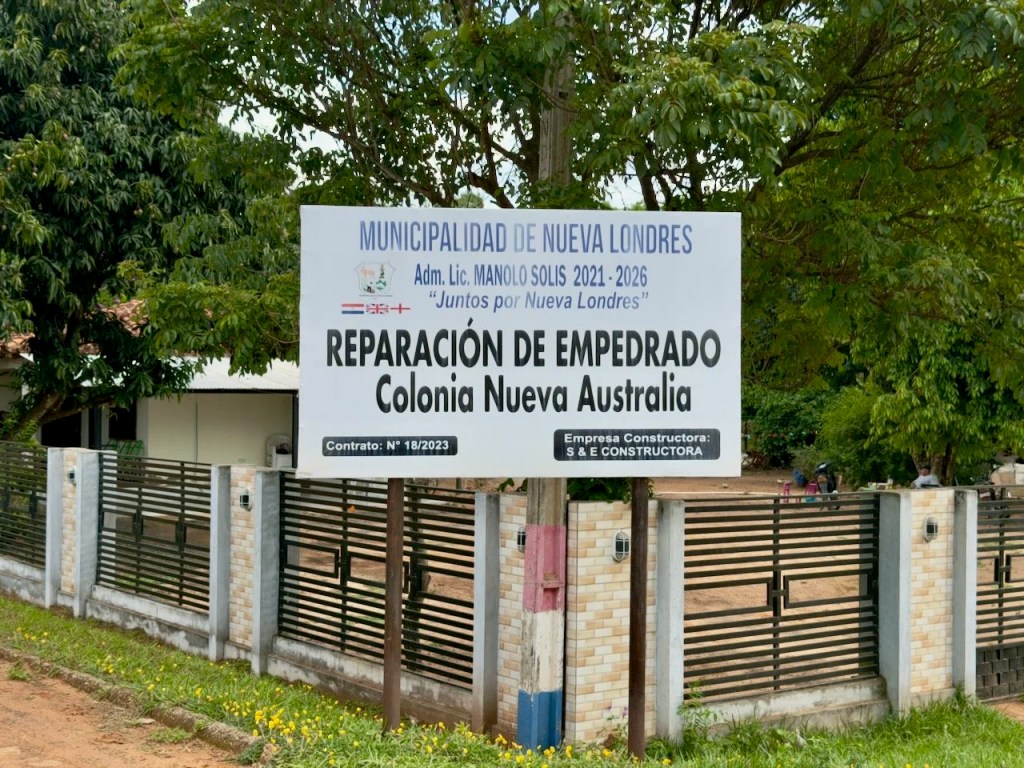
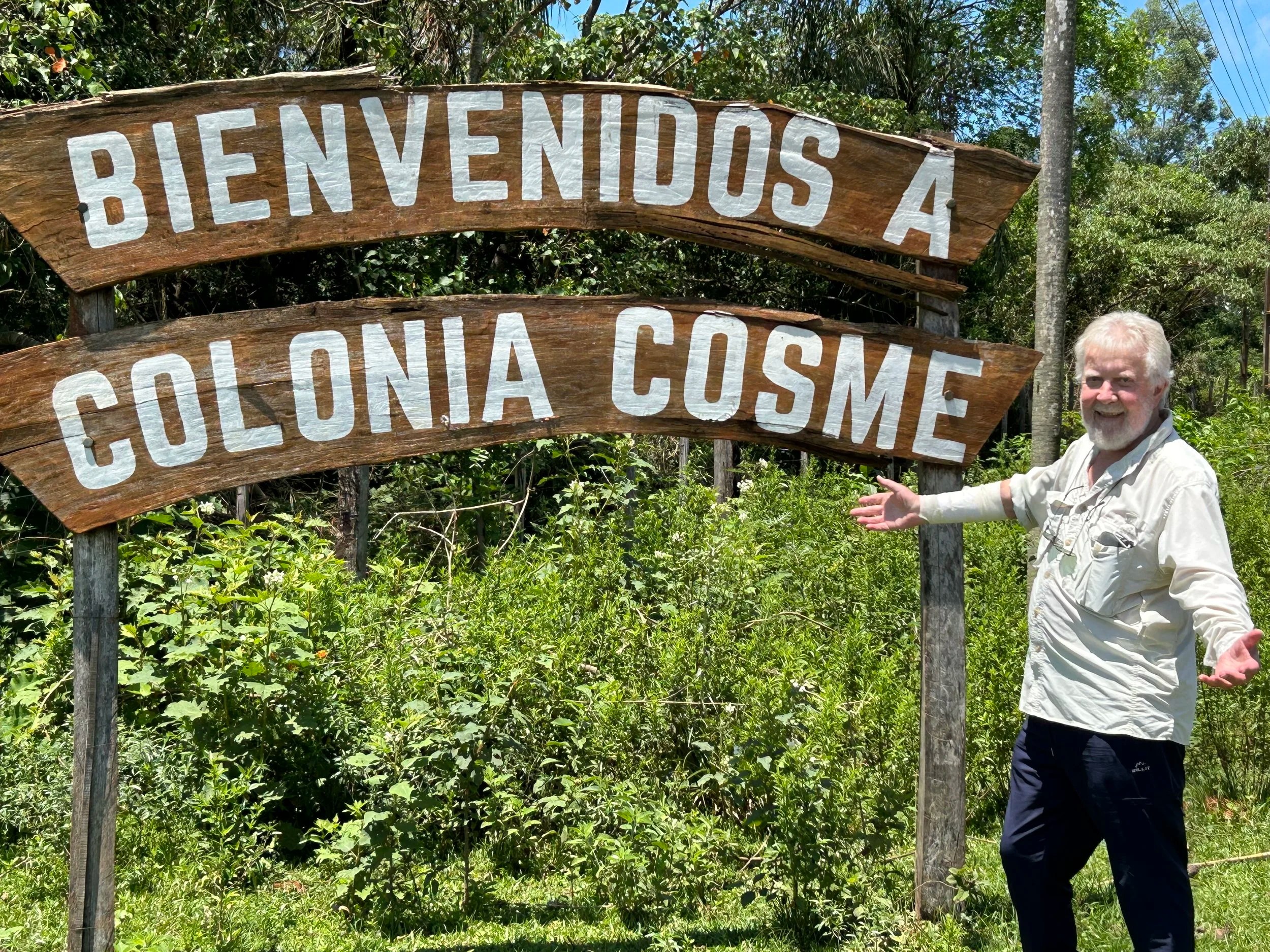
    We approached Asuncion from the south, having left northern Argentina and crossed the enormous Paraná river, part of the ‘territory’ of landlocked Paraguay’s Navy.  And we looked for the two settlements.  And lo, we found both, not least because although isolated and unremarkable, each was signposted, as shown below.  

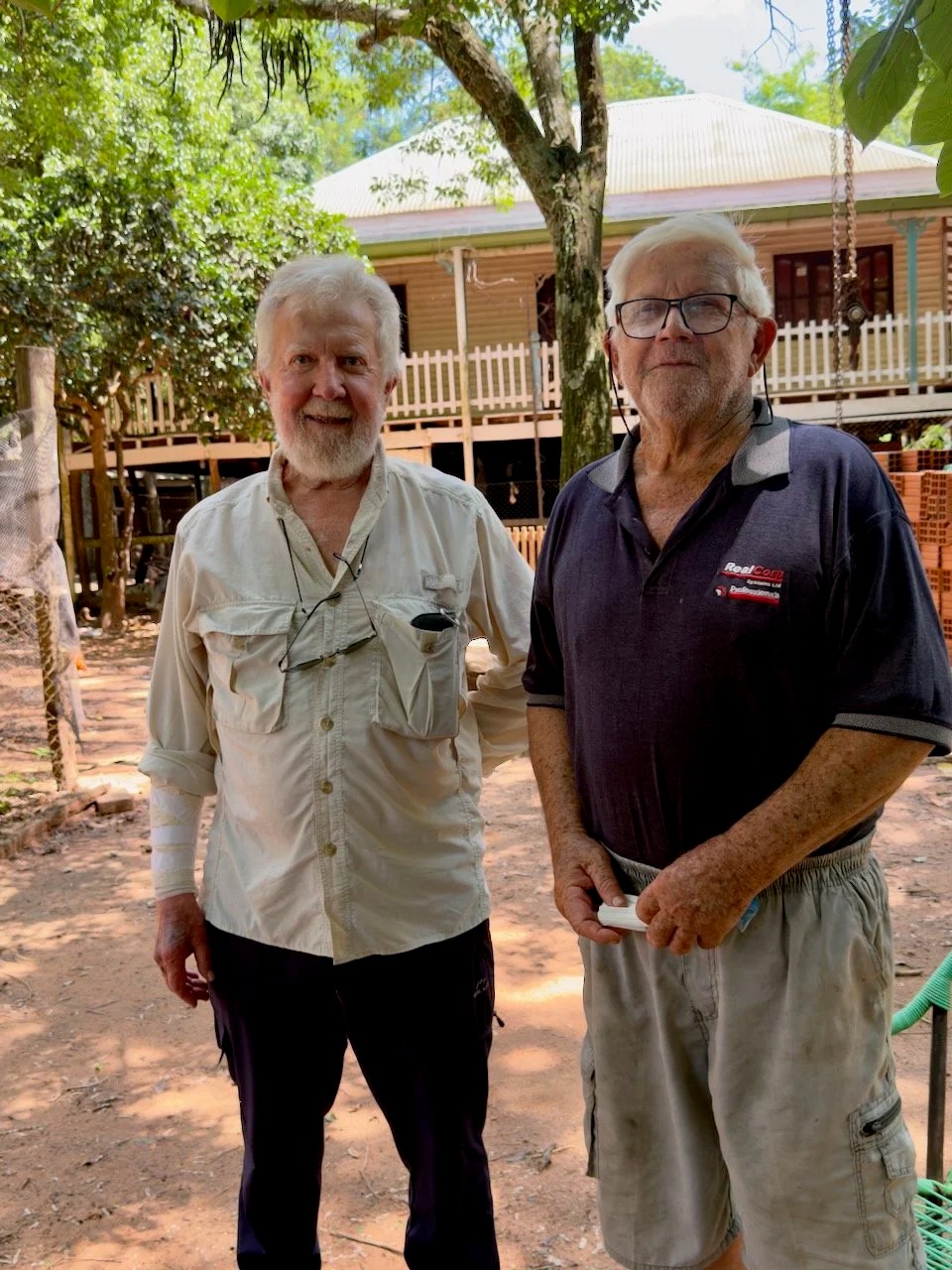
    First was Colonia Cosme where we, on a chance, were able to meet the delightful Francisco Wood, grandson of founders, who was happy to chat via Hugh’s simultaneous Spanish translation.  A lovely encounter.  

     Rob & Francisco whose grandparents were part of the original settlement group.
    Rob & Francisco whose grandparents were part of the original settlement group.

    And then 70 km to the first established Colonia Nueva Australia, now called Nueva Londres (partly because the Australian government apparently showed little interest in a suggestion to rename the colony ‘New Canberra’).  

    So there ends our personal homage to what has been described as “one of the strangest episodes in Australian history”.  For Lane, it seems sacrilegious to say that we will toast the ‘Colonia Nueva Australia’ venture tonight, but I rather think we will.  The shearers would approve.  

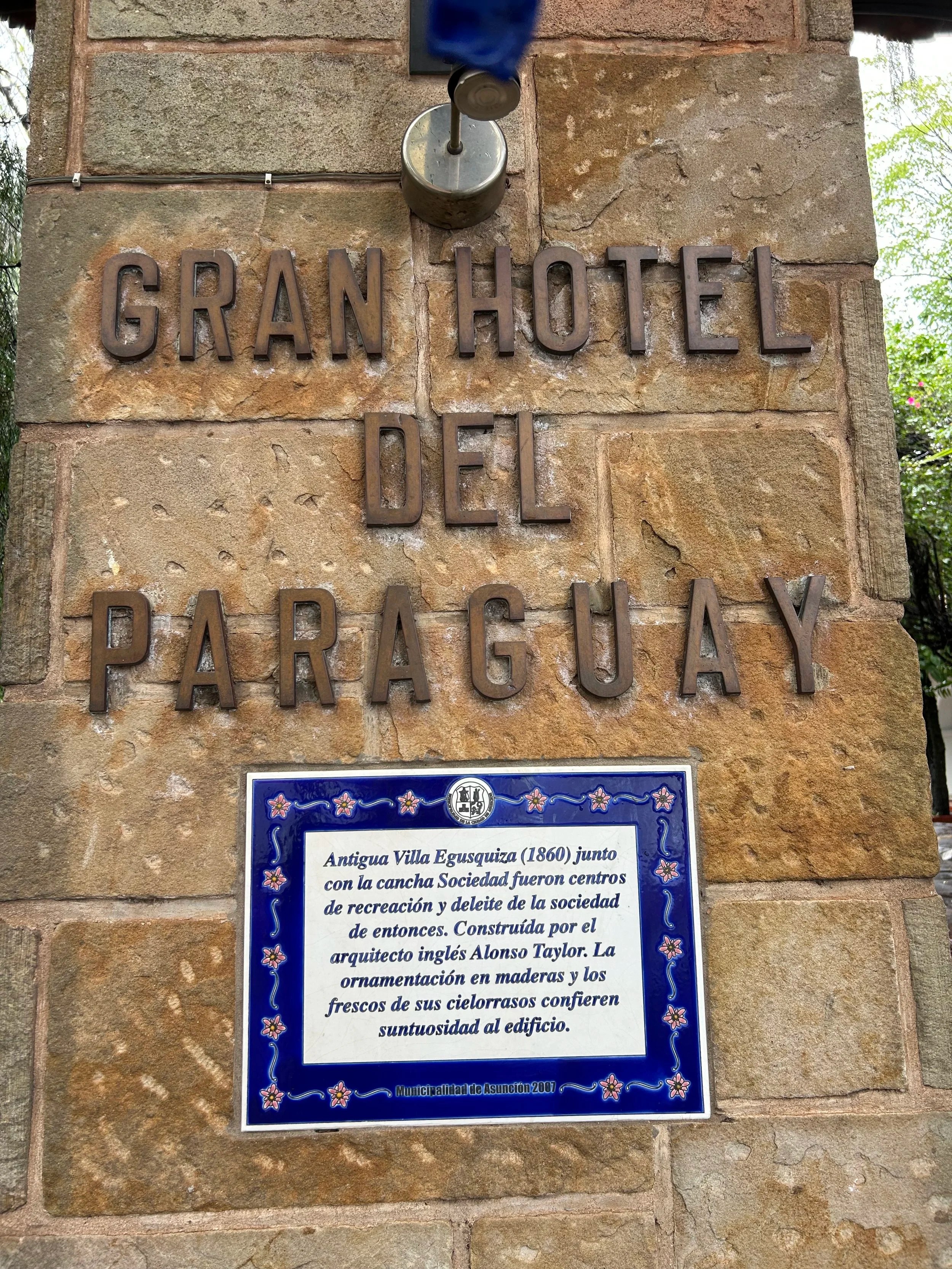
    Now we are off to explore Asuncion for three nights.  In part, we follow Lopez and his extraordinary Irish courtesan, Eliza Lynch, briefly the richest woman in the world.  For Gerry and me, we also follow the footsteps of Graham Greene, over whom we bonded 55 years ago, aided by jugs of beer, schnitzel and various substances.  Greene’s ‘Honorary Consul’ and ‘Travels with my Aunt’ take us to a seedy, dubious Paraguay with its distinctive ability to entrance and de-rail.  We have hopes of finding a more impressive restaurant than in Greene’s Hotel Gran del Paraguay in Asuncion, which according to a 2006 review in the Independent is “a fading colonial relic which manages the undemanding achievement of having the best restaurant in Paraguay.”  

    And in fact, as we compile this blog a day after the above was written, we have just lunched with our local guide at the Gran Hotel del Paraguay where Greene stayed.  And we had a gin and tonic in salutation.  Strangely and fittingly, it transpires that Eliza Lynch had previously owned and lived in this hotel.  But our hotel is the ‘Factoria’ and that’s a story in its own right, and for Gerry to tell. 

  • On the Way to Paraguay – October 25, 2025
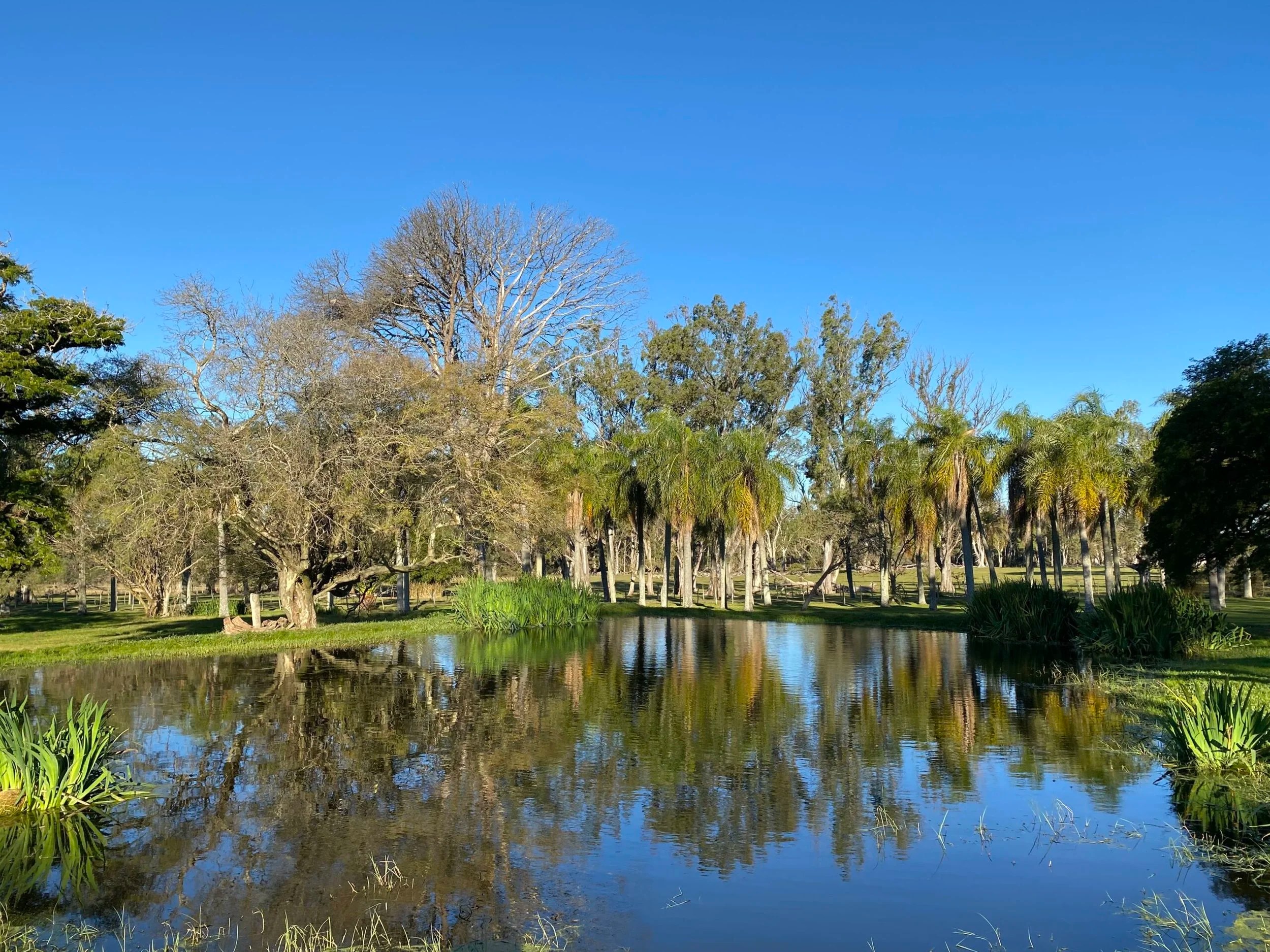
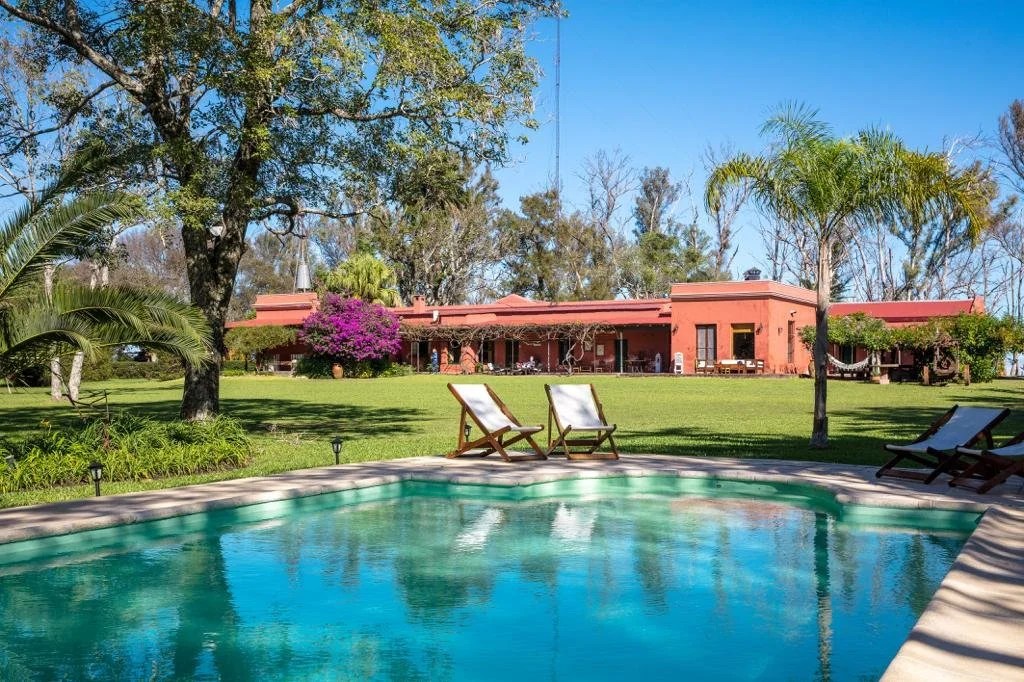
     Grounds of Estancia La Violeta
    Grounds of Estancia La Violeta

    As I’m sure you will have gathered, our driving direction for this trip is roughly due north for its whole extent. We began at Colonia on the southern border of Uruguay after our ferry ride from Buenos Aires and drove 7 hours north to Posada El Proyecto where we spent our first two nights on the road, as noted in my last post. 

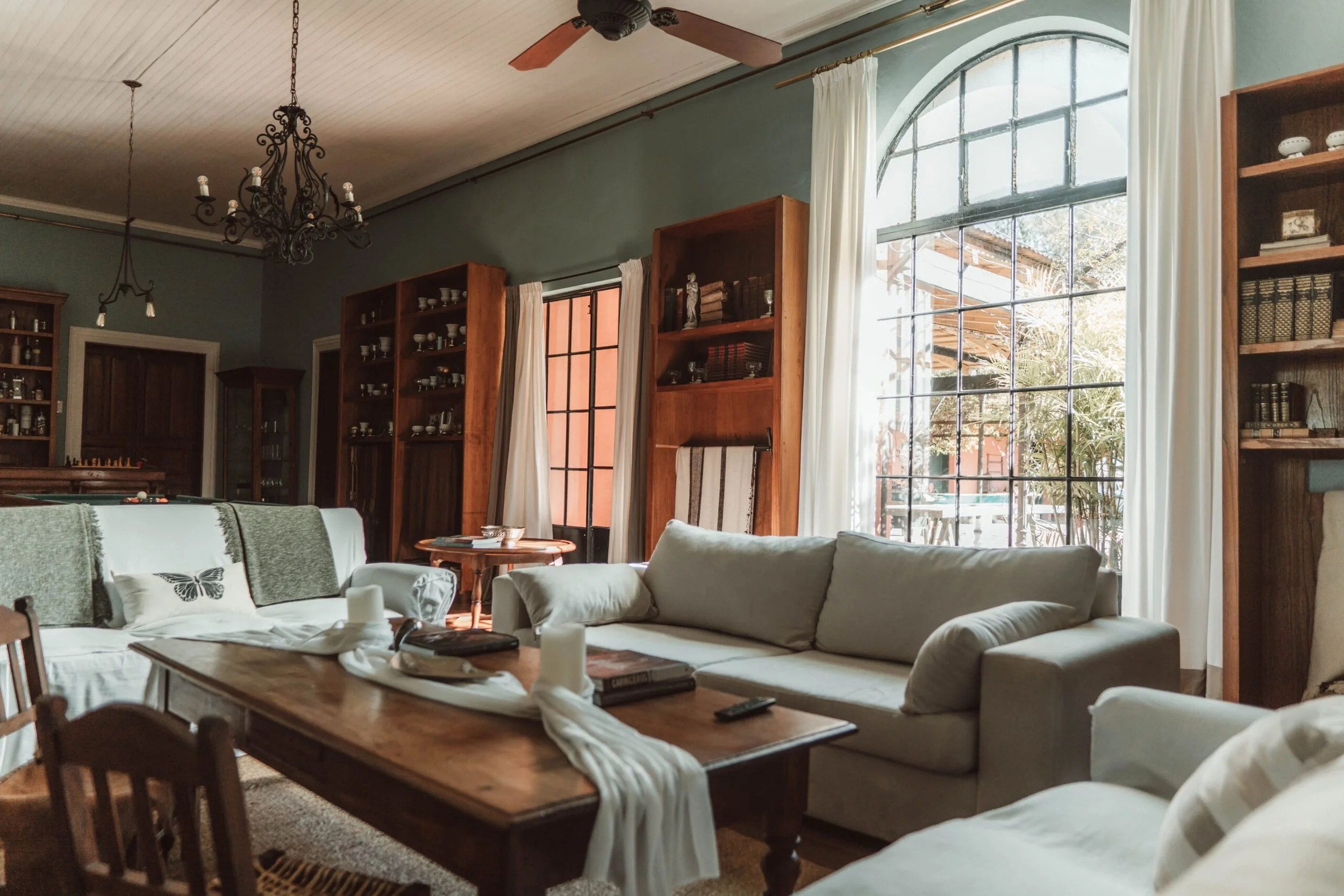
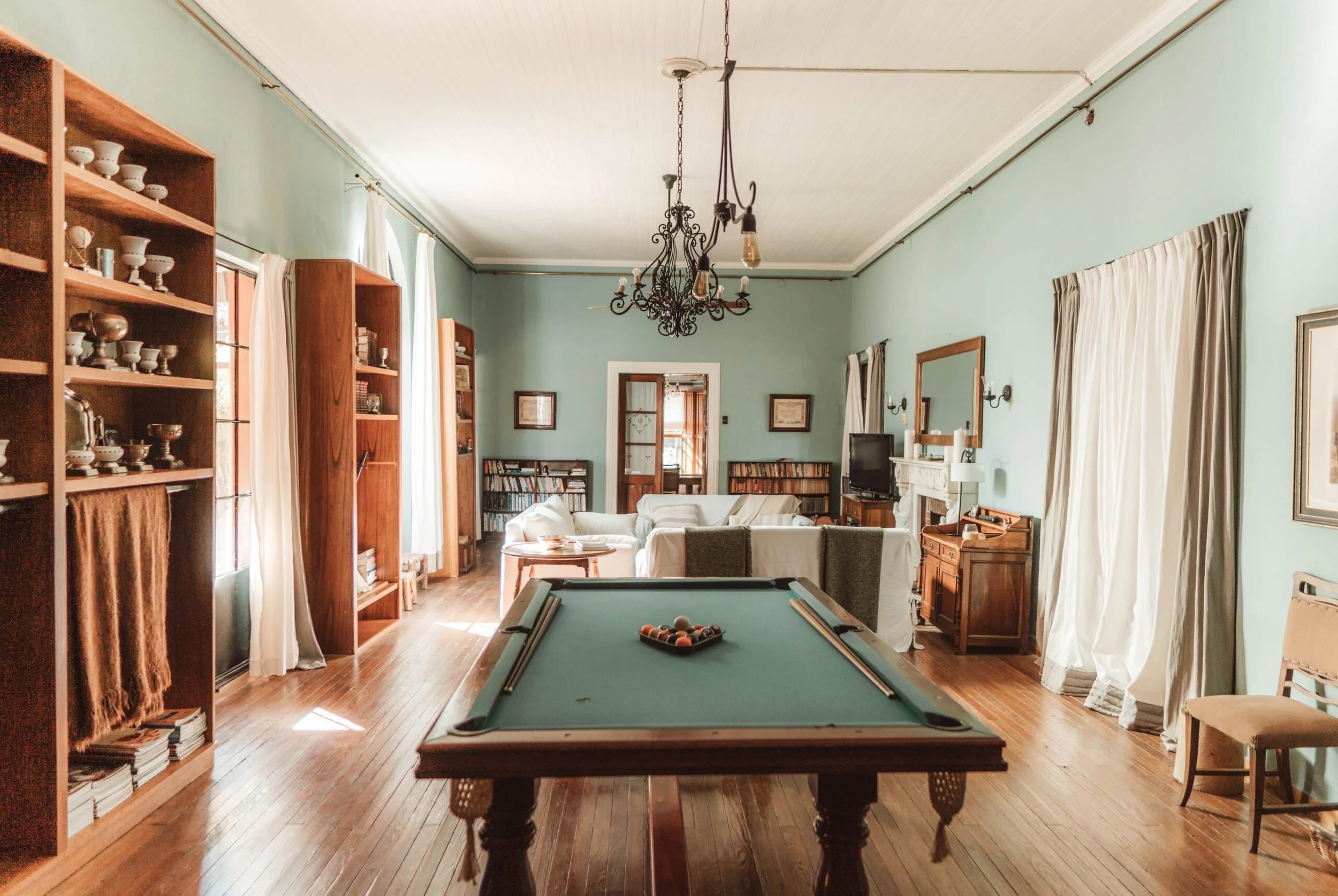
    From there we continued north, a 5 hour drive, to Posada Lunarejo a small bed & breakfast located in the Lunarejo Valley Regional Natural Park, in Rivera, Uruguay, the heart of gaucho country, where we have spent the last two nights. The inn, a refurbished 19th century country house, was quiet and tranquil and should have been a pleasant stay with the possibilities of access to local wildlife and interesting landscapes but sadly, mid-morning after our first night, the skies opened and we spent our day listening to huge peals of and booms of thunder, watching a glorious lightning light show while the rain pounded down in tropical torrents. No travel in those conditions.

    The rain continued throughout the night as the wind increased in speed and volume and we had concerns about the state of the roads for our drive to our current location. After long consultations with the proprietor of Posada Lunarejo, Hugh found us a route on paved roads all the way to our current location back in Argentina, at Estancia La Violeta, in Chajarí province. The chosen route was considerably longer than one suggested by our SatNav app but the deluge made it vital that we stayed on a paved surface.

     Estancia La Violeta
    Estancia La Violeta

    Why back in Argentina? As I noted, our direction is north and we simply ran out of Uruguay. We have crossed back into the much larger country of Argentina to continue our journey north to the southern border of Paraguay. 

    Our first night back in Argentina will be spent at Estancia La Violeta and tomorrow morning we drive north to Hotel Batista in Posadas, on the Paraguayan border for our northward journey up through Paraguay and up to its northern border with Brazil.

     Estancia La Violeta
    Estancia La Violeta

    Estancia La Violeta is superb and I would happily stop here for a considerably longer period than one night! It’s early in spring so the tourist season has not yet really started and we have the estancia to ourselves. Accommodations are wonderful, food is excellent and I plan to soak this into my pores since it has to last me for the next 3 weeks of hard driving.

    More to come!

  • Buenos Aires to  Treinta y Tres – October 23, 2025

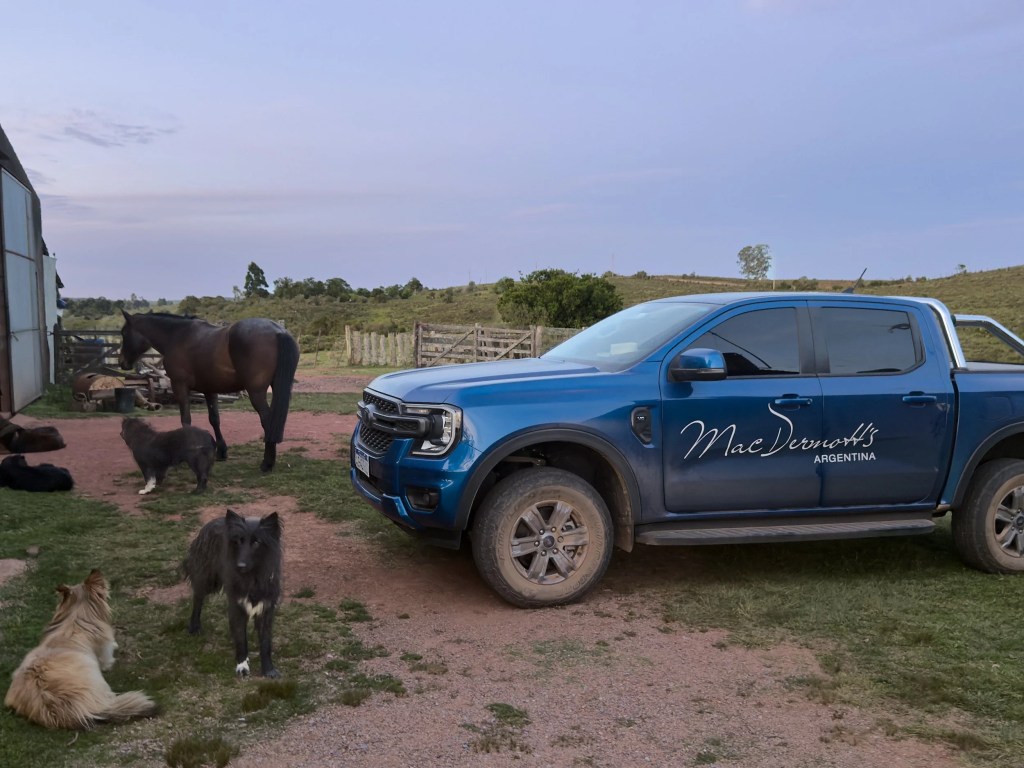
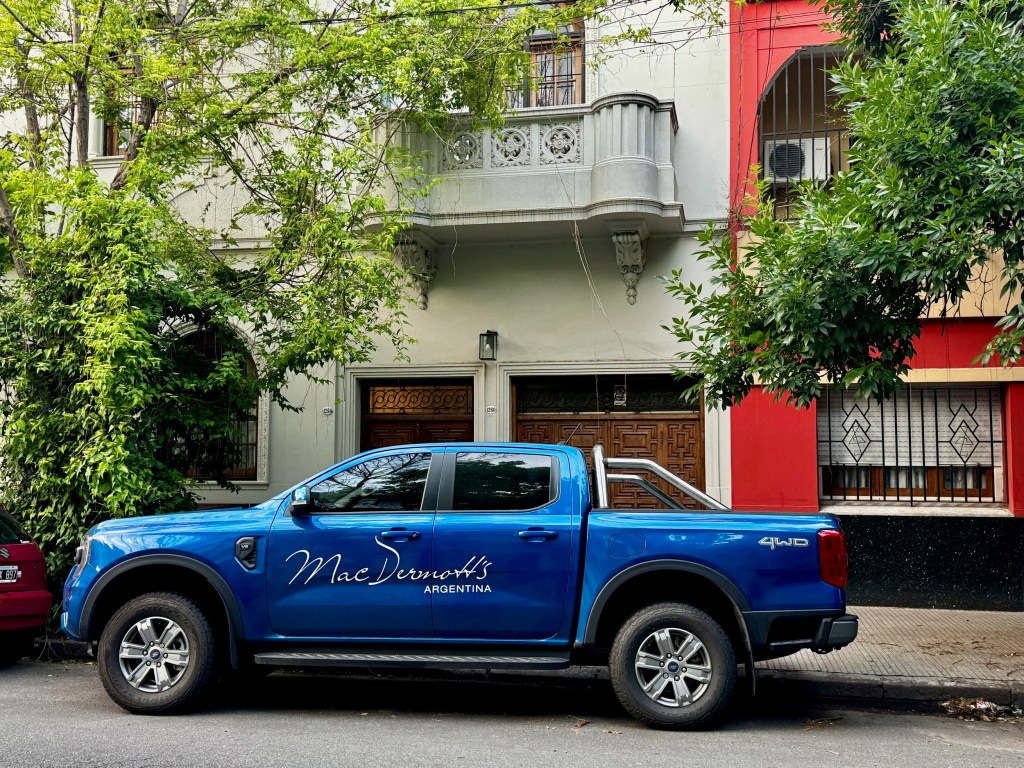
    A quick update while I have the chance between internet blackouts and long driving days. Arrived without incident in BA on Saturday afternoon at 1500 after a 16 hour transit time with no jet-lag, the blessing of being only one time zone east of Toronto. Met by Hugh, the owner of Macdermotts Argentina, who will be our guide, driver and companion for the next 24 days.

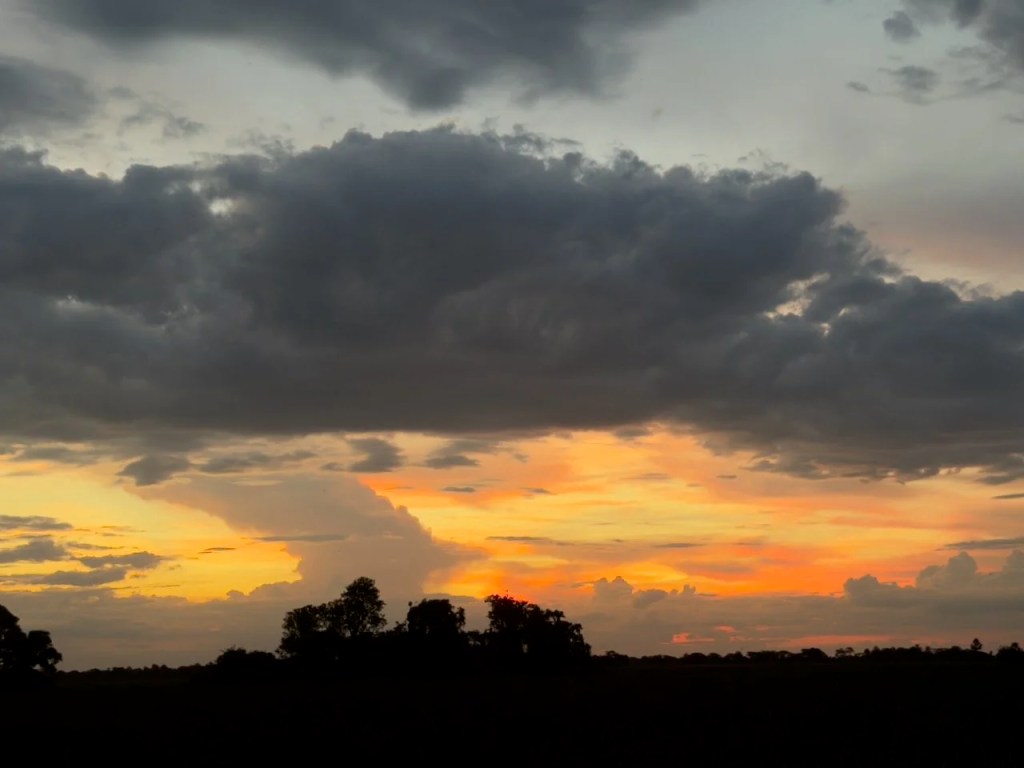
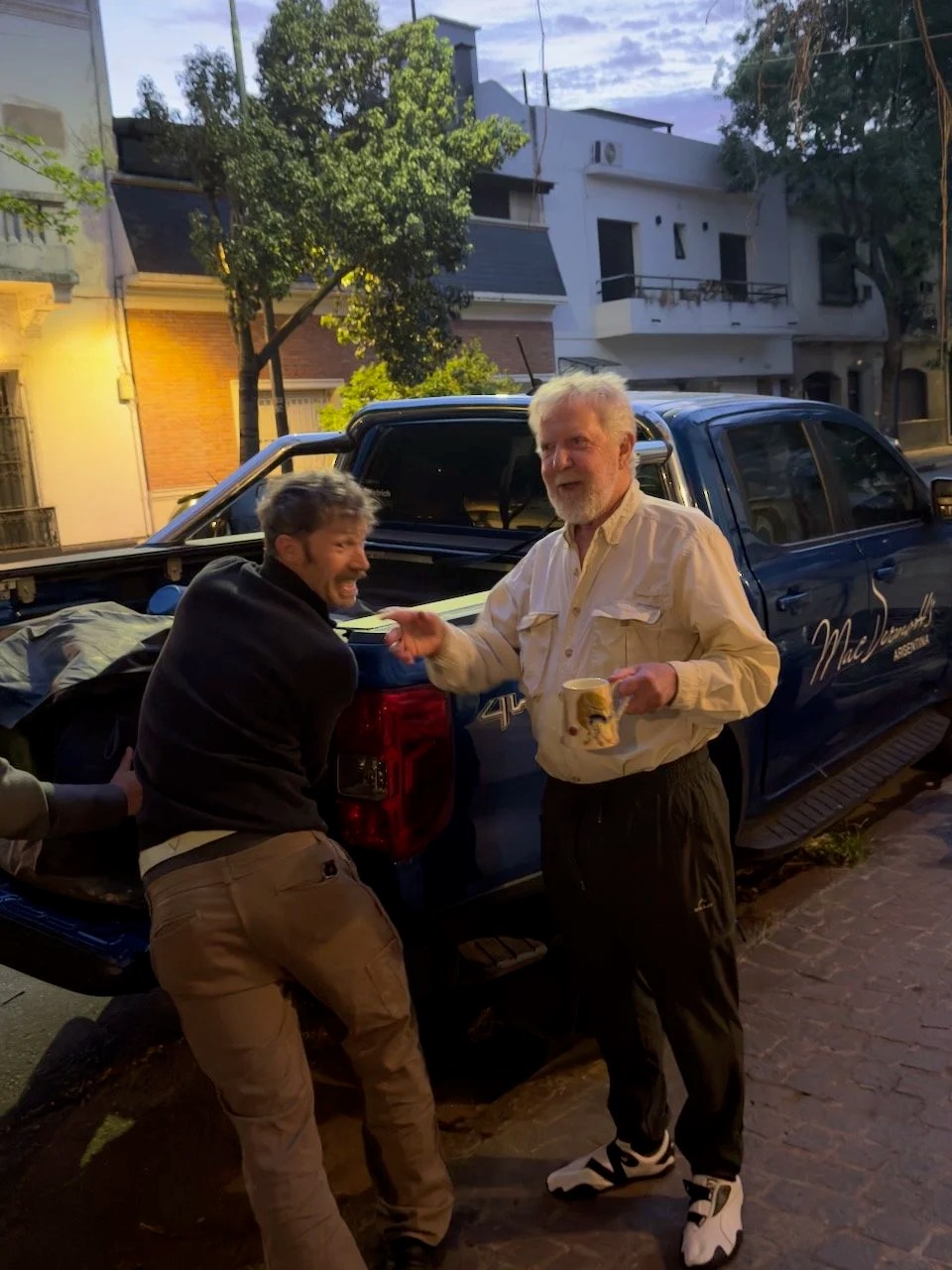
     Rob and Hugh loading the truck 5:30 am, each demonstrating their usual roles
    Rob and Hugh loading the truck 5:30 am, each demonstrating their usual roles

    Spent three days in BA making final arrangements, organizing documentation and loading the truck. While I love Buenos Aires and always enjoy being here, one event was particularly noteworthy, our dinner Sunday evening at Don Julio. Hugh introduced us to Don Julio in 2013 when V and I made our first foray into Argentina and we have taken every opportunity to tell friends to make sure to visit when in BA as well as dining here ourselves at every opportunity. When we first visited we were so taken with our meals that we returned twice more on that trip; the fact that we were able to make reservations for return visits on such short notice is a telling indicator of how much things have changed in 12 years. Its reputation has grown in the interim and it has been rated as the best steakhouse in the world by various critics, consequently the lead time for reservations is now measured in months rather than days. The restaurant decor has not changed significantly, the menu has not changed at all and the staff are as low key, charming and helpful as ever, no attitude, no sense of self-importance at the heights now enjoyed by the restaurant. However the experience has been refined to a new level of care and attention and the food and wine list are as compelling as ever. Briefly, R and I both had grilled sweetbreads for starters and grilled kidneys with grilled artichokes for me and grilled kidneys with grilled mushrooms for R, as our mains. I know, we should have had steak, but in my experience Don Julio is the best restaurant that I have ever visited for enjoying offal and the opportunity was too good to miss. Hugh and his partner Paulo joined us for dinner and Paulo, very knowledgeable about wine, picked a couple of exceptional Argentinian reds to help carry our meal, fabulous. It’s been a while since I was last here, absolutely worth the wait.

    Off bright and early on Tuesday morning for the ferry to Colonia, Uruguay and then a 7 hour drive to our recently-vacated location near Treinta y Tres, Uruguay. Why here? A bit of background on the nature and structure of the trip.

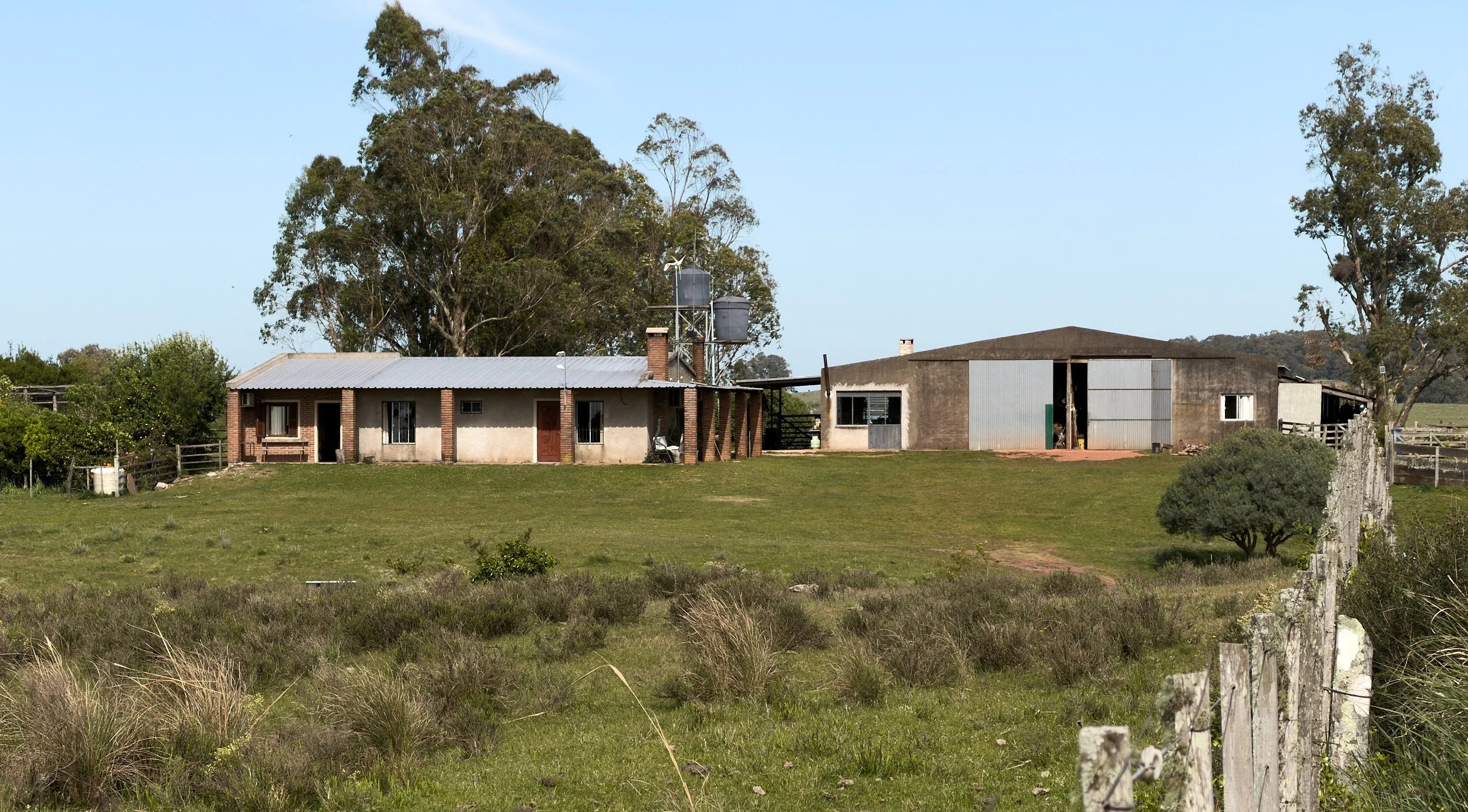
     El Proyecto is a small family run cattle ranch located an hour north from Treinta y Tres in the rolling hills of eastern Uruguay. Our home for the first two nights on the road.
    El Proyecto is a small family run cattle ranch located an hour north from Treinta y Tres in the rolling hills of eastern Uruguay. Our home for the first two nights on the road.

    R has been fascinated by Paraguay, his interest originally awakened by his reading of Bluestocking in Patagonia: Mary Gilmore’s Quest for Love and Utopia at the World’s End by Anne Whitehead. Whitehead, an Australian author, chronicles a bizarre social experiment which took place when a band of 500 ordinary Australians sailed out to found a socialist Utopia in Paraguay a century ago. One of them was a red-headed schoolteacher – the intrepid Mary Cameron. In a remarkable blend of biography and travel writing Whitehead follows in her footsteps and brings to life a testing time spent in one of the harshest places on earth.

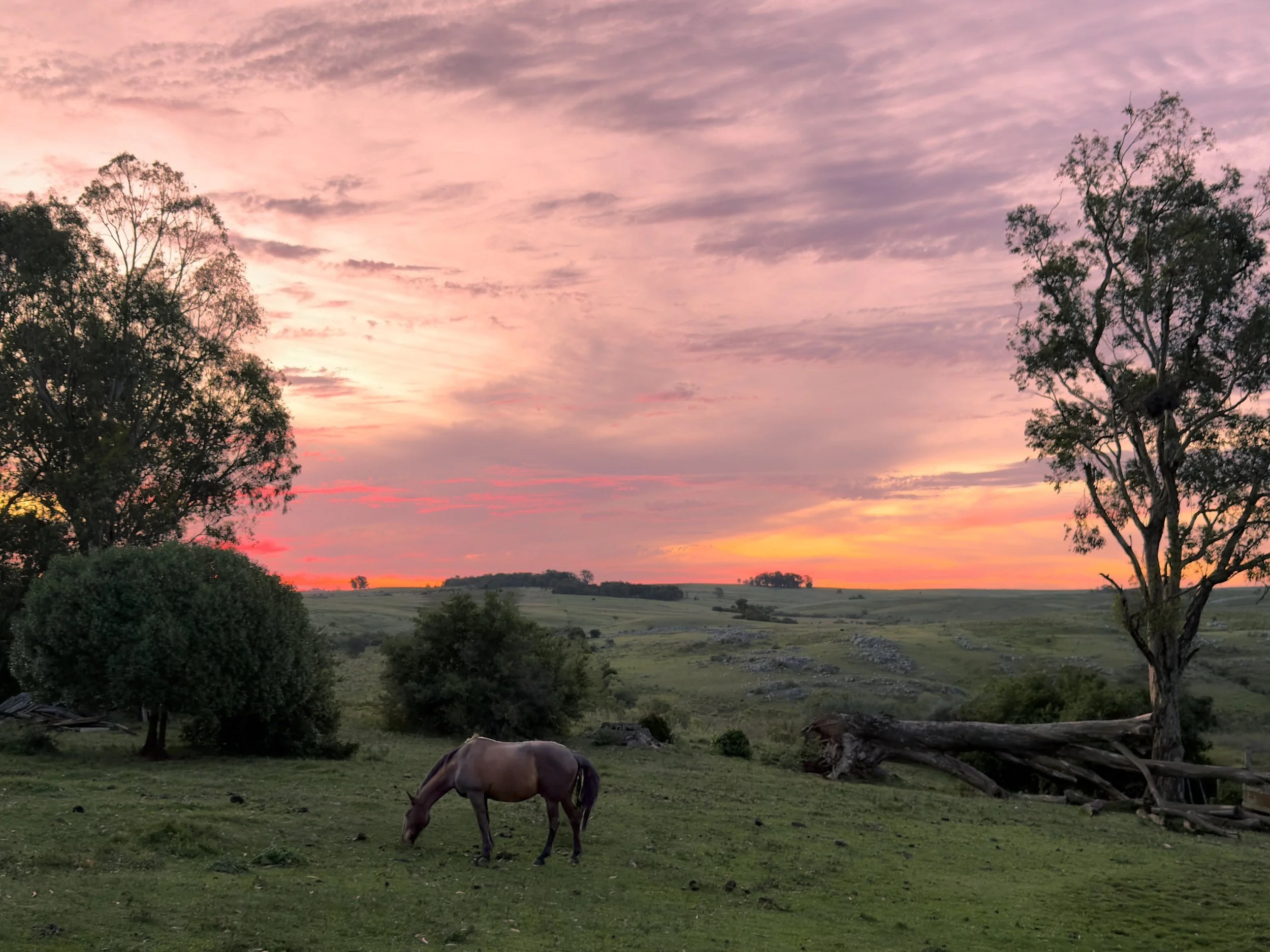
     Sunset, El Proyecto
    Sunset, El Proyecto

    Mary Cameron was an aspiring writer and feminist – but she also took with her white muslin for a wedding dress; she then married a nearly illiterate sheep-shearer, William Gilmore. Their socialist dream foundered before very long and they had to earn their passage home with their baby son – through the impossibly remote country communities of Paraguay and the vast estancias of Argentina to Patagonia, the “end of the earth” made famous by Darwin and Bruce Chatwin. With his usual academic rigour R has broadened the scope of his readings on that original utopian experiment to try and understand the conditions in Paraguay at that time that made it attractive as a location for the experiment. Treinta y Tres is the jumping off point for our adventure through Uruguay and Paraguay which will take us to the site of that Australian utopian experiment as well as to many locations which played a part in the War of the Triple Alliance, a conflict little known outside of the region but one which was an essential element in the formation of present day Argentina, Bolivia, Uruguay and Brazil. However the conflict also had a profound effect on Paraguay and helped shape the conditions that made it attractive for the Australian experiment.

    The current political and cultural realities of the region are therefore due, in no small part, to the Triple Alliance War and we are here to gain a better understanding of the conflict, the personalities and the dynamics that shaped present day South America and made Paraguay such fertile ground for so many interesting and bizarre social phenomena. Readers of ‘At the Tomb of the Inflatable Pig: A Riotous Journey Into the Heart of Paraguay’ will immediately understand.

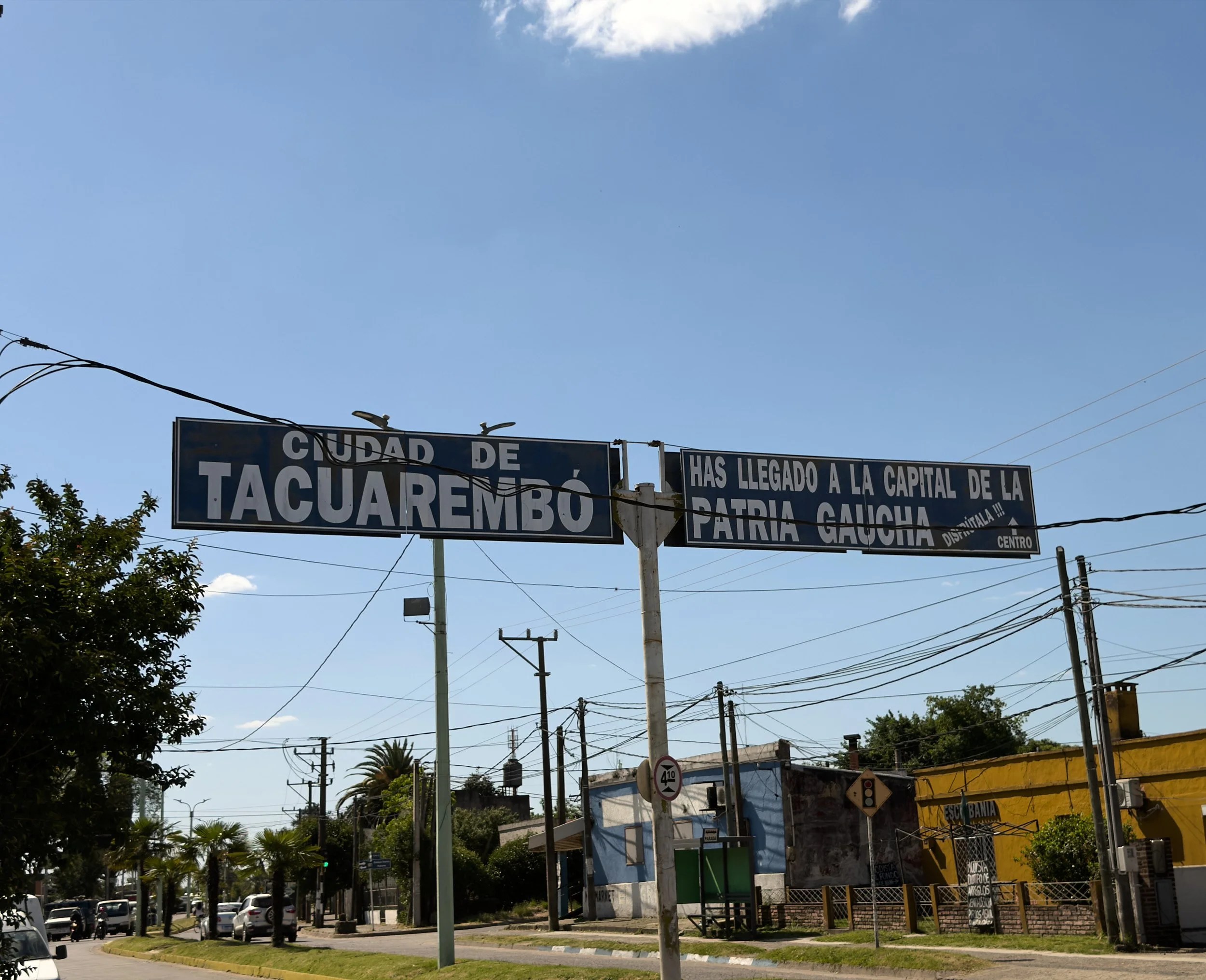
     After leaving El Proyecto just arrived at the city of Tacuarembó, per the sign ‘You have arrived at the Capital of the country of the Gauchos. We will be living at a farm in the surrounding country for the next couple of nights.
    After leaving El Proyecto just arrived at the city of Tacuarembó, per the sign ‘You have arrived at the Capital of the country of the Gauchos. We will be living at a farm in the surrounding country for the next couple of nights.

    The second portion of our trip is particularly exciting for me as we explore the Brazilian Pantanal and focus on the wildlife of the region. But more about that when we reach Brazil.

    More to come!

  • Toronto to Buenos Aires – Oct 17, 2025

    In the words of the inimitable Willy Nelson:

    ‘On the road again

    Goin’ places that I’ve never been

    Seein’ things that I may never see again…’

    This time around our merry band of travellers, Robert and Hugh whom you previously met in Patagonia and on the Carretera Austral in Chile, are off again on what should prove to be our most ambitious adventure to date. We will be driving from Buenos Aires to Cuibaba in the Brazilian Pantanal, over the course of 3 weeks and over a distance of roughly 5,000 kilometres. Along the way we will be exploring some of the wildest and most interesting areas that we have yet encountered as we work our way through Uruguay, Paraguay and the wetlands of Brazil. Hugh has arranged for local guides to meet us at our stops along the way so that we will always have local knowledge with us in the truck. There is an enormous amount of background and history to absorb so the guides’ expertise will be welcome. Our objectives are principally to see and learn more about Paraguay, a country whose past, even by the standards of the chaotic history of South America, beggars the imagination as well as to track and photograph jaguars and the wildlife of the Brazilian Pantanal.

     Hugh & Rob
    Hugh & Rob

    For those of you who are not familiar with Paraguay, and I include myself in this list, the best introduction is to be found in ‘At the Tomb of the Inflatable Pig: A Riotous Journey Into the Heart of Paraguay’ by John Gimlette. I hope you make the time to read it, well worth the effort.

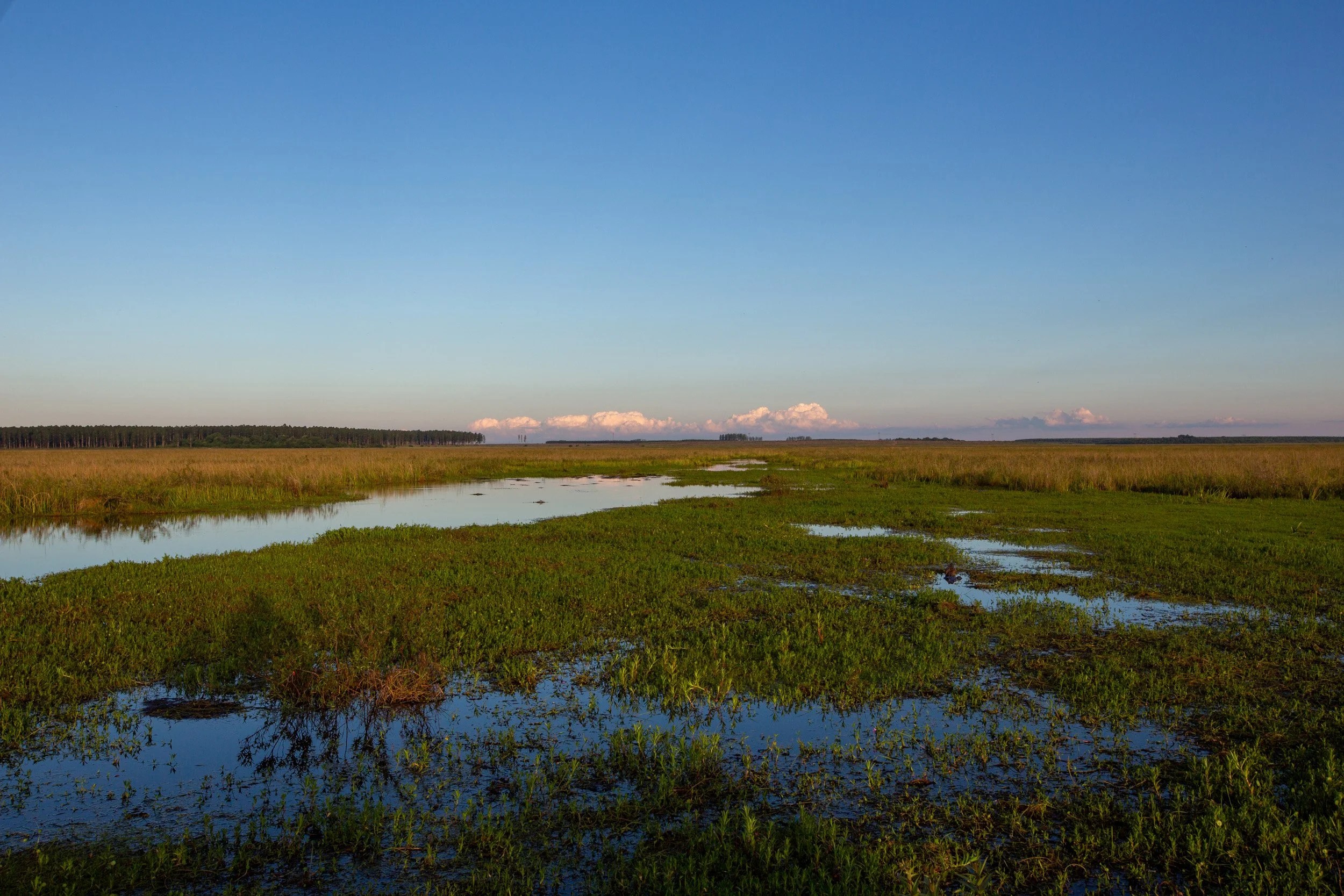
    As interesting as Paraguay will be, I’m particularly keen to explore the Brazilian Pantanal, whose name derives from the Portuguese word for ‘swamp’. It is the world’s largest tropical wetland and covers between 150,000 and 190,000 square kilometres whose ecosystem is home to some 463 species of birds, 269 species of fish, more than 236 species of mammals, 141 species of reptiles and amphibians, and over 9,000 subspecies of invertebrates. However, for me at least, the most compelling animal is its apex predator, the jaguar, whom I’m hoping to photograph.

     Argentinian wetlands, my working proxy for the Pantanal
    Argentinian wetlands, my working proxy for the Pantanal

    We will be off-grid for portions of our trip so access to the internet will be sporadic but whenever possible I will be posting updates on our adventures.

    I fly to BA later this evening on the first leg of the journey with a couple of changes of clothes and 15kg of photo equipment, can’t wait.

    More to come!

  • Toronto – March 14, 2025
     Thank you Gusta
    Thank you Gusta

    As promised in an earlier post I’ll close my documentary of this snow leopard journey by trying to put it, at least for my own satisfaction, into some useful/helpful context. But before I do, huge apologies for the very long delay in completing this last post, the events of the last 10 or 12 days have been disheartening in the extreme and have temporarily hijacked motivation and enthusiasm.

    I remind myself that almost exactly 5 years ago we were overtaken by a lifetime event, one that no one had foreseen, that took our world by surprise, one for which we had no rules, no prior lived experience, no frame of reference and one whose outcome was the deaths of millions. A truly existential experience, a truly lifetime moment. And yet almost exactly 5 years on we are being overtaken by yet another existential, lifetime moment, not one with life or death consequences but one that will bring with it massive social and economic pain and dislocation to individuals and to families on both sides of the border. This time it’s caused by a different pathology, one not of the body but of the spirit and one which calls into question all the comfortable assumptions that we have had about the world and our place in it; who we are, who are friends are, who can be trusted and how we will manage and survive.

    One of the things which has been fascinating to watch arising from this threat has been a very unexpected response, the country has been galvanised and unified in ways that I have not seen since the Canada v USSR hockey tournament in 1972. For my non-Canadian readers this may seem a very strange comparison but it is a fitting one. For many Canadians hockey has become the sporting metaphor for how to conduct oneself in competitive situations, and in 1972 against the Russians it was a proxy war on skates. The belief that Canada, as a very polite country who apologises for everyone else’s mistakes as well as its own, a country which is seen to be just a nice guy who would quickly roll over to the demands of Le Grand Orange, well that expectation was badly judged. Anyone who bought into that assumption has clearly never played hockey against Canadians, as that ’72 tournament will bear witness. How will it play out? Who knows, too early to tell but the one thing that I do know is that Canadians, small thing though it is, are now once again proudly attaching the maple leaf flag to all of their suitcases and backpacks!

    To get an idea of the character of the barrage of reporting that is overwhelming us, this article from The Independent, a UK service, is as good an example as any.

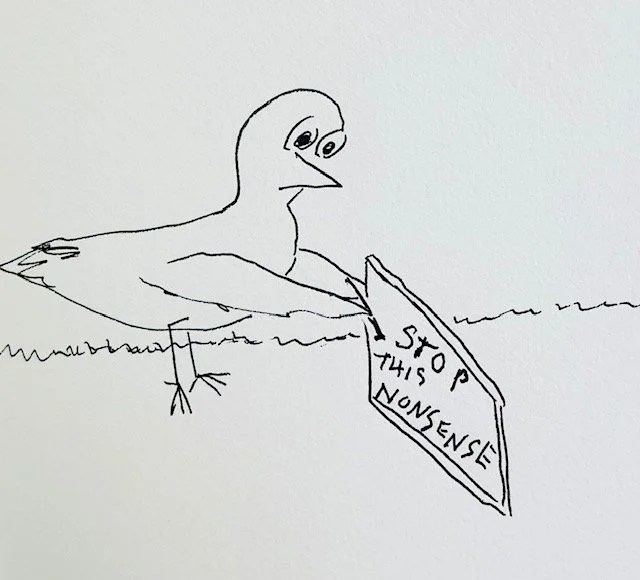
    All of the above is to ask, how many more lifetime, existential moments are we going to be lucky enough to survive? As Gusta, one of my readers and a good friend from New York, a psychologist, a gifted musician and composer, the creator of a daily cartoon which reflects on current events and the contributor of today’s lead image has it, ‘Stop this nonsense!’

    But back to snow leopards, I asked all of our 6 other trip companions to tell me, on a scale of 1 – 5 their rating of the trip overall. Surprisingly, the Americans all rated it 4 out of 5 while our Australian fellow-traveller and I rated it as 1 or at our most generous, 2 out of 5 while V simply said it was the worst trip she had ever experienced. Why this difference?

    I think it comes down to purpose and expectation. The 4 Americans and in particular the two Southern women who were travelling together were perfectly pleased since they had now ‘done’ snow leopards. By their same yardstick they had jointly ‘done’ a number of other countries and places. Neither of them were photographers but others shared their images so that they could palpably demonstrate that they too had ‘done’ Ladakh. The other two Americans, one of whom was quite a good photographer also felt that it was a 4 out of 5 since, given the limitations and constraints of access to the leopards, it was about the best that could be expected and we did after all see 4 different cats over the course of our stay. Using that logic one could equally make the case that going to an English country house shooting weekend would be an excellent way to learn about pheasants. Our tone and amenities may have been a little down-market but the essence of the experience was the same, line everyone up in a row, flush the quarry and let them bang away.

    However after much thought, I have come to accept that my rating was as much an indictment of my own physical limitations as it was of the nature of the experience. Because there are other ways to see and photograph snow leopards in a very different manner. For example, I explored the idea of coming back to Ladakh, hiring one of the trained wildlife guides who accompanied us and heading for the portion of the Tibetan Plateau that extends into eastern Ladakh, about a 9 hour drive away from Leh. Because it’s a plateau ringed by the Himalayas, travel over the relatively flatter landscape is much easier, there are significantly fewer visitors and it’s possible to trek to locations where one can lie up in a blind with only the guide and so have a private and much more intimate experience with the animals than is possible out of Leh (see video below). However, as attractive as this scenario may be, as noted above my own physical limitations come into play. For starters the plateau is at 5,000+ metres, at least 1,000 metres higher than we had had to deal with and I know how exhausting the most trivial physical exertions were in Rumbak. Add the very real difficulties of trekking extended distances with heavy photography equipment and the significantly more primitive living and working conditions and I quickly came to the conclusion that on trips of this type I may well have to settle for either ‘doing’ Ladakh in the manner of our American compatriots or thinking that these will make excellent next-lifetime projects. Karma at work!

    The video above was taken by one of our guides on his iPhone but in an entirely different area than the one we had access to. This was what I expected to see on our trip, sadly our experience fell far short.

    More to come!